Recommendations
Books Like How to Win Friends and Influence People
Best books to read after How to Win Friends and Influence People by Dale Carnegie
How to Win Friends and Influence People is arguably the first self-help book and still one of the best-selling — a guide to interpersonal effectiveness that has sold 30 million copies and influenced everyone from Warren Buffett to Silicon Valley CEOs. These 8 books extend into persuasion science, social psychology, negotiation, and the modern behavioral research that validates and extends Carnegie's intuitions.
- 1
 Buy on Amazon
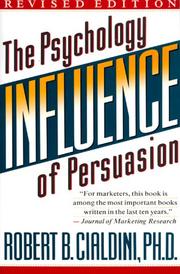
Influence
by Robert B. Cialdini
The most rigorous scientific account of persuasion — identifying the six principles (reciprocity, commitment, social proof, authority, liking, and scarcity) that reliably influence human behavior — the behavioral science foundation for Carnegie's interpersonal intuitions.
- 2
 Buy on Amazon
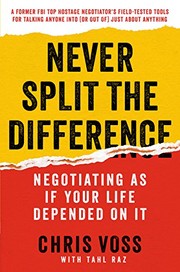
Never Split the Difference
by Chris Voss
Former FBI hostage negotiator Chris Voss's account of negotiation tactics — tactical empathy, mirroring, and the 'accusation audit' — which extends Carnegie's principles of active listening and genuine interest into high-stakes negotiation contexts.
- 3
 Buy on Amazon
How to Stop Worrying and Start Living
by Dale Carnegie
Carnegie's companion book on managing anxiety and worry — the natural sequel covering the emotional self-management that complements the social skills of How to Win Friends, drawn from the same combination of anecdote and practical principle.
- 4
 Buy on Amazon
The Like Switch
by Jack Schafer
Former FBI behavioral analyst Jack Schafer's account of the specific behaviors that make people like and trust each other — the counterintelligence-derived framework for the interpersonal effectiveness Carnegie describes from a salesman's perspective.
- 5
 Buy on Amazon
Nonviolent Communication
by Marshall B. Rosenberg
Rosenberg's communication framework based on empathic listening and expression of genuine needs — a more psychologically sophisticated approach to the genuine interest in others that Carnegie advocates, applied to conflict resolution.
- 6
 Buy on Amazon
Social
by Matthew D. Lieberman
UCLA neuroscientist Matthew Lieberman's account of why the human brain is wired for social connection — the evolutionary and neuroscientific explanation for why Carnegie's principles work: we are fundamentally social creatures who respond to interest and validation.
- 7
 Buy on Amazon
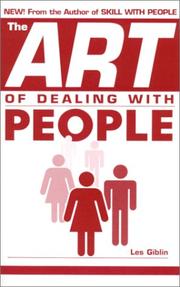
The Art of Dealing with People
by Les Giblin
A compact, practical guide to interpersonal effectiveness in the Carnegie tradition — focused on making others feel important and valued, building on the same fundamental insight that genuine interest and appreciation produce connection.
- 8
 Buy on Amazon
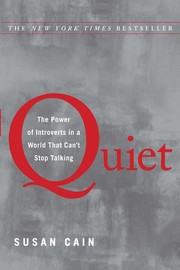
Quiet
by Susan Cain
Susan Cain's account of introversion — arguing that the introverts who are disadvantaged by Carnegie's social-performance framework bring different but equally valuable capacities to relationships and organizations — the necessary complement and partial corrective to How to Win Friends.
More How to Win Friends and Influence People Resources
More Reading Recommendations
View all →Monthly Newsletter
Never miss a big release
Get the most anticipated upcoming books delivered to your inbox once a month — no spam, no filler.
Monthly only. Unsubscribe anytime.
Book links are Amazon affiliate links. As an Amazon Associate, BookReleaseRadar earns from qualifying purchases at no extra cost to you.