Recommendations
Books Like The Possessed
Best books to read after The Possessed (Demons) by Fyodor Dostoevsky
Dostoevsky's 1872 novel — also published as Demons — follows a group of nihilists in a provincial Russian town whose demonic leader Pyotr Verkhovensky organizes a murder to bind them in shared guilt. The most politically prophetic of Dostoevsky's novels, directly anticipating twentieth-century totalitarianism. These recommendations extend the experience through Dostoevsky's other major works, through Russian fiction that shares its investigation of revolutionary ideology, and through the tradition of the political novel that studies how ideas become violence.
- 1
 Buy on Amazon
Crime and Punishment
by Fyodor Dostoevsky
The essential companion — Raskolnikov's theory of the exceptional individual permitted to transgress ordinary moral codes is the individual-level equivalent of what Pyotr Verkhovensky organizes at the political level in The Possessed. Both novels study what happens when intellectual theory is used to justify violence, and both are structured around the psychological consequences that the perpetrator cannot escape. Crime and Punishment is shorter, more intimate, and the most recommended starting point if you haven't yet read all of Dostoevsky.
- 2Buy on Amazon
The Brothers Karamazov
by Fyodor Dostoevsky
Dostoevsky's final and greatest novel (1880) — the fullest development of the themes that The Possessed introduces: Ivan Karamazov's atheism and his Legend of the Grand Inquisitor are the most sophisticated statement of the intellectual position that The Possessed argues against, and Alyosha Karamazov's spiritual love is the most convincing alternative Dostoevsky could imagine. The Brothers Karamazov subsumes every theme of The Possessed into a larger and more generous framework.
- 3Buy on Amazon
Notes from Underground
by Fyodor Dostoevsky
The philosophical founding text of the Dostoevskian argument against rational self-interest that becomes political in The Possessed. The Underground Man's bitter refusal of the progressive optimism of his time is the psychological precursor to Stavrogin's nihilism — both characters are products of the same encounter between Western rationalism and Russian consciousness, but where the Underground Man is powerless and only broods, Stavrogin acts out his nihilism in the world.
- 4Buy on Amazon
One Day in the Life of Ivan Denisovich
by Alexander Solzhenitsyn
Solzhenitsyn's 1962 novella — the first gulag literature to be published in the Soviet Union — is the twentieth-century companion: the documentary record of what Dostoevsky's prophecy in The Possessed predicted. Where The Possessed shows the revolutionary ideology that led to the gulag (the nihilism, the organization of murder, the possession of the people by the demon of Western atheism), One Day in the Life shows the gulag itself, in a single ordinary day.
- 5
 Buy on Amazon
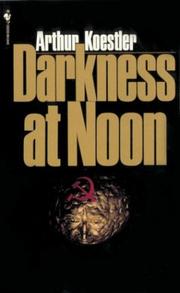
Darkness at Noon
by Arthur Koestler
Koestler's 1940 masterpiece — the interrogation of old Bolshevik Rubashov by the Stalin-era secret police — is the twentieth-century equivalent of what The Possessed predicted: a man who organized murder in the service of the Revolution being murdered in turn by the Revolution he served. Darkness at Noon and The Possessed are the two essential novels for understanding how revolutionary ideology functions — Dostoevsky from the inside in the 1870s, Koestler from the political catastrophe in the 1940s.
- 6
 Buy on Amazon
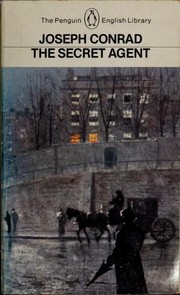
The Secret Agent
by Joseph Conrad
Conrad's 1907 companion in the European tradition of the political novel about anarchism and violence — Mr. Verloc, a double agent, organizes a bombing that kills his own brother-in-law. The Secret Agent and The Possessed are the two great novels of the late nineteenth / early twentieth century about the psychology of revolutionary violence: Dostoevsky from inside the Russian radical tradition, Conrad from the perspective of London's exile communities. Both are devastatingly skeptical about the idealism behind political terrorism.
- 7
 Buy on Amazon
The Trial
by Franz Kafka
Kafka's 1925 companion in the tradition of the novel about bureaucratic and institutional power — Josef K., arrested without being told his crime, prosecuted by a Court he cannot understand or appeal to. The Trial and The Possessed are companion studies in the two poles of Dostoevsky's fear: where The Possessed shows ideology from below (the nihilists who destroy the old order), The Trial shows the institutional power that replaces it — the impersonal guilt and judgment that ideology produces in its mature form.
- 8Buy on Amazon
The Possessed
by Jean Arouet
Camus's 1959 theatrical adaptation of The Possessed — his last completed major work before his death in 1960 — is the French philosophical heir's direct engagement with Dostoevsky's political prophecy. Camus's adaptation emphasizes Stavrogin's nihilism and its relationship to the absurd, and reading it alongside the novel is the clearest illustration of what The Possessed meant to the French existentialists who saw in it the philosophical roots of twentieth-century political violence.
More The Possessed Resources
More Reading Recommendations
View all →Monthly Newsletter
Never miss a big release
Get the most anticipated upcoming books delivered to your inbox once a month — no spam, no filler.
Monthly only. Unsubscribe anytime.
Book links are Amazon affiliate links. As an Amazon Associate, BookReleaseRadar earns from qualifying purchases at no extra cost to you.