Recommendations
Books Like The Metamorphosis
Best books to read after The Metamorphosis by Franz Kafka
Kafka's 1915 story — traveling salesman Gregor Samsa, transformed into a monstrous vermin, must cope with the practical consequences while his family adjusts to his uselessness — is the most widely read German-language story of the twentieth century and the most accessible entry into Kafka's world. These recommendations extend the experience through Kafka's other major works, through the existentialist tradition that inherits his concerns, and through fiction that shares its investigation of alienation, the body, and the impossibility of fitting the social world one inhabits.
- 1
 Buy on Amazon
The Trial
by Franz Kafka
The essential next Kafka — Josef K., arrested without being told his crime, prosecuted by a Court he cannot understand or appeal to. The Trial is Kafka's most sustained and ambitious work and the fullest development of the situation introduced in The Metamorphosis: a protagonist caught in an institutional or social world that does not recognize his humanity and to which his attempts to explain or justify himself are completely ineffective. The Trial is longer and more complex than The Metamorphosis, and together they constitute Kafka's most essential works.
- 2
 Buy on Amazon
The Castle
by Franz Kafka
Kafka's unfinished final novel — K., a land surveyor who arrives in a village where a Castle governs everything, can never obtain access to the Castle or confirmation of his appointment. The Castle pushes the Kafkaesque situation to its most extended and metaphysically ambitious form: where Gregor Samsa's alienation is from his own body, K.'s alienation is from the entire social and institutional structure around him. The Castle is the most rewarding of Kafka's major works for readers who have already encountered his world through The Metamorphosis.
- 3
 Buy on Amazon
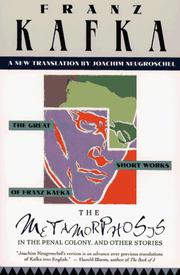
In the Penal Colony
by Franz Kafka
Kafka's 1919 story — an officer demonstrates an elaborate torture/execution machine to a visitor in a penal colony — is the companion to The Metamorphosis in Kafka's short fiction: equally concentrated, equally disturbing, and focused on the body as the site of institutional punishment. Where The Metamorphosis shows the body transformed by inner necessity, In the Penal Colony shows the body destroyed by institutional power — both are studies in what it means to be a body subject to forces that cannot be argued with or appealed to.
- 4Buy on Amazon
Notes from Underground
by Fyodor Dostoevsky
Dostoevsky's 1864 companion in the tradition of the short philosophical narrative about consciousness and social impossibility — the Underground Man's bitter meditation on his own inability to act and his resentment of those who can. Notes from Underground is Kafka's most important literary precursor: the Underground Man's hyperconscious paralysis anticipates Josef K.'s and K.'s situations, and Kafka's fundamental situation (consciousness that cannot act effectively in the world) is already present in embryo in Dostoevsky's 1864 novella.
- 5
 Buy on Amazon
Nausea
by Jean-Paul Sartre
Sartre's 1938 companion in the tradition of the philosophical novel about consciousness and contingency — Antoine Roquentin's experience of the Nausea as objects reveal their brute existence to him. Nausea and The Metamorphosis are the two most important short philosophical novels of the twentieth-century European tradition: both use the alienation of consciousness from its world to dramatize a philosophical condition, and both have generated more interpretation than almost any other works of comparable length.
- 6
 Buy on Amazon
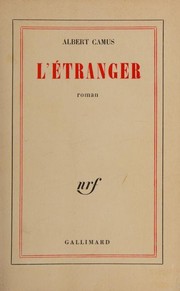
The Stranger
by Albert Camus
Camus's 1942 companion — Meursault's murder and trial — is the most direct French philosophical heir to Kafka's world: the same isolation of consciousness, the same impossibility of authentic relationship with the social world, the same trial that reveals not a crime but a social failure. Where Gregor Samsa becomes an insect and is destroyed by his family, Meursault becomes a murderer and is destroyed by his society — both for being unable to perform the feelings others require of them.
- 7
 Buy on Amazon
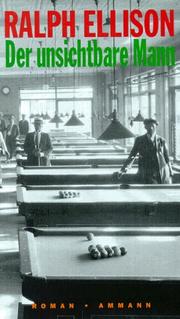
Invisible Man
by Ralph Ellison
Ellison's 1952 companion in the tradition of the novel about social invisibility and the impossibility of authentic existence within a social system that cannot perceive you — the unnamed Black narrator's experience of being made invisible by a white American society that literally cannot see him. Ellison himself identified Kafka as a precursor, and the comparison illuminates both: where Gregor Samsa is made monstrous (visible in the wrong way), Ellison's narrator is made invisible (not seen at all) — both are variations on the same situation of consciousness that cannot achieve social recognition.
- 8
 Buy on Amazon
Steppenwolf
by Hermann Hesse
Hesse's 1927 German companion — Harry Haller's experience of himself as half-man and half-wolf, unable to find a social existence adequate to his nature. Steppenwolf and The Metamorphosis are companion German-language studies of the man who is incompatible with the social world — where Gregor Samsa discovers his incompatibility literally (he becomes a vermin), Harry Haller lives it metaphorically (he is the Steppenwolf who cannot integrate into bourgeois society). Both are portraits of the outsider consciousness that German modernism returned to obsessively.
More The Metamorphosis Resources
More Reading Recommendations
View all →Monthly Newsletter
Never miss a big release
Get the most anticipated upcoming books delivered to your inbox once a month — no spam, no filler.
Monthly only. Unsubscribe anytime.
Book links are Amazon affiliate links. As an Amazon Associate, BookReleaseRadar earns from qualifying purchases at no extra cost to you.