Recommendations
Books Like Rhinoceros
Best books to read after Rhinoceros by Eugène Ionesco
Ionesco's 1959 most popular and most politically legible play — the inhabitants of a provincial town turning into rhinoceroses while Bérenger remains the last human being — is the most accessible work of the Theater of the Absurd and the most direct theatrical investigation of conformism and the individual's resistance to collective dehumanization. These recommendations extend the experience through Ionesco's other major plays, through the Theater of the Absurd, and through fiction and drama that investigates totalitarianism, conformism, and the costs of remaining human.
- 1
 Buy on Amazon
The Chairs
by Eugène Ionesco
The companion Ionesco play and arguably his formal masterwork — the Old Man and Old Woman filling a room with empty chairs for the guests who will hear the Old Man's message. The Chairs and Rhinoceros are companion Ionesco plays: Rhinoceros is the more accessible (the absurdist premise is explained rather than enacted) while The Chairs is the more purely theatrical (the absurdity is the form itself). Reading them together gives the full range of Ionesco's method.
- 2
 Buy on Amazon
The Bald Soprano
by Eugène Ionesco
The founding work of the Theater of the Absurd and the best starting point for readers new to Ionesco — the Smiths and the Martins in a suburban English drawing room, talking past each other in language that has lost all connection to meaning. The Bald Soprano established the formal method (the language that sounds conversational but has no communicative content) that Rhinoceros extends into political allegory.
- 3
 Buy on Amazon
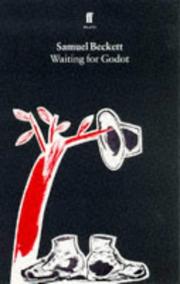
Waiting for Godot
by Samuel Beckett
The companion in the Theater of the Absurd — Vladimir and Estragon waiting for Godot. Rhinoceros and Waiting for Godot are the two most performed works of the Theater of the Absurd, representing its two modes: Beckett's is metaphysical (the absurdity of existence); Ionesco's is social (the absurdity of conformism). Both use the impossible premise to investigate conditions that realistic theater cannot adequately represent.
- 4
 Buy on Amazon
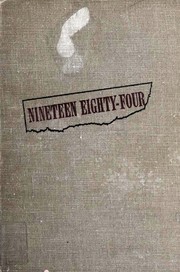
1984
by George Orwell
The prose companion in the tradition of the dystopian work about conformism and the individual who resists it — Winston Smith's attempt to maintain his individual consciousness against the Party's demand for total submission. Rhinoceros and 1984 are companion investigations of the same social process: how the individual is absorbed into collective conformism, how the process appears benign or attractive from the inside, and what it costs the last holdout to resist.
- 5
 Buy on Amazon
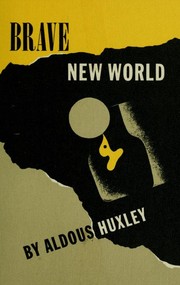
Brave New World
by Aldous Huxley
The companion dystopia — the World State's achieved happiness through conditioning and the elimination of individual consciousness. Brave New World and Rhinoceros are companion investigations of the same question: how does a society achieve total conformism, and how does it make that conformism feel attractive? In both, the protagonist is the last person who refuses to be assimilated — John the Savage, Bérenger — and both endings are bleak.
- 6
 Buy on Amazon
The Trial
by Franz Kafka
The prose precursor in the tradition of the work organized around an incomprehensible social process — Josef K.'s arrest and trial. Kafka's influence on the Theater of the Absurd is pervasive, and Rhinoceros is in the Kafkaesque tradition: the incomprehensible process (the rhinoceroses), the individual's inability to escape it, the progressive isolation of the person who refuses to be assimilated.
- 7
 Buy on Amazon
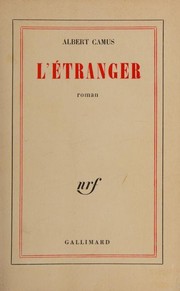
The Stranger
by Albert Camus
Camus's companion in the existentialist-absurdist tradition — Meursault's existence and his refusal to perform the emotions that society demands. The Stranger and Rhinoceros are companion investigations of the individual who refuses to conform to social expectations — Meursault's refusal to perform grief, Bérenger's refusal to become a rhinoceros — and both raise the question of what it costs to remain human in a world that demands something else.
- 8
 Buy on Amazon
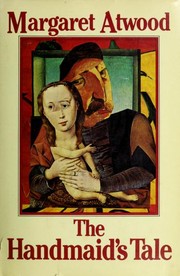
The Handmaid's Tale
by Margaret Atwood
Atwood's 1985 companion in the tradition of the dystopian narrative about collective dehumanization — Offred's life in the Republic of Gilead, where women have been reduced to reproductive function. The Handmaid's Tale and Rhinoceros are companion investigations of the process by which a society transforms individuals into instruments of collective ideology: Ionesco's rhinoceroses represent the transformation from person to conformist mass; Atwood's Gilead represents the transformation from woman to Handmaid.
More Rhinoceros Resources
More Reading Recommendations
View all →Monthly Newsletter
Never miss a big release
Get the most anticipated upcoming books delivered to your inbox once a month — no spam, no filler.
Monthly only. Unsubscribe anytime.
Book links are Amazon affiliate links. As an Amazon Associate, BookReleaseRadar earns from qualifying purchases at no extra cost to you.