Recommendations
Books Like Predictably Irrational
Best books to read after Predictably Irrational by Dan Ariely
Predictably Irrational shows that our irrationality is not random but patterned — which means it can be studied, predicted, and sometimes designed around. These 8 books extend that insight into the full landscape of behavioral science, from cognitive bias to habit to choice architecture.
- 1
 Buy on Amazon
Thinking, Fast and Slow
by Daniel Kahneman
Kahneman's 2011 synthesis of fifty years of cognitive psychology research is the deeper, more comprehensive treatment of the behavioral science that Predictably Irrational popularizes: where Ariely focuses on specific phenomena with vivid experiments, Kahneman organizes the whole field around the System 1/System 2 framework. Reading Predictably Irrational is a good introduction; Thinking, Fast and Slow is the full education.
- 2
 Buy on Amazon
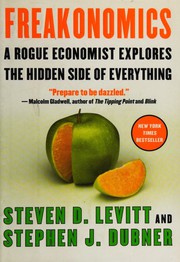
Freakonomics
by Steven D. Levitt
Levitt and Dubner's 2005 popular economics bestseller shares Predictably Irrational's quality of using empirical methods to overturn confident intuitions about human behavior — though Freakonomics uses economic analysis of incentives while Predictably Irrational uses psychological analysis of judgment, they are the two founding books of the pop-social-science genre.
- 3
 Buy on Amazon
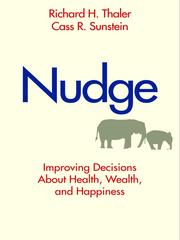
Nudge
by Richard H. Thaler
Thaler and Sunstein's 2008 argument for 'libertarian paternalism' — designing choice environments that account for the irrational patterns Ariely documents — is the policy application of Predictably Irrational's insights: if people are predictably irrational, how should we design institutions that take that into account?
- 4
 Buy on Amazon
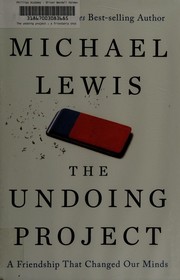
The Undoing Project
by Michael Lewis
Lewis's 2016 account of the Kahneman-Tversky partnership provides the human and historical story behind the research that Predictably Irrational builds on — particularly the foundational papers on anchoring, loss aversion, and the framing effect that Ariely's work extends.
- 5
 Buy on Amazon
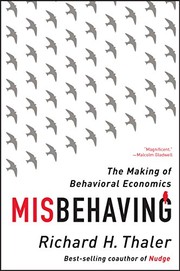
Misbehaving
by Richard H. Thaler
Thaler's 2015 memoir of the history of behavioral economics — from his battles with rational-choice orthodoxy to his 2017 Nobel Prize — is the essential companion to Predictably Irrational for understanding how the field Ariely works in came to exist and what it had to overcome to be taken seriously.
- 6
 Buy on Amazon
The Power of Habit
by Charles Duhigg
Duhigg's 2012 account of the neuroscience and psychology of habit formation extends Predictably Irrational's portrait of the automatic and unconscious forces that drive behavior — specifically, the cue-routine-reward loop that underlies most habitual behavior, and the ways that understanding the loop allows you to change it.
- 7
 Buy on Amazon
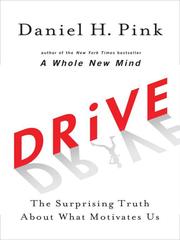
Drive
by Daniel H. Pink
Pink's 2009 argument about human motivation — that autonomy, mastery, and purpose are more powerful motivators than money for most knowledge work — is a direct application of behavioral science (specifically the research on intrinsic vs. extrinsic motivation) to management and organizational design, extending Predictably Irrational's analysis of what actually drives human behavior.
- 8
 Buy on Amazon
The Righteous Mind
by Jonathan Haidt
Haidt's 2012 moral psychology applies the same fundamental insight as Predictably Irrational — that people's stated reasons are often post-hoc rationalizations of intuitive judgments made before the reasoning began — to the specific domain of moral and political judgment, showing why the behavioral science of irrationality is not just an economic curiosity but a political reality.
More Predictably Irrational Resources
More Reading Recommendations
View all →Monthly Newsletter
Never miss a big release
Get the most anticipated upcoming books delivered to your inbox once a month — no spam, no filler.
Monthly only. Unsubscribe anytime.
Book links are Amazon affiliate links. As an Amazon Associate, BookReleaseRadar earns from qualifying purchases at no extra cost to you.