Recommendations
Books Like Nudge
Best books to read after Nudge by Richard Thaler and Cass Sunstein
Nudge showed that good choice architecture can improve people's decisions without restricting their freedom. These 8 books provide the behavioral science behind the nudge approach, its applications in specific domains, and the philosophical debates about when nudging is paternalistic versus empowering.
- 1
 Buy on Amazon
Thinking, Fast and Slow
by Daniel Kahneman
Kahneman's 2011 synthesis of cognitive psychology research is the scientific foundation of the nudge approach: Nudge applies the biases that Kahneman and Tversky documented — the status quo bias, loss aversion, the default effect — to the design of choice environments, and reading Thinking, Fast and Slow gives you the research that Thaler and Sunstein are building on.
- 2
 Buy on Amazon
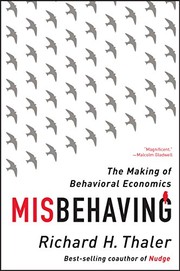
Misbehaving
by Richard H. Thaler
Thaler's 2015 memoir of the history of behavioral economics — from his early battles with rational-choice orthodoxy to his 2017 Nobel Prize — is the essential companion to Nudge for understanding how the intellectual case for choice architecture was built and what it had to overcome to be taken seriously.
- 3
 Buy on Amazon
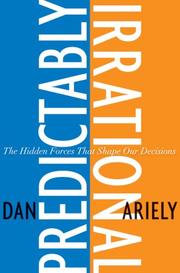
Predictably Irrational
by Dan Ariely
Ariely's 2008 behavioral economics bestseller provides the consumer-facing version of the same research that Nudge applies to policy: where Nudge focuses on institutional design, Predictably Irrational focuses on the individual experiences of irrationality that make institutional design necessary.
- 4
 Buy on Amazon
The Righteous Mind
by Jonathan Haidt
Haidt's 2012 moral psychology is an important companion to Nudge for understanding the political limits of the nudge approach: the moral foundations that conservatives weight more heavily than liberals (loyalty, authority, sanctity) make them more resistant to choice architectures that seem to override traditional norms and social conventions.
- 5
 Buy on Amazon
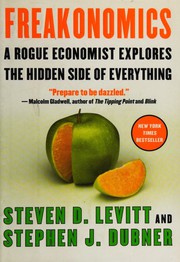
Freakonomics
by Steven D. Levitt
Levitt and Dubner's 2005 popular economics bestseller is the most entertaining companion to Nudge in the genre of applying economic analysis to human behavior: where Nudge focuses on designing better institutions, Freakonomics focuses on understanding how incentive structures already shape behavior in unexpected ways.
- 6
 Buy on Amazon
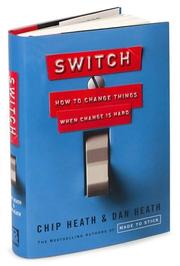
Switch
by Chip Heath
Heath and Heath's 2010 account of how to change behavior when change is hard — using the metaphor of an elephant (emotions), a rider (reason), and a path (the environment) — is the management-focused companion to Nudge's policy-focused approach: both books argue that you need to shape the environment to support the behavior you want, not just convince people rationally.
- 7
 Buy on Amazon
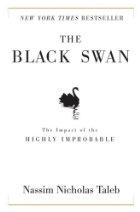
The Black Swan
by Nassim Nicholas Taleb
Taleb's 2007 argument about the role of rare, unpredictable events in history provides a critical perspective on the nudge approach: if the world is more volatile and less predictable than our models assume, then nudges designed for the expected world may perform badly or catastrophically in the unexpected world that actually arrives.
- 8
 Buy on Amazon
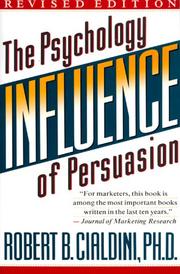
Influence
by Robert B. Cialdini
Cialdini's 1984 classic on the psychology of persuasion — reciprocity, commitment, social proof, authority, liking, and scarcity — is the foundational book for understanding how environmental design shapes behavior, and the direct precursor to the nudge literature: Thaler and Sunstein build explicitly on Cialdini's research in their analysis of what makes defaults and framings effective.
More Nudge Resources
More Reading Recommendations
View all →Monthly Newsletter
Never miss a big release
Get the most anticipated upcoming books delivered to your inbox once a month — no spam, no filler.
Monthly only. Unsubscribe anytime.
Book links are Amazon affiliate links. As an Amazon Associate, BookReleaseRadar earns from qualifying purchases at no extra cost to you.