Recommendations
Books Like Notes from Underground
Best books to read after Notes from Underground by Fyodor Dostoevsky
Dostoevsky's 1864 foundational novella — the bitter, self-lacerating monologue of the Underground Man, a retired civil servant who argues against rational self-interest, progressive optimism, and the idea that human beings are fundamentally good. The founding text of literary existentialism and the introduction to the Dostoevskian worldview. These recommendations extend the experience through Dostoevsky's major novels, through the existentialist fiction that directly inherits its concerns, and through fiction that shares its preoccupation with consciousness, freedom, and the impossibility of authentic action.
- 1
 Buy on Amazon
Crime and Punishment
by Fyodor Dostoevsky
The natural next Dostoevsky after Notes from Underground — Raskolnikov takes the Underground Man's theory of the exceptional individual permitted to transgress ordinary codes and attempts to act on it, with devastating psychological consequences. Where the Underground Man only theorizes and broods, Raskolnikov acts — and discovers that the action he theorized is humanly impossible to live with. Crime and Punishment is where Dostoevsky tests the Underground Man's ideas in the world.
- 2Buy on Amazon
The Brothers Karamazov
by Fyodor Dostoevsky
The fullest development of the Underground Man's ideas — Ivan Karamazov is the Underground Man grown into a great novelist-philosopher, and his Legend of the Grand Inquisitor is the Underground Man's argument about human freedom given its most powerful formulation. The Brothers Karamazov is where the Underground Man's problem (freedom is real but unbearable; consciousness is a curse; there is no rational ground for morality) finds both its most complete statement and Dostoevsky's most searching answer.
- 3
 Buy on Amazon
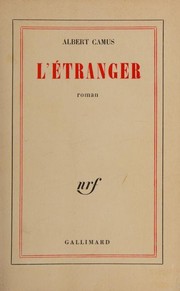
The Stranger
by Albert Camus
Camus's 1942 companion in the tradition of the short philosophical novel about consciousness and the absurd — Meursault's flat, affect-less narration of his murder of an Arab and his subsequent trial. Where the Underground Man is hyperconscious (his consciousness makes action impossible), Meursault is subconscious (his lack of consciousness makes him incapable of performing the guilty feelings society demands). Both are studies in the gap between consciousness and the social performance of consciousness.
- 4
 Buy on Amazon
Nausea
by Jean-Paul Sartre
Sartre's 1938 existentialist novel — the most direct twentieth-century heir to Notes from Underground: Antoine Roquentin's experience of the Nausea, the alienation he feels as objects reveal their brute, contingent existence. Sartre identified Dostoevsky's Underground Man as a precursor to his own existentialist project, and reading Nausea alongside Notes from Underground shows the continuity of the tradition from 1864 to 1938: the same radical consciousness confronting the same world without meaning.
- 5
 Buy on Amazon
The Trial
by Franz Kafka
Kafka's 1925 companion in the tradition of the short, concentrated philosophical novel about consciousness, guilt, and the impossibility of authentic action — Josef K., arrested without being told his crime, unable to understand or appeal to the Court that prosecutes him. The Underground Man and Josef K. are both paralyzed by their situations — one by too much consciousness, one by too little information — and both are destroyed by systems they cannot comprehend.
- 6
 Buy on Amazon
Hunger
by Knut Hamsun
Hamsun's 1890 Norwegian companion — the unnamed narrator's experience of poverty and semi-starvation in Christiania, his pride that prevents him from accepting help, his consciousness that records his own degradation with sharp, unsparing precision. Hunger is the Scandinavian equivalent of Notes from Underground: a first-person narrator who records his own contradictions, who cannot act rationally even in extremity, whose consciousness is both his most distinctive feature and the instrument of his suffering.
- 7Buy on Amazon
The Death of Ivan Ilyich
by Leo Tolstoy
Tolstoy's 1886 companion in the Russian tradition of the short concentrated moral narrative — Ivan Ilyich, a respectable judge, discovers he is dying and must confront the falseness of the respectable life he has lived. Where Dostoevsky's Underground Man rejects comfortable social existence through spite and perversity, Tolstoy's Ivan Ilyich has accepted comfortable social existence completely — and discovers on his deathbed that it was entirely empty. Both novellas force the question of whether conventional life constitutes a life worth living.
- 8
 Buy on Amazon
The Metamorphosis
by Franz Kafka
Kafka's 1915 companion in the tradition of the short philosophical narrative about the impossibility of social existence — Gregor Samsa's transformation into vermin externalizes the condition the Underground Man describes: the experience of being unrecognizable to others, unable to perform the roles they require, trapped in a consciousness that the social world cannot accommodate. Both Notes from Underground and The Metamorphosis end with the protagonist's failure to find any adequate position in the social world he inhabits.
More Notes from Underground Resources
More Reading Recommendations
View all →Monthly Newsletter
Never miss a big release
Get the most anticipated upcoming books delivered to your inbox once a month — no spam, no filler.
Monthly only. Unsubscribe anytime.
Book links are Amazon affiliate links. As an Amazon Associate, BookReleaseRadar earns from qualifying purchases at no extra cost to you.