Recommendations
Books Like My Struggle
Best books to read after My Struggle by Karl Ove Knausgård
My Struggle is one of the most extraordinary literary projects of the twenty-first century — a six-volume autobiographical novel that gives fictional form to Knausgård's actual life with unprecedented intimacy and scale. If the project's radical honesty and its portrait of the relationship between art and ordinary life moved you, these books share its concern with the authenticity of the autobiographical impulse, its interest in what it costs to write honestly about real people and real experience, and its willingness to follow consciousness wherever it leads.
- 1
 Buy on Amazon
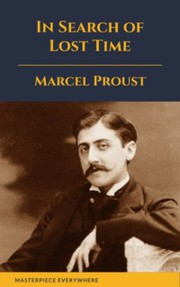
In Search of Lost Time
by Marcel Proust
The essential predecessor — Proust's seven-volume reconstruction of the past through involuntary memory; Knausgård acknowledged Proust as one of the central influences on My Struggle, and both are organized around the same fundamental question: can an entire life become the material for a literary work, and what does it cost to write such a work? The comparison shows the two poles of the autobiographical novel: Proust reconstructing an aristocratic past through memory, Knausgård transcribing a suburban Norwegian present through obsessive contemporaneous attention
- 2
 Buy on Amazon
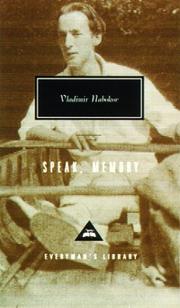
Speak, Memory
by Vladimir Nabokov
Nabokov's autobiographical memoir — the most artistically self-conscious of the major literary autobiographies, organized around the relationship between memory, pattern, and beauty; where Knausgård writes with a radical democratic honesty that refuses to make his life beautiful, Nabokov writes with the conviction that art can and must redeem the past by finding the pattern in it
- 3
 Buy on Amazon
The World of Yesterday
by Stefan Zweig
Zweig's memoir of European culture — the essential companion in the tradition of the autobiography as elegy; where Knausgård mourns a specific father and a specific childhood, Zweig mourns an entire civilization; both are organized around the conviction that what has been lost can be recovered by the precision and honesty of the account
- 4Buy on Amazon
Boyhood
by J.M. Coetzee
The first of Coetzee's autrebiographical trilogy — a third-person autobiographical account of his South African childhood; the most formally interesting parallel to My Struggle in the tradition of the serious literary autobiography; where Knausgård uses the first person with maximum directness, Coetzee uses the third person as a way of maintaining aesthetic distance from autobiographical material
- 5
 Buy on Amazon
The Liars' Club
by Mary Karr
Karr's memoir of her chaotic Texas childhood — the most celebrated American literary memoir of the last thirty years and a direct parallel to My Struggle in the tradition of the memoir organized around a difficult family and an unusual childhood; where Knausgård covers his entire life, Karr focuses on childhood; both are organized around the question of what you owe the truth when writing about people who are still alive
- 6Buy on Amazon
Septology
by Jon Fosse
The essential Norwegian contemporary companion — Fosse's seven-part novel about an elderly painter; the comparison between Knausgård's radical autobiographical directness and Fosse's slow, meditative, anonymizing style shows the two poles of what contemporary Norwegian literary fiction is doing; both are among the most ambitious literary projects in contemporary Scandinavian writing
- 7
 Buy on Amazon
The Remains of the Day
by Kazuo Ishiguro
Ishiguro's novel about a butler's gradual recognition of how his life has been shaped by self-deception — the most important parallel to My Struggle in the tradition of the fiction of retrospective self-examination; where Knausgård's self-examination is direct and contemporaneous, Ishiguro's is indirect and retrospective
- 8Buy on Amazon
Austerlitz
by W.G. Sebald
Sebald's novel about a man recovering a suppressed past — the comparison in the tradition of the serious literary project about the relationship between personal identity and personal history; where Knausgård transcribes his life as he lives it, Sebald excavates a life that has been deliberately suppressed; both are organized around the question of what happens to a person's identity when they lose contact with their own past
More My Struggle Resources
More Reading Recommendations
View all →Monthly Newsletter
Never miss a big release
Get the most anticipated upcoming books delivered to your inbox once a month — no spam, no filler.
Monthly only. Unsubscribe anytime.
Book links are Amazon affiliate links. As an Amazon Associate, BookReleaseRadar earns from qualifying purchases at no extra cost to you.