Recommendations
Books Like Mindset
Best books to read after Mindset by Carol Dweck
Mindset shows that the belief in whether abilities are fixed or growable shapes how people respond to challenge, failure, and feedback — and that this belief is itself changeable. These 8 books extend that insight into neuroscience, motivation, habit formation, and the organizational conditions that support a growth culture.
- 1
 Buy on Amazon
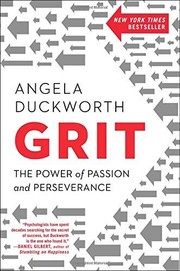
Grit
by Angela Duckworth
Duckworth's 2016 argument about passionate perseverance as the key ingredient in success is the most important companion to Mindset in the popular psychology of achievement: a growth mindset (believing abilities can be developed) is the belief structure that makes grit possible, and grit is the disposition that allows you to actually do the sustained deliberate practice that a growth mindset says will work.
- 2
 Buy on Amazon
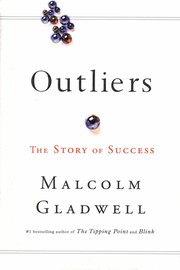
Outliers
by Malcolm Gladwell
Gladwell's 2008 examination of the structural context behind extraordinary success is in productive dialogue with Mindset: where Dweck emphasizes the individual psychological belief that determines whether practice leads to improvement, Gladwell emphasizes the structural opportunities that determine whether practice is available at all — both are necessary for a complete account of how extraordinary performance develops.
- 3
 Buy on Amazon
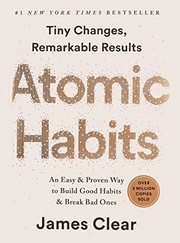
Atomic Habits
by James Clear
Clear's 2018 practical guide to habit formation is the behavioral complement to Mindset's psychological argument: a growth mindset tells you that improvement is possible; Atomic Habits tells you the specific behavioral systems — environment design, habit stacking, the 2-minute rule — that make sustained practice automatic rather than dependent on willpower.
- 4
 Buy on Amazon
Thinking, Fast and Slow
by Daniel Kahneman
Kahneman's 2011 synthesis provides the cognitive framework for understanding how mindset works: a fixed mindset triggers System 1's threat-detection response to challenge and failure (automatic defensive reactions), while a growth mindset allows System 2 to remain engaged with feedback and learning even when the emotional System 1 signals danger.
- 5
 Buy on Amazon
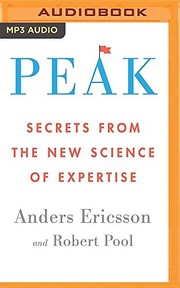
Peak
by Anders Ericsson
Ericsson's 2016 account of deliberate practice is the scientific foundation of Mindset's core claim — that abilities can be developed through effortful practice — and shows specifically what kind of practice produces skill development: not mere repetition but structured, feedback-rich, progressively challenging deliberate practice of the kind that a growth mindset makes psychologically accessible.
- 6
 Buy on Amazon
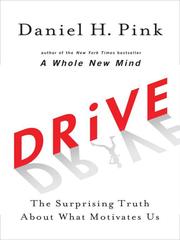
Drive
by Daniel H. Pink
Pink's 2009 argument about human motivation — that autonomy, mastery, and purpose are more powerful motivators than external rewards for most knowledge work — is the motivational complement to Mindset's psychological argument: a growth mindset opens people to the pursuit of mastery (a fundamental human motivator in Pink's framework) by making challenge feel like an opportunity rather than a threat.
- 7
 Buy on Amazon
Range
by David Epstein
Epstein's 2019 argument for broad exploration rather than early specialization complements Mindset by showing the domains in which a growth mindset applied to a narrow specialization may be less effective than the same growth mindset applied across a broader range of learning experiences.
- 8
 Buy on Amazon
The Power of Habit
by Charles Duhigg
Duhigg's 2012 account of the habit loop is the behavioral systems complement to Mindset's psychological argument: a growth mindset is the belief that practice works; The Power of Habit shows how to design the behavioral environments and routines that make sustained practice automatic rather than dependent on the growth mindset's resources.
More Mindset Resources
More Reading Recommendations
View all →Monthly Newsletter
Never miss a big release
Get the most anticipated upcoming books delivered to your inbox once a month — no spam, no filler.
Monthly only. Unsubscribe anytime.
Book links are Amazon affiliate links. As an Amazon Associate, BookReleaseRadar earns from qualifying purchases at no extra cost to you.