Recommendations
Books Like Fatelessness
Best books to read after Fatelessness by Imre Kertész
Imre Kertész's Fatelessness is one of the most formally original Holocaust novels ever written — narrated by a fourteen-year-old in Auschwitz who doesn't know what Auschwitz is, in a prose of deliberate flatness that refuses conventional horror. These recommendations share its engagement with Holocaust literature, its formal innovation, or its portrait of survival and its aftermath.
- 1
 Buy on Amazon
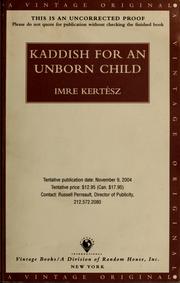
Kaddish for an Unborn Child
by Imre Kertész
The companion novel — the narrator refuses to have a child because he cannot pass on the Holocaust as inheritance, Kertész's most stylistically extreme and personal work.
- 2
 Buy on Amazon
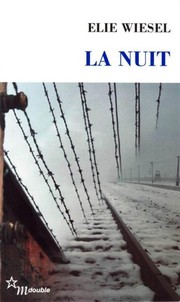
Night
by Elie Wiesel
The foundational survivor testimony — Wiesel in the same camps as Gyuri Köves (Auschwitz, Buchenwald), the conventional emotional witness that contrasts with Kertész's detachment.
- 3
 Buy on Amazon
This Way for the Gas, Ladies and Gentlemen
by Tadeusz Borowski
Borowski's Auschwitz stories — also narrated with disturbing detachment, the other great literary survivor fiction with the same quality of complicity and flatness.
- 4
 Buy on Amazon
The Reader
by Bernhard Schlink
The German postwar generation's reckoning with perpetrators — the complement to Kertész's victim narrative, the same period examined from the other side.
- 5
 Buy on Amazon
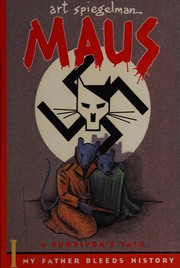
Maus
by Art Spiegelman
The graphic memoir of survival — Spiegelman's father in Auschwitz, the same period as Kertész but in a completely different formal mode that makes the story newly visible.
- 6
 Buy on Amazon
If This Is a Man
by Primo Levi
Levi's account of Auschwitz — the most analytical and the most widely read survivor account, the scientific observer's response to the same catastrophe Kertész narrates.
- 7
 Buy on Amazon
The Painted Bird
by Jerzy Kosiński
A Polish boy moving through rural Central Europe during World War II — the most violent and controversial of the Eastern European Holocaust novels, formally extreme like Kertész.
- 8
 Buy on Amazon
Suite Française
by Irène Némirovsky
Written as the occupation happened and discovered posthumously — the closest thing to witnessing the period without retrospective knowledge, a formal parallel to Kertész's present-tense narration.
More Fatelessness Resources
More Reading Recommendations
View all →Monthly Newsletter
Never miss a big release
Get the most anticipated upcoming books delivered to your inbox once a month — no spam, no filler.
Monthly only. Unsubscribe anytime.
Book links are Amazon affiliate links. As an Amazon Associate, BookReleaseRadar earns from qualifying purchases at no extra cost to you.