Recommendations
Books Like Crime and Punishment
Best books to read after Crime and Punishment by Fyodor Dostoevsky
Dostoevsky's 1866 masterpiece follows Raskolnikov, a student in St. Petersburg, who murders a pawnbroker to test his theory of the exceptional individual — and discovers that he cannot live with what he has done. These recommendations extend the experience through Dostoevsky's other major works, through the Russian literary tradition, and through fiction that shares its preoccupation with the psychology of guilt, the encounter between intellectual pride and spiritual humility, and the question of whether suffering can lead to redemption.
- 1Buy on Amazon
The Brothers Karamazov
by Fyodor Dostoevsky
Dostoevsky's final and greatest novel (1880) — the story of three brothers and the murder of their father, encompassing every major Dostoevskian theme at its fullest development. The Brothers Karamazov is where Crime and Punishment's questions (about guilt, faith, freedom, and the possibility of redemption) find their most complete elaboration; Alyosha Karamazov embodies the answer that Sonya Marmeladova points toward in Crime and Punishment.
- 2Buy on Amazon
The Idiot
by Fyodor Dostoevsky
Dostoevsky's 1869 novel — the attempt to portray a genuinely good man (Prince Myshkin) in a corrupt society. Where Crime and Punishment studies the psychology of guilt in an exceptional mind, The Idiot studies the psychology of goodness in an epileptic Christ-figure who is destroyed by the world that cannot accommodate him. The Idiot is the most emotionally harrowing of the major Dostoevsky novels.
- 3Buy on Amazon
The Possessed
by Fyodor Dostoevsky
Dostoevsky's 1872 novel about political nihilists in a Russian provincial town — the darkest of his major works and the one most directly focused on the relationship between intellectual theories and violence. Where Raskolnikov's theory justifies murder on philosophical grounds, Pyotr Verkhovensky in The Possessed organizes murder on political grounds: both novels study what happens when ideas are taken to their logical conclusions without moral restraint.
- 4Buy on Amazon
Notes from Underground
by Fyodor Dostoevsky
Dostoevsky's 1864 novella — the founding text of literary existentialism: the Underground Man's bitter, self-lacerating monologue about his inability to act and his resentment of those who can. Notes from Underground is the best introduction to the Dostoevskian worldview before Crime and Punishment, and Raskolnikov's theory of the exceptional individual is the logical next step from the Underground Man's bitter consciousness of his own inadequacy.
- 5Buy on Amazon
Anna Karenina
by Leo Tolstoy
The great Russian companion: Tolstoy and Dostoevsky were the two giants of the Russian literary tradition, and reading them together reveals the full range of what the Russian novel could do. Where Dostoevsky compresses his investigation of consciousness and guilt into intense psychological drama, Tolstoy expands his across the full social and historical world of Russian life. Anna Karenina is the most accessible entry into Tolstoy's work for readers coming from Dostoevsky.
- 6
 Buy on Amazon
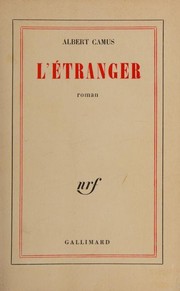
The Stranger
by Albert Camus
Camus's 1942 novel — Meursault's murder of an Arab and his subsequent trial — is the twentieth-century philosophical companion to Crime and Punishment: both novels use a murder as the occasion for investigating what moral responsibility and guilt actually mean. Where Raskolnikov claims exceptionality and is destroyed by guilt, Meursault denies guilt entirely and is destroyed by a society that demands he perform it. Both novels raise the question of whether the society that judges killers is morally superior to them.
- 7
 Buy on Amazon
The Trial
by Franz Kafka
Kafka's 1925 novel — Josef K., arrested without being told his crime, prosecuted by a Court he cannot understand or appeal to — is the twentieth-century companion in the tradition of the novel about guilt and judgment. Where Crime and Punishment studies guilt that the protagonist actually bears, The Trial studies guilt that is imposed on someone who cannot identify its source — and both novels make guilt the condition of consciousness itself, not merely a response to a specific act.
- 8
 Buy on Amazon
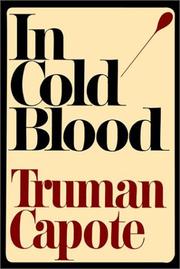
In Cold Blood
by Truman Capote
Capote's 1966 non-fiction companion — the investigation of the murder of the Clutter family and the psychology of the two killers — is the twentieth-century factual equivalent of what Crime and Punishment does fictionally: a sustained, detailed portrait of the minds that commit murder and the social world that surrounds and judges them. Capote's sympathy for Perry Smith, the more sensitive of the two killers, parallels Dostoevsky's sympathy for Raskolnikov.
More Crime and Punishment Resources
More Reading Recommendations
View all →Monthly Newsletter
Never miss a big release
Get the most anticipated upcoming books delivered to your inbox once a month — no spam, no filler.
Monthly only. Unsubscribe anytime.
Book links are Amazon affiliate links. As an Amazon Associate, BookReleaseRadar earns from qualifying purchases at no extra cost to you.