Recommendations
Books Like Valentine
Best books to read after Valentine by George Sand
Readers drawn to Valentine's analysis of class barriers, its portrait of the Berry aristocratic world, and Sand's democratic sympathy for the peasant community will find Indiana as its companion and the tradition of French Romantic fiction about love destroyed by social machinery.
- 1
 Buy on Amazon
Indiana
by George Sand
The companion Sand novel published the same year — Indiana (1832) and Valentine (1832) are the founding pair of Sand's early feminist fiction; both center on an aristocratic woman in a loveless Restoration marriage who falls in love with a man her position forbids; reading them together shows Sand working out two versions of the same fundamental analysis of how social institutions destroy authentic feeling.
- 2
 Buy on Amazon
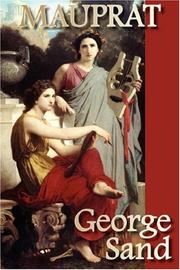
Mauprat
by George Sand
The companion Sand novel that develops Valentine's theme of social education through love — where Valentine is about a woman destroyed by class barriers despite her genuine love, Mauprat is about a man transformed by a principled woman's love despite his brutal upbringing; the two novels together show Sand's range in analyzing the relationship between social formation and authentic feeling.
- 3
 Buy on Amazon
La Mare au Diable
by George Sand
The companion pastoral novel that returns to the Berry world of Valentine fifteen years later — where Valentine looks at the Berry social world from the perspective of the aristocratic estate and its crisis, La Mare au Diable looks at it from the perspective of the peasant community itself; the two novels together give the complete social picture of the Berry world Sand knew from childhood.
- 4
 Buy on Amazon
La Nouvelle Héloïse
by Jean-Jacques Rousseau
The eighteenth-century companion in the tradition of class-crossed love — Rousseau's 1761 epistolary novel about a tutor who falls in love with his noble student is the precursor to Sand's treatment of the same theme; where Rousseau uses the scenario to argue for virtue and renunciation, Sand uses it to argue against the social institutions that make renunciation necessary.
- 5
 Buy on Amazon
Wuthering Heights
by Emily Brontë
The English companion in the tradition of the love that social position destroys — Heathcliff and Catherine are separated by class just as Bénédict and Valentine are; but where Sand's analysis is social and optimistic (the peasant's love is as noble as the aristocrat's), Brontë's is psychological and tragic (the class wound shapes the soul into something that cannot love without destroying).
- 6
 Buy on Amazon
Eugénie Grandet
by Honoré de Balzac
The companion Balzac novel set in the same provincial French world as Valentine — Balzac's 1833 novel about a merchant's daughter destroyed by her father's avarice and her own fidelity is the most precise French Realist parallel to Sand's Romantic portrait of provincial female constraint; both novels document how the French provincial property system traps women.
- 7
 Buy on Amazon
Tess of the d'Urbervilles
by Thomas Hardy
The English companion in the tradition of the woman destroyed by class and sexual politics — Hardy's 1891 novel about a rural woman's destruction by the class system that awards moral judgment to those with property follows the same fundamental argument as Valentine about the social machinery that punishes the poor for being poor.
- 8
 Buy on Amazon
Lélia
by George Sand
The companion Sand novel that represents the philosophical extreme of what Valentine documents socially — while Valentine shows concretely how social institutions destroy a specific love in a specific Berry community, Lélia asks what happens to the woman who faces this destruction without the consolation of any specific social setting; the two novels together give the range of Sand's early feminist analysis.
More Valentine Resources
More Reading Recommendations
View all →Monthly Newsletter
Never miss a big release
Get the most anticipated upcoming books delivered to your inbox once a month — no spam, no filler.
Monthly only. Unsubscribe anytime.
Book links are Amazon affiliate links. As an Amazon Associate, BookReleaseRadar earns from qualifying purchases at no extra cost to you.