Recommendations
Books Like Thinking, Fast and Slow
Best books to read after Thinking, Fast and Slow by Daniel Kahneman
Thinking, Fast and Slow is the master reference for cognitive biases — the systematic errors in human judgment that affect everything from medical diagnosis to investment decisions to moral reasoning. These 8 books extend its insights into specific domains or provide complementary accounts of how minds and systems fail.
- 1
 Buy on Amazon
The Righteous Mind
by Jonathan Haidt
Haidt's 2012 social psychology of moral and political judgment builds directly on Kahneman's System 1/System 2 framework — arguing that moral reasoning is primarily a post-hoc rationalization of moral intuitions (System 1) rather than a deliberate reasoning process (System 2), and that this explains why people hold moral beliefs with conviction while being unable to give adequate reasons for them.
- 2
 Buy on Amazon
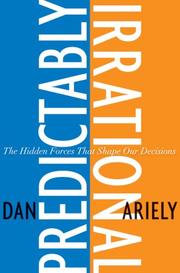
Predictably Irrational
by Dan Ariely
Ariely's 2008 behavioral economics bestseller is the most popular companion to Thinking, Fast and Slow in the genre of popular cognitive science: organized around a series of experiments demonstrating specific and surprising ways that human decision-making departs from the rational-actor model of economics, with the same sense of delight at counterintuitive findings.
- 3
 Buy on Amazon
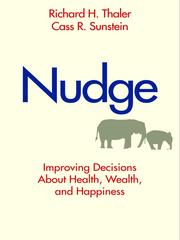
Nudge
by Richard H. Thaler
Thaler and Sunstein's 2008 argument for 'libertarian paternalism' — the idea that the choice architectures we design can nudge people toward better decisions without restricting their freedom — is the policy application of the cognitive science in Thinking, Fast and Slow, showing what it looks like to design systems that account for System 1's biases rather than assuming System 2 rationality.
- 4
 Buy on Amazon
The Black Swan
by Nassim Nicholas Taleb
Taleb's 2007 argument about the outsized role of rare, unpredictable events in history is one of the most important companions to Thinking, Fast and Slow in the literature of human prediction failure: Taleb focuses specifically on the narrative fallacy and the availability heuristic as applied to financial and historical forecasting, and his critique of overconfident experts is a direct extension of Kahneman's research on overconfidence.
- 5
 Buy on Amazon
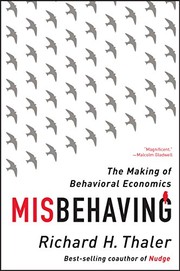
Misbehaving
by Richard H. Thaler
Thaler's 2015 memoir of the history of behavioral economics — from his early battles with the rational-actor orthodoxy in economics to his Nobel Prize in 2017 — is the history of the field that Thinking, Fast and Slow popularizes, told by one of its founders, and provides essential context for understanding how Kahneman and Tversky's psychological research became the foundation of a new economics.
- 6
 Buy on Amazon
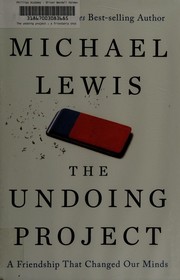
The Undoing Project
by Michael Lewis
Lewis's 2016 account of the intellectual and personal partnership between Daniel Kahneman and Amos Tversky — the two psychologists whose collaboration produced the heuristics and biases research program that is the foundation of Thinking, Fast and Slow — is the human story behind the science, and reading it alongside Thinking, Fast and Slow gives the emotional context that the research book necessarily omits.
- 7
 Buy on Amazon
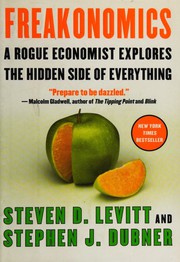
Freakonomics
by Steven D. Levitt
Levitt and Dubner's 2005 popular economics bestseller applies economic thinking and data analysis to counterintuitive questions — why drug dealers live with their mothers, whether legalized abortion reduced crime, what makes a good parent — and shares Thinking, Fast and Slow's quality of using rigorous empirical methods to overturn confident intuitions.
- 8
 Buy on Amazon
Strangers in Their Own Land
by Arlie Russell Hochschild
Hochschild's 2016 political ethnography provides the real-world test case for Thinking, Fast and Slow's framework: the 'deep story' she identifies — the emotional narrative that drives Tea Party politics — is a System 1 phenomenon, and the question of why logical arguments don't change it is exactly the problem that Kahneman's research illuminates.
More Thinking, Fast and Slow Resources
More Reading Recommendations
View all →Monthly Newsletter
Never miss a big release
Get the most anticipated upcoming books delivered to your inbox once a month — no spam, no filler.
Monthly only. Unsubscribe anytime.
Book links are Amazon affiliate links. As an Amazon Associate, BookReleaseRadar earns from qualifying purchases at no extra cost to you.