Recommendations
Books Like The Waves
Best books to read after The Waves by Virginia Woolf
Woolf's 1931 most formally ambitious novel — six characters speaking their inner lives through monologues from childhood to old age, separated by prose-poem interludes describing a day passing from dawn to dusk — is the most experimental major work in English modernism. These recommendations extend the experience through Woolf's other novels, through modernist fiction that shares its formal ambition, and through fiction that investigates consciousness, time, and the dissolution of individual identity with comparable depth.
- 1
 Buy on Amazon
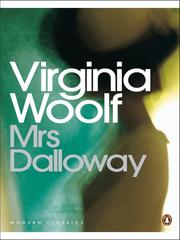
Mrs Dalloway
by Virginia Woolf
The most recommended entry point into Woolf if The Waves is your first — a single London day in the mind of Clarissa Dalloway preparing for a party, intercut with Septimus Warren Smith's shellshock and suicide. Mrs Dalloway is more narrative and more immediately accessible than The Waves while sharing its stream-of-consciousness method and its central preoccupations (the passage of time, the nature of social performance, the persistence of the past in the present). If The Waves was your first Woolf, Mrs Dalloway is the best companion.
- 2
 Buy on Amazon
To the Lighthouse
by Virginia Woolf
Woolf's 1927 masterpiece and the closest companion to The Waves in her work — the Ramsay family at their summer house on the Isle of Skye across two visits separated by a decade. To the Lighthouse is the middle ground between the relative narrative accessibility of Mrs Dalloway and the pure formalism of The Waves: its central image (the lighthouse that cannot be reached until the second part, when Mrs. Ramsay is dead) makes it the most emotionally resonant of Woolf's three major novels for most readers.
- 3
 Buy on Amazon
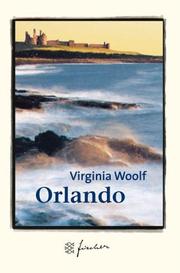
Orlando
by Virginia Woolf
Woolf's 1928 playful companion — Orlando's three-hundred-year life and gender transformation — shows the other face of what Woolf could do: where The Waves is austere and formally radical, Orlando is joyful and narratively propulsive. Reading them together shows the full range of Woolf's art. Orlando is also the ideal entry into Woolf for readers who find The Waves too demanding.
- 4
 Buy on Amazon
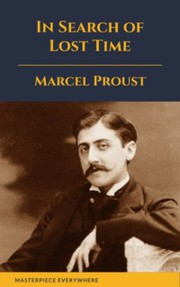
In Search of Lost Time
by Marcel Proust
Proust's 1913–1927 seven-volume masterpiece is The Waves's closest companion in ambition and subject: both are sustained investigations of the relationship between time, memory, and consciousness, both use formal experiment to render what conventional narrative cannot approach, and both are structured by the conviction that the truest record of a life is the consciousness of time passing rather than the events that time contains. The Waves compresses into one volume what Proust expands into seven.
- 5
 Buy on Amazon
Ulysses
by James Joyce
Joyce's 1922 companion in formal ambition and the investigation of consciousness — Leopold Bloom's and Stephen Dedalus's single day in Dublin, rendered through an astonishing variety of experimental techniques. Ulysses and The Waves are the two supreme achievements of modernist fiction's exploration of what the novel can do when it abandons conventional narrative to pursue consciousness directly. Joyce's approach is encyclopedic, comic, and allusive; Woolf's is lyrical, elegiac, and concentrated — but both are responding to the same discovery: that the interesting thing is not what happens but what it feels like from the inside.
- 6
 Buy on Amazon
The Sound and the Fury
by William Faulkner
Faulkner's 1929 companion in the international tradition of the modernist experiment in rendering consciousness — the Compson family's decline told through four radically different points of view (including the idiot Benjy's stream of consciousness in the first section). Faulkner was directly influenced by Woolf, and The Sound and the Fury's investigation of how different consciousnesses inhabit the same reality is the American companion to The Waves's English investigation of the same question.
- 7
 Buy on Amazon
The Death of the Heart
by Elizabeth Bowen
Bowen's 1938 companion in the English literary tradition that Woolf dominated — the story of sixteen-year-old Portia Quayne's stay with her step-brother Thomas and his wife Anna in London, and the devastating effect of adults' managed emotions on her unprotected feeling. Bowen is the English novelist most directly in Woolf's tradition — her prose has Woolf's sensitivity to consciousness and the texture of social performance — and The Death of the Heart is her most Woolfian and most emotionally direct novel.
- 8
 Buy on Amazon
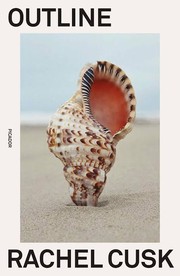
Outline
by Rachel Cusk
Cusk's 2014 novel — a series of conversations the narrator has with strangers on a trip to Greece to teach a writing course — is the contemporary heir to Woolf's investigation of consciousness and self in literary form. Where Woolf uses the stream-of-consciousness monologue to render inner life directly, Cusk uses conversation — the narrator barely speaks; what we learn about her comes through what others tell her about themselves — to render identity as something that exists in relation rather than in isolation. The Outline trilogy is the most significant contemporary response to what Woolf's formal experiments made possible.
More The Waves Resources
More Reading Recommendations
View all →Monthly Newsletter
Never miss a big release
Get the most anticipated upcoming books delivered to your inbox once a month — no spam, no filler.
Monthly only. Unsubscribe anytime.
Book links are Amazon affiliate links. As an Amazon Associate, BookReleaseRadar earns from qualifying purchases at no extra cost to you.