Recommendations
Books Like The Tin Drum
Best books to read after The Tin Drum by Günter Grass
Grass's 1959 Nobel Prize-winning novel — Oskar Matzerath, who decides at age three to stop growing and narrates from a mental institution his experiences in Danzig across the rise of Nazism — is the founding text of postwar German literature. These recommendations extend the experience through Grass's other work, through European novels that use similarly distorted perspectives to confront historical catastrophe, and through fiction that engages with Nazism, the Second World War, and German guilt with comparable honesty and formal ambition.
- 1
 Buy on Amazon
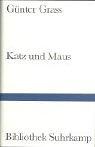
Cat and Mouse
by Günter Grass
The second part of Grass's Danzig Trilogy (1961, a short novel) — the story of Joachim Mahlke, a Danzig teenager whose enormous Adam's apple marks him as different, and his obsessive pursuit of the Knight's Cross. Cat and Mouse is shorter and more concentrated than The Tin Drum but shares its setting (wartime Danzig), its distorted perspective on the Nazi period, and its investigation of the masculine codes of honor and heroism that the Nazi system exalted and perverted.
- 2
 Buy on Amazon
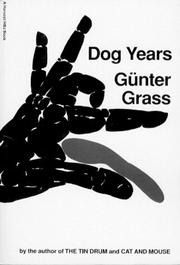
Dog Years
by Günter Grass
The third part of the Danzig Trilogy (1963) — the most politically comprehensive of the three, tracing the careers of two childhood friends (one German, one Jewish) from prewar Danzig through the Nazi period and into the postwar Federal Republic. Dog Years is Grass's most direct engagement with German collective guilt and the failure of denazification; reading the complete Danzig Trilogy gives the fullest picture of what Grass achieved in his confrontation with the German past.
- 3
 Buy on Amazon
The Radetzky March
by Joseph Roth
Roth's 1932 companion — three generations of the Trotta family across the decline and fall of the Austro-Hungarian Empire — is the Central European predecessor to the Danzig Trilogy: the same elegiac portrait of a world that has already ceased to exist by the time it is described, the same sense of a specific geographic world (the borderlands of the old Empire, the Free City of Danzig) whose destruction by history the novel is mourning. The Radetzky March is the Habsburg predecessor to The Tin Drum's Danzig world.
- 4Buy on Amazon
Austerlitz
by W.G. Sebald
Sebald's 2001 companion in the German tradition of fiction that confronts the Holocaust and its aftermath — Jacques Austerlitz's discovery in middle age that he is a Jewish refugee from Prague whose parents were murdered in the camps. Austerlitz and The Tin Drum are companion studies in how German fiction approaches the Nazi period: where Grass uses satirical energy and grotesque comedy to make the horror legible, Sebald uses melancholy accumulation and documentary precision to render what was lost.
- 5
 Buy on Amazon
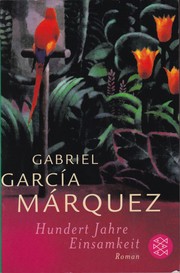
One Hundred Years of Solitude
by Gabriel García Márquez
García Márquez's 1967 masterpiece is the closest international equivalent to The Tin Drum in formal ambition and magical-realist approach to historical catastrophe: where Grass uses Oskar's glass-shattering shriek and refusal to grow as magical elements in an otherwise realistic historical setting, García Márquez saturates his entire novel with magic. Both are using the distorting lens of the fantastic to make their historical material (the destruction of a community by external forces) emotionally comprehensible.
- 6
 Buy on Amazon
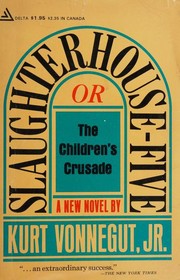
Slaughterhouse-Five
by Kurt Vonnegut
Vonnegut's 1969 American companion in the tradition of the anti-war novel that uses black comedy and formal experiment to confront what realistic fiction cannot approach directly — in Vonnegut's case, the Allied firebombing of Dresden. Both Slaughterhouse-Five and The Tin Drum use unreliable, distorted narrators (Billy Pilgrim unstuck in time; Oskar confined in a mental institution) and black comedy to render historical atrocity in a way that neither celebrates nor pretends to mourn it adequately.
- 7
 Buy on Amazon
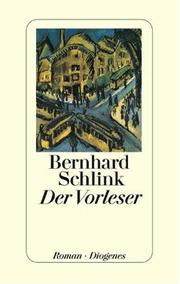
The Reader
by Bernhard Schlink
Schlink's 1995 German companion — Michael Berg's love affair with Hanna Schmitz (a former SS guard) and his adult reckoning with what she was — is the later German novel about guilt and complicity that The Tin Drum helped make possible. Where Grass uses Oskar's perspective to show how ordinary German life participated in Nazism, Schlink uses a love story to show how the postwar generation processes the guilt it inherited from the perpetrator generation. The Reader is slimmer and more directly emotional; The Tin Drum is vaster and more formally inventive.
- 8
 Buy on Amazon
Pedro Páramo
by Juan Rulfo
Rulfo's 1955 companion in the tradition of the formally experimental novel that uses dead voices and fragmented structure to reconstruct the history of a community destroyed by power. Pedro Páramo and The Tin Drum are companion studies from the same decade (1955/1959) in what the novel can do when it abandons conventional realism to approach historical catastrophe: Rulfo through the ghost voices of a Mexican village, Grass through the picaresque adventures of a child who refused to grow up.
More The Tin Drum Resources
More Reading Recommendations
View all →Monthly Newsletter
Never miss a big release
Get the most anticipated upcoming books delivered to your inbox once a month — no spam, no filler.
Monthly only. Unsubscribe anytime.
Book links are Amazon affiliate links. As an Amazon Associate, BookReleaseRadar earns from qualifying purchases at no extra cost to you.