Recommendations
Books Like The Seagull
Best books to read after The Seagull by Anton Chekhov
Chekhov's 1896 breakthrough play — Konstantin, Arkadina, Trigorin, and Nina beside an estate lake — is the work in which Chekhov first found his mature theatrical method: the ensemble of characters who speak past each other, the comedy that is simultaneously tragedy, the central image (the seagull) that gathers the play's argument about beauty, destruction, and the capriciousness of desire. These recommendations extend the experience through Chekhov's major plays, through the European theatrical tradition that The Seagull transformed, and through fiction that investigates artistic ambition and the relationship between art and life.
- 1Buy on Amazon
Three Sisters
by Anton Chekhov
The masterwork that follows The Seagull — the Prozorov sisters' impossible dream of Moscow. Three Sisters extends and deepens the method first developed in The Seagull: the same ensemble of characters whose desires are mutually incongruent, the same gap between what is said and what is felt, the same comedy that is simultaneously elegy — but now with the greater assurance of a mature master.
- 2Buy on Amazon
The Cherry Orchard
by Anton Chekhov
Chekhov's final play and the fullest expression of his mature method — the cherry orchard that cannot be saved. The Cherry Orchard is the culmination of the theatrical development that The Seagull began, and reading the two plays in order shows the arc of Chekhov's development from the relatively conventional dramaturgy of his early career to the pure atmosphere of his final masterwork.
- 3Buy on Amazon
Uncle Vanya
by Anton Chekhov
The companion in the tradition of wasted lives and missed opportunities — Vanya's recognition that his life has been given to the wrong cause. Uncle Vanya and The Seagull are companion investigations of the same question: what do exceptional people (Vanya, Konstantin, Nina) do in a world that has no adequate use for them? Both plays answer: they destroy themselves, or are destroyed, in the gap between their capacities and their circumstances.
- 4
 Buy on Amazon
Hedda Gabler
by Henrik Ibsen
The Norwegian companion — the extraordinary woman trapped by convention and by the narrowness of the social world. Both The Seagull and Hedda Gabler are investigations of what extraordinary people do with their exceptional capacities when the social world offers them no adequate outlet, and both end with the destruction of the most talented or exceptional character — Nina's ruination, Hedda's suicide — as the consequence of a failure of imagination in the world around them.
- 5
 Buy on Amazon
The Wild Duck
by Henrik Ibsen
The direct precursor — the play in which Ibsen used the wild duck as a central symbol in much the way Chekhov would use the seagull: an animal that has been wounded and domesticated, that becomes the emblem of the most vulnerable character's fate. The connection is explicit: Chekhov read Ibsen carefully, and the seagull that Konstantin shoots and that Trigorin identifies as a 'subject for a short story' is a conscious reworking of Ibsen's wild duck.
- 6Buy on Amazon
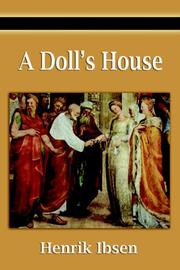
A Doll's House
by Henrik Ibsen
The most important precursor in the European theatrical tradition — Nora Helmer's recognition that she has been a doll in her husband's house. Both The Seagull and A Doll's House are organized around a woman's recognition of the structure that has constrained her (Nina's recognition that Trigorin's desire has destroyed her; Nora's recognition of her marriage), but where Nora slams the door and leaves, Nina stays and endures — the difference between Ibsen's moral optimism and Chekhov's compassionate melancholy.
- 7
 Buy on Amazon
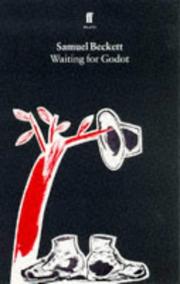
Waiting for Godot
by Samuel Beckett
The most direct inheritor of Chekhov's formal method in theater — Vladimir and Estragon waiting for Godot, the language that fills the gap of unfulfilled desire. Beckett acknowledged his debt to Chekhov, and the formal principle he inherited from The Seagull — that a play can be organized around waiting rather than action, around what doesn't happen rather than what does — is the foundation of Waiting for Godot.
- 8
 Buy on Amazon
Miss Julie
by August Strindberg
Strindberg's 1888 companion — the one-act play about class, desire, and the seduction of the aristocratic Julie by the valet Jean on Midsummer's Eve. The Seagull and Miss Julie are contemporary works (1888 and 1896) that represent the two poles of late nineteenth-century European naturalistic theater: Strindberg's brutal directness and Chekhov's oblique tenderness. Both investigate the relationship between desire and social structure, but where Strindberg's characters are destroyed by the collision, Chekhov's endure it.
More The Seagull Resources
More Reading Recommendations
View all →Monthly Newsletter
Never miss a big release
Get the most anticipated upcoming books delivered to your inbox once a month — no spam, no filler.
Monthly only. Unsubscribe anytime.
Book links are Amazon affiliate links. As an Amazon Associate, BookReleaseRadar earns from qualifying purchases at no extra cost to you.