Recommendations
Books Like The Righteous Mind
Best books to read after The Righteous Mind by Jonathan Haidt
The Righteous Mind gives you a framework for understanding why moral and political disagreement is so intractable: people are not arguing about facts but about which moral foundations to weight. These 8 books extend that framework into history, anthropology, political science, and applied ethics.
- 1
 Buy on Amazon
Strangers in Their Own Land
by Arlie Russell Hochschild
Hochschild's 2016 sociological portrait of Tea Party members in Louisiana provides the empirical flesh on the bones of Haidt's moral foundations theory: the 'deep story' that Hochschild identifies — the emotional narrative about fairness and line-cutting that drives Tea Party resentment — is a precise illustration of the loyalty, authority, and sanctity foundations that The Righteous Mind argues conservatives weight more heavily than liberals.
- 2
 Buy on Amazon
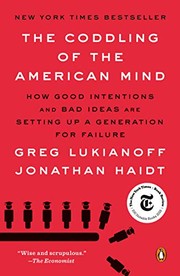
The Coddling of the American Mind
by Jonathan Haidt
Haidt's 2018 follow-up (co-authored with Greg Lukianoff) applies the moral psychology of The Righteous Mind to the campus free-speech debates, arguing that three 'Great Untruths' — that fragility is weakness, that emotional reasoning is reliable, and that the world is a battle between good and evil people — are harming a generation of students and poisoning political discourse.
- 3
 Buy on Amazon
The Better Angels of Our Nature
by Steven Pinker
Pinker's 2011 argument that violence has declined across human history — and that the Enlightenment values of reason, science, humanism, and liberty are responsible — is the most important book in the rationalist tradition that The Righteous Mind is in dialogue with: both books take seriously the idea that we can study human moral psychology scientifically and draw practical conclusions from what we find.
- 4
 Buy on Amazon
Thinking, Fast and Slow
by Daniel Kahneman
Kahneman's 2011 synthesis of decades of cognitive psychology research — distinguishing between System 1 (fast, intuitive, emotional) and System 2 (slow, deliberate, rational) thinking — is the most important companion to The Righteous Mind in the cognitive science of how people make moral and political judgments, since Haidt's 'social intuitionist model' builds directly on Kahneman's framework.
- 5Buy on Amazon
The Anatomy of Fascism
by Robert Paxton
Paxton's 2004 history of fascism — defining fascism by its emotional mobilizations and behavioral practices rather than its ideological content — provides the historical complement to Haidt's psychological account: understanding how the loyalty, authority, and sanctity foundations can be weaponized by political movements that appeal to them while claiming to protect them.
- 6
 Buy on Amazon
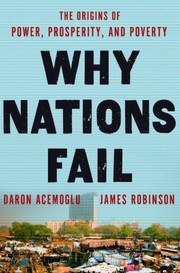
Why Nations Fail
by Daron Acemoğlu
Acemoğlu and Robinson's 2012 argument that nations fail when their political and economic institutions are extractive rather than inclusive provides the political-economy complement to The Righteous Mind's moral psychology: where Haidt explains why people hold the political beliefs they do, Why Nations Fail explains what happens when those beliefs produce particular institutional arrangements.
- 7
 Buy on Amazon
The Nurture Assumption
by Judith Rich Harris
Harris's 1998 argument that peer groups rather than parents are the primary environmental influence on children's development — controversial but empirically well-supported — provides one of the most important background books for understanding the developmental psychology that underlies The Righteous Mind's account of moral formation.
- 8
 Buy on Amazon
How to Be an Antiracist
by Ibram X. Kendi
Reading Kendi's policy-level antiracist framework alongside Haidt's moral foundations theory reveals the central tension in contemporary American political discourse: Kendi's framework emphasizes the care/harm and fairness foundations (racism produces harm, antiracism produces fairness), while Haidt's analysis suggests that conservative resistance to those frameworks is often driven by different moral foundations (loyalty, authority, sanctity) rather than indifference to harm.
More The Righteous Mind Resources
More Reading Recommendations
View all →Monthly Newsletter
Never miss a big release
Get the most anticipated upcoming books delivered to your inbox once a month — no spam, no filler.
Monthly only. Unsubscribe anytime.
Book links are Amazon affiliate links. As an Amazon Associate, BookReleaseRadar earns from qualifying purchases at no extra cost to you.