Recommendations
Books Like The Magic Mountain
Best books to read after The Magic Mountain by Thomas Mann
Mann's 1924 masterpiece — Hans Castorp's seven years in a Swiss sanatorium as the vessel for a vast debate about European civilization — is the great German modernist novel about the intellectual life of the pre-war world and its catastrophic collapse. These recommendations extend the experience through Mann's other work, through European modernist novels that share its philosophical ambition, and through fiction that uses a specific enclosed world to diagnose a larger historical condition.
- 1
 Buy on Amazon
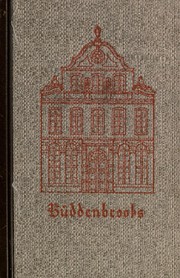
Buddenbrooks
by Thomas Mann
Mann's 1901 debut and the essential prior companion to The Magic Mountain: the four-generation chronicle of a Lübeck merchant family, from commercial height to artistic refinement to extinction. Buddenbrooks establishes the Mann themes that The Magic Mountain develops philosophically: the incompatibility of artistic sensitivity and vital practical engagement, the relationship between beauty and decline, the fate of a bourgeois civilization that refines itself into impotence.
- 2
 Buy on Amazon
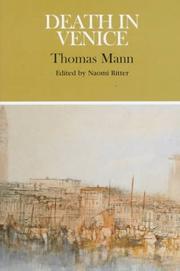
Death in Venice
by Thomas Mann
Mann's 1912 novella and the most concentrated expression of the themes that run through all his work: Gustav von Aschenbach, a famous aging writer, becomes obsessively enchanted by the beautiful boy Tadzio in Venice. Death in Venice is the bridge between Buddenbrooks and The Magic Mountain — the same investigation of the relationship between artistic consciousness, beauty, illness, and death, compressed into 80 pages instead of 700.
- 3
 Buy on Amazon
Doctor Faustus
by Thomas Mann
Mann's 1947 novel — the life of composer Adrian Leverkühn, who sells his soul to the Devil in exchange for twenty-four years of musical genius. Doctor Faustus is Mann's final major novel and his most direct engagement with Germany's political catastrophe (the Second World War, Nazism, the destruction of German cultural civilization). Where The Magic Mountain diagnoses the cultural conditions that made the First World War possible, Doctor Faustus diagnoses the conditions that made the Second World War possible.
- 4Buy on Amazon
The Brothers Karamazov
by Fyodor Dostoevsky
The great Russian companion in philosophical ambition and moral scope — the theological debates between Ivan and Alyosha Karamazov are the closest equivalent in the novel tradition to the ideological debates between Settembrini and Naphta in The Magic Mountain. Both novels use the form of characters arguing to investigate the deepest questions of Western civilization (faith, reason, freedom, death), and both use a specific enclosed world (the sanatorium, the Karamazov household) as the stage for that investigation.
- 5
 Buy on Amazon
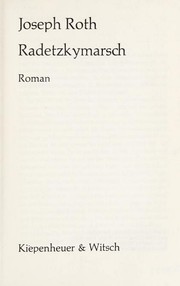
The Radetzky March
by Joseph Roth
Roth's 1932 masterpiece — three generations of the Trotta family across the decline and fall of the Austro-Hungarian Empire. The Radetzky March and The Magic Mountain are companion studies from the same years in the same subject: a European civilization in the process of dying that cannot see its own death coming. Where Mann's novel is philosophical and debates the causes, Roth's is elegiac and mourns the loss with beautiful precision.
- 6
 Buy on Amazon
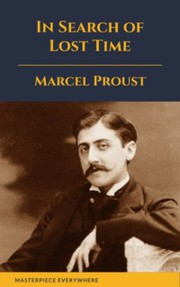
In Search of Lost Time
by Marcel Proust
Proust's 1913–1927 seven-volume masterpiece is the companion in scale and philosophical ambition to The Magic Mountain: both novels use the passage of time, the nature of memory, and the relationship between consciousness and the world to investigate what constitutes a life. Where Mann uses the sanatorium as his enclosed time-dilated world, Proust uses memory itself. Both are the supreme achievements of the European novel at the moment of European civilization's crisis.
- 7Buy on Amazon
Buddenbrooks
by Thomas Mann
Repeated as essential context — see first entry above. Buddenbrooks is the necessary foundation for understanding Mann's development from social realist to philosophical novelist, and the themes of artistic refinement and vital decline that The Magic Mountain elaborates philosophically are first dramatized in the specific story of the Buddenbrook family.
- 8
 Buy on Amazon
The Remains of the Day
by Kazuo Ishiguro
Ishiguro's 1989 companion in the study of a man who devoted himself entirely to a role (professional service / institutional life) that turns out to have been in service of a corrupt master — and who understands too late the personal life he sacrificed. Hans Castorp's years in the sanatorium represent a withdrawal from life into a kind of refined stasis; Stevens's years as a butler represent a withdrawal into professional identity — both are portraits of people who chose the institution over the self.
More The Magic Mountain Resources
More Reading Recommendations
View all →Monthly Newsletter
Never miss a big release
Get the most anticipated upcoming books delivered to your inbox once a month — no spam, no filler.
Monthly only. Unsubscribe anytime.
Book links are Amazon affiliate links. As an Amazon Associate, BookReleaseRadar earns from qualifying purchases at no extra cost to you.