Recommendations
Books Like The Earth (La Terre)
Best books to read after The Earth (La Terre) by Émile Zola
Zola's most shocking Rougon-Macquart novel (1887) follows Jean Macquart among the violent, land-obsessed peasants of the Beauce region as the Fouan family tears itself apart over an inheritance. These recommendations extend the experience through other Rougon-Macquart novels featuring characters from the same family network, through Zola's other major works, and through naturalist and realist fiction that shares its unsparing portrait of rural life and the land as a force that shapes and destroys its people.
- 1
 Buy on Amazon
Germinal
by Émile Zola
The thirteenth Rougon-Macquart novel (1885) and the closest companion to The Earth in moral power and scope: where The Earth studies the peasantry's violent attachment to the land, Germinal studies the mining proletariat's violent resistance to its exploitation. Both novels are Zola at his most ambitious — vast social portraits of a class at the point of breakdown — and together they form the fullest picture of French working-class life in the Second Empire.
- 2
 Buy on Amazon
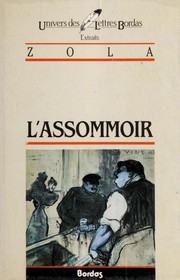
L'Assommoir
by Émile Zola
The seventh Rougon-Macquart novel (1877) and the direct family connection to The Earth: Gervaise Macquart, the protagonist of L'Assommoir, is Jean Macquart's half-sister. Reading L'Assommoir alongside The Earth gives the full Macquart branch of the family — the urban alcoholic destruction of Gervaise alongside the rural peasant violence of Jean's Beauce neighbors — both driven by poverty and the different forms it takes in city and country.
- 3
 Buy on Amazon
Nana
by Émile Zola
The ninth Rougon-Macquart novel (1880): Nana, Gervaise's daughter and Jean Macquart's niece, becomes a famous courtesan whose destructive power over men mirrors the peasants' destructive relationship to the land in The Earth. Both novels are studies of a force — sexual in Nana, territorial in The Earth — that overrides all social, moral, and familial bonds in those it possesses.
- 4
 Buy on Amazon
Tess of the D'Urbervilles
by Thomas Hardy
Hardy's 1891 novel — the closest English equivalent to The Earth's subject: Tess Durbeyfield, a rural laboring woman destroyed by the forces of class, religion, and male exploitation in late Victorian Dorset. Where Zola's peasants are violent and ferocious in their attachment to the land, Hardy's Tess is gentle and destroyed by the world's violence — but both novels are indictments of a rural order that grinds down those who work its soil.
- 5
 Buy on Amazon
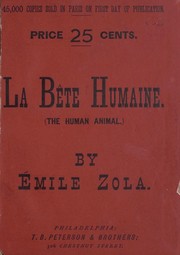
La Bête Humaine
by Émile Zola
The seventeenth Rougon-Macquart novel (1890) — Jean Macquart appears in La Bête Humaine as a secondary character before his central role in The Earth. La Bête Humaine and The Earth are companion studies in Zola's most unsparing naturalism: where The Earth studies agricultural violence driven by land hunger, La Bête Humaine studies railway violence driven by hereditary compulsion — both are portraits of the destructive forces that the Macquart blood unleashes in different environments.
- 6
 Buy on Amazon
Jude the Obscure
by Thomas Hardy
Hardy's 1895 novel — the companion to Tess in its portrait of a rural Englishman destroyed by the social order he cannot access. Jude Fawley, a stone mason who dreams of academic achievement but cannot enter the university world, and Sue Bridehead, the free-thinking woman he loves, are ground down by a society that has no place for the aspirations of rural laborers. Both Hardy and Zola are writing about what happens to those who are born into the land and want more than it offers.
- 7
 Buy on Amazon
Sister Carrie
by Theodore Dreiser
Dreiser's 1900 American companion in the naturalist tradition: Carrie Meeber arrives in Chicago from a small midwestern town and rises through relationships with men who can advance her, while George Hurstwood falls from comfort to ruin. Like Zola, Dreiser is analyzing social forces that drive human beings through indifference to conventional morality — both are working in the tradition of the novel that refuses to punish its characters for following their drives.
- 8
 Buy on Amazon
The Ragged Trousered Philanthropists
by Robert Tressell
Tressell's 1914 English companion in the tradition of the novel about the working poor: Frank Owen, a house painter in the fictional Mugsborough, watches his fellow workers starve while they enthusiastically support the system that exploits them. The Ragged Trousered Philanthropists shares The Earth's refusal to romanticize working-class life and its unflinching portrait of material deprivation — though Tressell's indignation is explicitly socialist where Zola's is more bleakly biological.
More The Earth (La Terre) Resources
More Reading Recommendations
View all →Monthly Newsletter
Never miss a big release
Get the most anticipated upcoming books delivered to your inbox once a month — no spam, no filler.
Monthly only. Unsubscribe anytime.
Book links are Amazon affiliate links. As an Amazon Associate, BookReleaseRadar earns from qualifying purchases at no extra cost to you.