Recommendations
Books Like The Crucible
Best books to read after The Crucible by Arthur Miller
Miller's 1953 most politically enduring play — John Proctor's refusal to sign the false confession that would save his life in the Salem witch trials — is the American play about the individual's resistance to collective pressure and the demand for public capitulation, and has been revived wherever that demand has been most intense. These recommendations extend the experience through Miller's other plays, through the theatrical and literary tradition that investigates political hysteria and the cost of integrity, and through fiction that investigates conformism, scapegoating, and the mechanics of collective accusation.
- 1
 Buy on Amazon
Death of a Salesman
by Arthur Miller
The companion and the play that established Miller's reputation before The Crucible — Willy Loman's terrible final two days. Death of a Salesman and The Crucible are Miller's two major plays: Death of a Salesman is about private self-deception and the American Dream's lie, The Crucible is about public hysteria and the cost of individual integrity. Together they constitute the essential Miller.
- 2
 Buy on Amazon
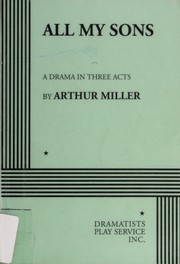
All My Sons
by Arthur Miller
The earlier Miller companion and the most Ibsenian of his plays — Joe Keller's wartime sale of defective airplane parts and the consequences. All My Sons shares The Crucible's investigation of what an individual owes to the community (Joe Keller's responsibility; John Proctor's responsibility) and both are organized around a man's attempt to escape the consequences of a past crime that eventually catches up with him.
- 3
 Buy on Amazon
1984
by George Orwell
Orwell's 1949 companion in the tradition of the work about the individual's resistance to the demand for public capitulation — Winston Smith's attempt to maintain his individual consciousness against the Party's demand for total submission. 1984 and The Crucible are companion investigations of the same social process: the demand that the individual publicly confess and name others, the rewards for compliance, and the destruction awaiting those who refuse.
- 4
 Buy on Amazon
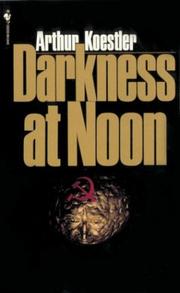
Darkness at Noon
by Arthur Koestler
Koestler's 1940 companion — Rubashov's interrogation during the Stalinist show trials and his gradual capitulation to the Party's demand for a confession. Darkness at Noon and The Crucible are companion investigations of the same political situation (the demand that the individual publicly confess to crimes they did not commit) from different angles: Koestler from inside the Communist system, Miller from the Salem trials, both in response to 1950s political pressure.
- 5
 Buy on Amazon
The Trial
by Franz Kafka
Kafka's prose companion in the tradition of the protagonist subjected to an incomprehensible legal process — Josef K.'s arrest and trial for an unspecified crime. The Trial and The Crucible share the same formal situation: a protagonist who is accused without understanding the charge, whose attempts to defend himself are interpreted as evidence of guilt, and whose only escape from the process is a confession that would itself be a lie.
- 6
 Buy on Amazon
Rhinoceros
by Eugène Ionesco
Ionesco's 1959 companion in the Theater of the Absurd — the inhabitants of a town turning into rhinoceroses while Bérenger remains the last human being. Rhinoceros and The Crucible are companion investigations of the same social process: how individuals are absorbed into collective hysteria, how the process appears benign or even obligatory from the inside, and what it costs the last holdout to resist. Ionesco's rhinoceroses are Ionesco's Iron Guard; Miller's witch accusers are Miller's HUAC.
- 7
 Buy on Amazon
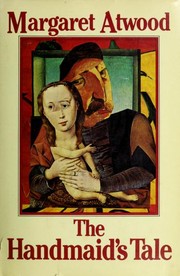
The Handmaid's Tale
by Margaret Atwood
Atwood's 1985 companion in the tradition of the dystopian work about theocratic social control — Offred's life in the Republic of Gilead. The Handmaid's Tale and The Crucible are companion investigations of theocracy: both show a society that uses religious authority to control sexuality and extract public confession, both are organized around a woman's resistance to the system's demands, and both ask what it costs to maintain individual integrity in a theocratic state.
- 8
 Buy on Amazon
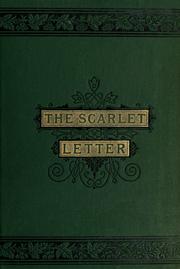
The Scarlet Letter
by Nathaniel Hawthorne
Hawthorne's 1850 companion in the American literary tradition that investigates Puritan New England and its use of public shame and confession as social control — Hester Prynne's adultery, Dimmesdale's concealed guilt. The Scarlet Letter and The Crucible are companion investigations of the Puritan world's use of sexual accusation and public confession as mechanisms of social control, and both are about the gap between private integrity and the demands of the public religious community.
More The Crucible Resources
More Reading Recommendations
View all →Monthly Newsletter
Never miss a big release
Get the most anticipated upcoming books delivered to your inbox once a month — no spam, no filler.
Monthly only. Unsubscribe anytime.
Book links are Amazon affiliate links. As an Amazon Associate, BookReleaseRadar earns from qualifying purchases at no extra cost to you.