Recommendations
Books Like The Castle
Best books to read after The Castle by Franz Kafka
Kafka's unfinished 1926 novel — K., a land surveyor who arrives in a village where a Castle governs everything and can never obtain access to its authorities or confirmation of his appointment — is Kafka's most metaphysically ambitious work. These recommendations extend the experience through Kafka's other major works, through the existentialist tradition that inherits his concerns, and through fiction that shares its investigation of bureaucracy, belonging, and the impossibility of reaching the authority one seeks.
- 1
 Buy on Amazon
The Trial
by Franz Kafka
The essential companion — Josef K., arrested without being told his crime, prosecuted by a Court he cannot understand or appeal to. The Trial and The Castle are Kafka's two major novels and are best read together: The Trial is about guilt and judgment (you are guilty of something, you just don't know what), while The Castle is about recognition and belonging (you are perhaps invited, you just can't confirm it). Both are Kafka at his fullest and most sustained, and both illuminate each other through contrast.
- 2
 Buy on Amazon
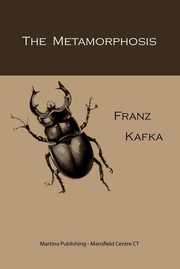
The Metamorphosis
by Franz Kafka
The most accessible entry into Kafka's world — Gregor Samsa's transformation into vermin and the domestic consequences. The Metamorphosis is the ideal introduction before The Castle: where The Castle sustains the Kafkaesque situation across a long novel of permanent deferral, The Metamorphosis compresses it into a single, devastating story. Both share the fundamental Kafka situation: a protagonist whose claims on the social world are not recognized, and whose attempts to restore his status are entirely ineffective.
- 3
 Buy on Amazon
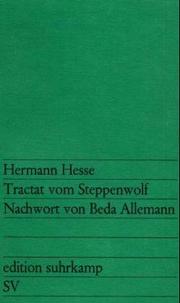
Steppenwolf
by Hermann Hesse
Hesse's 1927 German companion in the tradition of the novel about the outsider intellectual unable to find his place — Harry Haller's experience of himself as half-man, half-wolf, unable to achieve a social existence adequate to his nature. Where K. in The Castle cannot achieve social belonging because a bureaucratic authority withholds it, Harry Haller cannot achieve social belonging because his own nature refuses it — both are outsiders, but for different structural reasons.
- 4
 Buy on Amazon
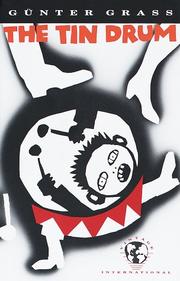
The Tin Drum
by Günter Grass
Grass's 1959 companion in the German tradition of the novel that uses a distorted perspective (the man who refuses to grow up, the land surveyor who can never reach the Castle) to expose the irrationality of historical and social reality. Both The Castle and The Tin Drum use a protagonist whose social position is deliberately ambiguous — K. cannot confirm his appointment; Oskar cannot be assigned adult moral responsibility — to investigate the systems that claim authority over ordinary life.
- 5
 Buy on Amazon
Nausea
by Jean-Paul Sartre
Sartre's 1938 existentialist companion — Antoine Roquentin's experience of the world's brute contingency, its refusal to yield meaning. The Castle and Nausea are companion explorations of the same philosophical condition from different directions: Roquentin's Nausea comes from the discovery that things exist without given meaning; K.'s situation comes from the discovery that the institutional world offers meaning (the Castle appointment) that cannot be confirmed. Both are about the gap between the human desire for significance and the world's indifference to that desire.
- 6
 Buy on Amazon
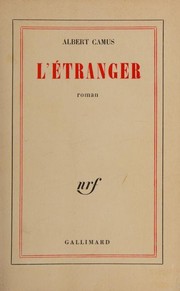
The Stranger
by Albert Camus
Camus's 1942 companion in the existentialist tradition — Meursault's murder and trial. Camus explicitly identified Kafka as a precursor to his own absurdist project, and The Castle is the Kafka work that most directly embodies the absurd as Camus defined it: the confrontation between human desire for clarity and the world's silence. Where Meursault's trial gives him a judgment (however unjust), K.'s situation gives him neither judgment nor release — just permanent, irreducible uncertainty.
- 7
 Buy on Amazon
The Remains of the Day
by Kazuo Ishiguro
Ishiguro's 1989 companion in the tradition of the novel about a life organized around service to an institution that turns out to be unworthy of the devotion given to it. Stevens the butler is K.'s inverse: where K. cannot achieve the institutional recognition he seeks, Stevens achieves it completely — and discovers that the institution (Lord Darlington's household, Lord Darlington's politics) was not what he believed it to be. Both novels ask what it means to organize your life around access to an authority you cannot fully know.
- 8
 Buy on Amazon
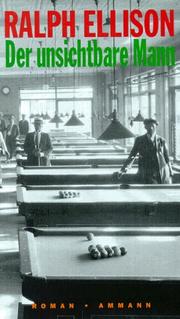
Invisible Man
by Ralph Ellison
Ellison's 1952 companion in the tradition of the novel about social invisibility — the unnamed Black narrator's experience of being made invisible by a white American society that cannot perceive him. The Castle and Invisible Man are both novels about the impossibility of achieving recognition from institutional authorities that refuse to see you as you are — K. because the Castle's bureaucracy doesn't care about his specific claims, Ellison's narrator because a racist society projects a different identity onto him than the one he has.
More The Castle Resources
More Reading Recommendations
View all →Monthly Newsletter
Never miss a big release
Get the most anticipated upcoming books delivered to your inbox once a month — no spam, no filler.
Monthly only. Unsubscribe anytime.
Book links are Amazon affiliate links. As an Amazon Associate, BookReleaseRadar earns from qualifying purchases at no extra cost to you.