Recommendations
Books Like The Big Short
Best books to read after The Big Short by Michael Lewis
The Big Short shows how a catastrophically fragile financial system was built by people who had every incentive to ignore the risk — and how a handful of contrarians who saw through the conventional wisdom profited from its collapse. These 8 books extend that story into financial history, institutional failure, and the study of how markets go wrong.
- 1
 Buy on Amazon
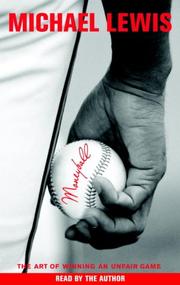
Moneyball
by Michael Lewis
Lewis's 2003 account of the Oakland Athletics' statistical revolution applies the same template as The Big Short — contrarians who use careful analysis to see through a massive institutional mispricing that conventional wisdom is blind to — and is the essential companion in Lewis's career-long examination of how markets and institutions fail to update on evidence.
- 2
 Buy on Amazon
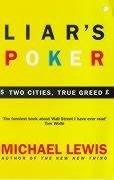
Liar's Poker
by Michael Lewis
Lewis's 1989 debut memoir of his years as a bond salesman at Salomon Brothers in the 1980s is the historical backstory to The Big Short: the same mortgage bond market that collapsed in 2008 was invented and built at Salomon Brothers in the 1980s, by the same culture of leverage and risk-taking that Lewis describes from the inside.
- 3
 Buy on Amazon
Flash Boys
by Michael Lewis
Lewis's 2014 account of high-frequency trading is the next book in his examination of how Wall Street works and fails: where The Big Short shows how the mortgage market was rigged against retail investors, Flash Boys shows how the stock market is rigged against them, through different mechanisms and by different actors.
- 4
 Buy on Amazon
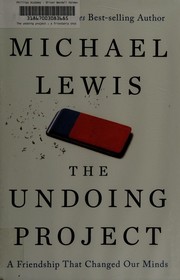
The Undoing Project
by Michael Lewis
Lewis's 2016 account of the Kahneman-Tversky partnership provides the psychological explanation for why the errors that produced the 2008 financial crisis were possible: overconfidence, the narrative fallacy, and the failure to weight low-probability catastrophic events correctly are all System 1 errors that Kahneman and Tversky documented.
- 5
 Buy on Amazon
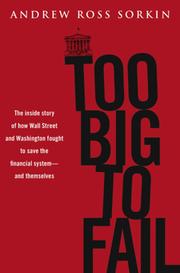
Too Big to Fail
by Andrew Ross Sorkin
Sorkin's 2009 account of the 2008 financial crisis from the perspective of the Treasury Department, the Federal Reserve, and the major banks — the behind-the-scenes decisions about which institutions to rescue and which to let fail — complements The Big Short's contrarian-investor perspective: Sorkin shows what the establishment was doing while Lewis's characters were betting against it.
- 6
 Buy on Amazon
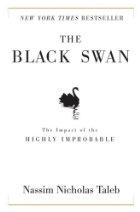
The Black Swan
by Nassim Nicholas Taleb
Taleb's 2007 argument about the role of rare, unpredictable events in financial history provides the theoretical framework for understanding the 2008 financial crisis as a black swan: a predictable-in-retrospect catastrophe that the mainstream financial risk models were structurally incapable of predicting, for the same reasons Taleb documents.
- 7
 Buy on Amazon
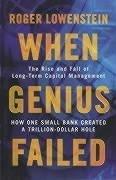
When Genius Failed
by Roger Lowenstein
Lowenstein's 2000 account of the collapse of Long-Term Capital Management — a hedge fund run by Nobel Prize-winning economists that nearly brought down the global financial system in 1998 — is the most important historical precursor to The Big Short in the literature of financial catastrophe produced by overconfidence in mathematical models.
- 8
 Buy on Amazon
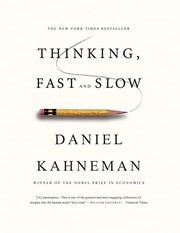
Thinking, Fast and Slow
by Daniel Kahneman
Kahneman's 2011 synthesis of cognitive psychology research provides the psychological foundation for understanding why the mortgage market participants in The Big Short were so wrong for so long: overconfidence, the availability heuristic (housing prices had never fallen nationally), and the narrative fallacy (the housing market had always gone up) are all System 1 errors that Kahneman's research has documented.
More The Big Short Resources
More Reading Recommendations
View all →Monthly Newsletter
Never miss a big release
Get the most anticipated upcoming books delivered to your inbox once a month — no spam, no filler.
Monthly only. Unsubscribe anytime.
Book links are Amazon affiliate links. As an Amazon Associate, BookReleaseRadar earns from qualifying purchases at no extra cost to you.