Recommendations
Books Like Strangers in Their Own Land
Best books to read after Strangers in Their Own Land by Arlie Russell Hochschild
Strangers in Their Own Land asks how people come to support politics that seem to work against their interests, and answers with careful ethnography rather than condescension. These 8 books share its effort to understand the American right from the inside, its structural thinking about how politics and economics interact, and its belief that empathy is necessary for political analysis.
- 1Buy on Amazon
Hillbilly Elegy
by J.D. Vance
Vance's 2016 memoir about Appalachian poverty and culture became Strangers in Their Own Land's most direct comparison point: both were published in 2016, both were widely read as explanations of white working-class conservatism, and they arrive at very different conclusions — Hochschild emphasizes structural and emotional factors, Vance emphasizes cultural ones, and reading them together shows the tension between those explanations.
- 2
 Buy on Amazon
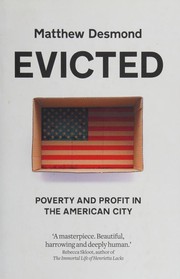
Evicted
by Matthew Desmond
Desmond's 2016 ethnography of eviction in Milwaukee shares Strangers in Their Own Land's method of participant observation and its insistence on understanding the systems that produce disadvantage rather than simply describing its effects — and the contrast between Hochschild's Louisiana (where people blame the government for their problems) and Desmond's Milwaukee (where the housing market is the mechanism) is revealing.
- 3
 Buy on Amazon
Nickel and Dimed
by Barbara Ehrenreich
Ehrenreich's 2001 account of working minimum-wage jobs across America is Hochschild's precursor in the genre of immersive reportage about the working poor — both writers spend time in the communities they study rather than observing from a distance — though Ehrenreich's subjects are further down the economic ladder and her political conclusions are more explicitly left-wing.
- 4
 Buy on Amazon
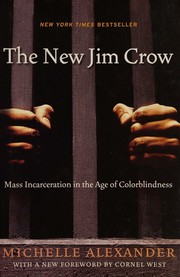
The New Jim Crow
by Michelle Alexander
Alexander's 2010 argument about mass incarceration as racialized social control provides the structural complement to Hochschild's analysis of white working-class politics: where Hochschild asks why white working-class conservatives support policies that harm them, Alexander documents the parallel question of why the criminal justice system is structured to harm Black communities.
- 5
 Buy on Amazon
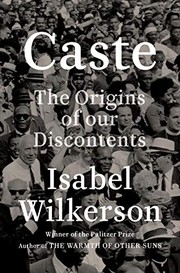
Caste
by Isabel Wilkerson
Wilkerson's 2020 analysis of the American caste system provides the theoretical framework for understanding why the 'line-cutting' deep story that Hochschild identifies is so emotionally powerful: the Tea Party members feel their caste position threatened, and the resentment of line-cutters is the resentment of a group whose social superiority has been indexed to their whiteness.
- 6
 Buy on Amazon
The Righteous Mind
by Jonathan Haidt
Haidt's 2012 social psychology of political morality — arguing that liberals and conservatives value different moral foundations (care, fairness, loyalty, authority, sanctity, liberty) and that understanding this explains political disagreement — provides the psychological complement to Hochschild's sociological account of the deep story and is the most useful theoretical companion to Strangers in Their Own Land.
- 7
 Buy on Amazon
Deer Hunting with Jesus
by Joe Bageant
Bageant's 2007 account of his return to Winchester, Virginia, and the white working-class community he grew up in — exploring why his neighbors vote against their economic interests — is the most direct predecessor to Strangers in Their Own Land, making the same argument with the same empathy for people whose politics Bageant doesn't share.
- 8
 Buy on Amazon
Between the World and Me
by Ta-Nehisi Coates
Coates's 2015 letter to his son about being Black in America is the essential companion to Strangers in Their Own Land: reading Hochschild's white Louisiana Tea Party members alongside Coates's Black Baltimore makes the structural relationship between their situations — both shaped by the same American political economy, from different positions — more visible than either book can show alone.
More Strangers in Their Own Land Resources
More Reading Recommendations
View all →Monthly Newsletter
Never miss a big release
Get the most anticipated upcoming books delivered to your inbox once a month — no spam, no filler.
Monthly only. Unsubscribe anytime.
Book links are Amazon affiliate links. As an Amazon Associate, BookReleaseRadar earns from qualifying purchases at no extra cost to you.