Recommendations
Books Like Steppenwolf
Best books to read after Steppenwolf by Hermann Hesse
Hesse's 1927 novel — Harry Haller's experience of himself as half-man, half-wolf, unable to find a social existence adequate to his nature, until the Magic Theatre — is the most widely read German novel in English translation and a touchstone of the 1960s counterculture. These recommendations extend the experience through Hesse's other major works, through the German literary tradition that shares its investigation of the outsider intellectual, and through fiction that approaches the question of authentic self-creation with comparable seriousness.
- 1
 Buy on Amazon
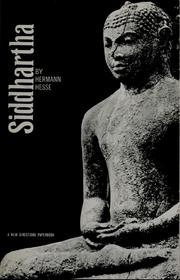
Siddhartha
by Hermann Hesse
Hesse's 1922 companion and the most widely recommended entry into his work — the fictional biography of a contemporary of the Buddha who seeks enlightenment through experience rather than doctrine, passing through asceticism, sensuality, and business before finding his own path to wisdom by a river. Siddhartha is shorter, more lyrical, and more immediately accessible than Steppenwolf, but shares its central theme: the search for an authentic spiritual path beyond conventional social existence.
- 2
 Buy on Amazon
The Glass Bead Game
by Hermann Hesse
Hesse's 1943 Nobel Prize-winning novel — set in a utopian future society in Castalia devoted to an abstract game of intellectual synthesis, following the life of Joseph Knecht who rises to the game's highest position and then renounces it. The Glass Bead Game is Hesse's most intellectually ambitious work and the fullest expression of his themes: the relationship between art, contemplation, and life; the tension between the institution and the individual; the question of what authentic existence requires. Where Steppenwolf shows the crisis of a man who cannot find his place, The Glass Bead Game shows the resolution of a man who finds his place and then outgrows it.
- 3
 Buy on Amazon
Demian
by Hermann Hesse
Hesse's 1919 coming-of-age novel — Emil Sinclair's encounter with the mysterious Max Demian, who leads him from conventional bourgeois morality toward a fuller self-knowledge. Demian is both the predecessor to Steppenwolf in Hesse's development (written just after the First World War) and the clearest statement of the spiritual awakening theme that all of Hesse's major works share: the encounter with a teacher or guide figure who reveals that conventional values are not adequate to the full human being.
- 4
 Buy on Amazon
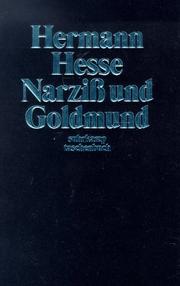
Narcissus and Goldmund
by Hermann Hesse
Hesse's 1930 companion — the medieval story of Narcissus, a monk and scholar, and Goldmund, an artist and wanderer, and the complementary ways of being that their friendship embodies. Narcissus and Goldmund is Hesse's most emotionally direct novel and the one that most clearly articulates the central Hesse opposition (the contemplative life vs. the sensual/artistic life) that Steppenwolf dramatizes through Harry Haller's inner conflict. Many readers consider it Hesse's most satisfying novel.
- 5
 Buy on Amazon
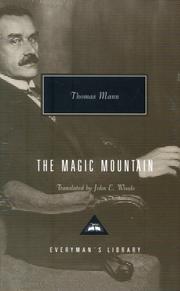
The Magic Mountain
by Thomas Mann
Mann's 1924 companion in the German tradition of the novel about an isolated intellectual world — Hans Castorp's seven years in a Swiss sanatorium as the vessel for a vast debate about European civilization. The Magic Mountain and Steppenwolf are companion studies from the same years (1924/1927) in the German literary tradition of the 'Bildungsroman of ideas': a protagonist whose encounter with a specific enclosed world (the sanatorium, the Magic Theatre) constitutes his philosophical education.
- 6
 Buy on Amazon
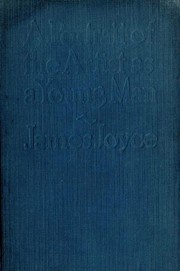
A Portrait of the Artist as a Young Man
by James Joyce
Joyce's 1916 companion in the international tradition of the novel about the artist's formation and his rejection of the social world that formed him — Stephen Dedalus's progressive detachment from family, religion, country, and literary convention in favor of the 'smithy of my soul.' Both Steppenwolf and Portrait trace a highly self-conscious protagonist's progressive discovery that the social world he inhabits is inadequate to his nature — and both end with the protagonist's preparation for flight.
- 7
 Buy on Amazon
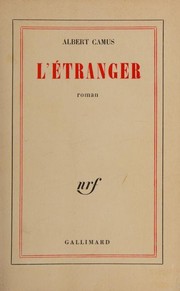
The Stranger
by Albert Camus
Camus's 1942 companion in the tradition of the short philosophical novel about the outsider consciousness — Meursault's flat, affect-less engagement with a world he cannot inhabit normally. Where Harry Haller in Steppenwolf is hyperconscious of his alienation and agonizes over it, Meursault is barely conscious of his and drifts through it — but both are studies in the inability to perform the social feelings that conventional existence requires, and both discover a kind of freedom in that inability.
- 8
 Buy on Amazon
Thus Spoke Zarathustra
by Friedrich Nietzsche
Nietzsche's 1883–1885 philosophical prose poem — Zarathustra's descent from the mountain to teach the Übermensch, the will to power, and the eternal recurrence — is the philosophical text that underlies Steppenwolf most directly. Hesse was deeply influenced by Nietzsche, and Harry Haller's sense of himself as a superior individual trapped in a world of mediocrity, his contempt for bourgeois existence, and the Magic Theatre's vision of multiple selves are all shaped by Nietzschean ideas. Reading Zarathustra alongside Steppenwolf is the clearest way to see Hesse's philosophical debts.
More Steppenwolf Resources
More Reading Recommendations
View all →Monthly Newsletter
Never miss a big release
Get the most anticipated upcoming books delivered to your inbox once a month — no spam, no filler.
Monthly only. Unsubscribe anytime.
Book links are Amazon affiliate links. As an Amazon Associate, BookReleaseRadar earns from qualifying purchases at no extra cost to you.