Recommendations
Books Like Siddhartha
Best books to read after Siddhartha by Hermann Hesse
Hesse's 1922 luminous short novel — a young Brahmin's journey from asceticism through sensual life to meditation by a river where a ferryman teaches him what doctrine cannot — is the most widely read of his works and a spiritual touchstone. These recommendations extend the experience through Hesse's other major novels, through world literature that investigates the spiritual life with comparable seriousness, and through fiction that traces the development of consciousness from received values to self-discovered ones.
- 1
 Buy on Amazon
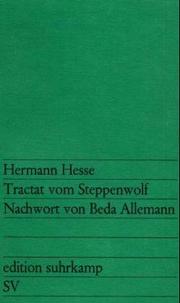
Steppenwolf
by Hermann Hesse
Hesse's 1927 companion and the most celebrated of his works in English — Harry Haller's experience of himself as half-man, half-wolf, unable to find a social existence adequate to his nature, until the Magic Theatre. Where Siddhartha's journey is serene and ultimately resolves in the peace of the river, Steppenwolf's journey is turbulent, satirical, and less conclusively resolved — both are investigations of the same question (what constitutes an authentic self beyond conventional social existence?) in very different registers.
- 2
 Buy on Amazon
Demian
by Hermann Hesse
Hesse's 1919 predecessor to Siddhartha — Emil Sinclair's encounter with the mysterious Max Demian, who introduces him to self-knowledge beyond the conventional moral categories of his bourgeois upbringing. Demian was written immediately after Hesse's Jungian analysis and is the most directly psychological of his major works; Siddhartha came two years later and represents the Eastern, more contemplative version of the same journey from received values to self-discovered ones.
- 3
 Buy on Amazon
The Glass Bead Game
by Hermann Hesse
Hesse's 1943 Nobel Prize-winning final major novel — set in a utopian future devoted to an abstract game of intellectual synthesis, following Joseph Knecht who rises to the game's highest position and then renounces it to become a private tutor. The Glass Bead Game is the most intellectually developed expression of the theme that Siddhartha introduces: the relationship between institutional wisdom (the Glass Bead Game, the Brahmin tradition) and the personal experience that transcends it.
- 4
 Buy on Amazon
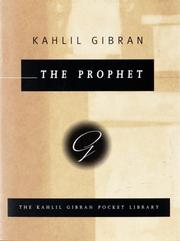
The Prophet
by Kahlil Gibran
Gibran's 1923 companion — Almustafa's teachings to the people of Orphalese before he departs — is the Lebanese philosophical prose-poem that shares Siddhartha's lyrical approach to wisdom and its tendency to arrive at spiritual truths through the accumulation of images rather than argument. Both works are short, luminous, and designed to be read and reread; both were adopted by the 1960s counterculture as spiritual guides; both have been criticized by literary readers for their simplicity and defended by their admirers for the same quality.
- 5
 Buy on Amazon
The Alchemist
by Paulo Coelho
Coelho's 1988 companion in the tradition of the short allegorical spiritual quest — Santiago's journey from Spain to Egypt in search of treasure, guided by the principle of the Personal Legend. The Alchemist is the most widely read contemporary equivalent to Siddhartha in the tradition of the short spiritual quest narrative: both follow a young protagonist who leaves his inherited world, encounters teachers and lovers along the way, and arrives at a wisdom that was available to him from the beginning but required the journey to discover. Both have been criticized as simplistic; both have been loved by millions.
- 6
 Buy on Amazon
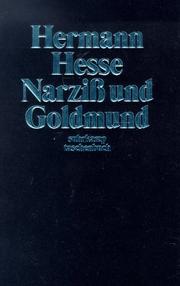
Narcissus and Goldmund
by Hermann Hesse
Hesse's 1930 companion and many readers' favorite among his works — the medieval story of Narcissus (a scholar and monk) and Goldmund (an artist and wanderer), and the complementary modes of being that their friendship embodies. Narcissus and Goldmund dramatizes the opposition between the contemplative and the active life — between the way of the spirit and the way of the senses — that Siddhartha moves through successively, and makes the case that both ways have their own completion.
- 7Buy on Amazon
The Razor's Edge
by W. Somerset Maugham
Maugham's 1944 companion in the Western tradition of the novel about a young man who abandons conventional success (wealth, marriage, status) to seek wisdom in India. Larry Darrell's rejection of his comfortable American world to travel to India and find spiritual meaning — while his friends pursue money and society — is the most accessible popular-fiction equivalent to Siddhartha's journey from the bright world of bourgeois expectation to something more authentic, if indefinable.
- 8
 Buy on Amazon
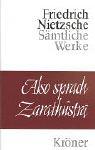
Thus Spoke Zarathustra
by Friedrich Nietzsche
Nietzsche's 1883–1885 philosophical prose poem — the closest Western equivalent to Siddhartha in form if not in content: Zarathustra's descent from his mountain to teach what he has discovered, his encounters with the people who cannot yet receive his teaching, and his gradual understanding of what he is saying. Both Siddhartha and Thus Spoke Zarathustra are structured as the journey of a teacher who must discover the limits of teaching, and both use lyrical prose to approach philosophical ideas that cannot be adequately stated in propositional form.
More Siddhartha Resources
More Reading Recommendations
View all →Monthly Newsletter
Never miss a big release
Get the most anticipated upcoming books delivered to your inbox once a month — no spam, no filler.
Monthly only. Unsubscribe anytime.
Book links are Amazon affiliate links. As an Amazon Associate, BookReleaseRadar earns from qualifying purchases at no extra cost to you.