Recommendations
Books Like Shirley
Best books to read after Shirley by Charlotte Brontë
Charlotte Brontë's most socially ambitious novel (1849) sets two contrasting women — dependent Caroline Helstone and independent Shirley Keeldar — against the Luddite disturbances of 1811-12, addressing the position of women in relation to industrial and social upheaval. These recommendations extend the experience through the Brontë novels, through Victorian industrial fiction, and through fiction about female independence and social constraint.
- 1
 Buy on Amazon
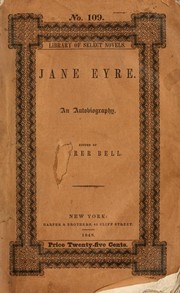
Jane Eyre
by Charlotte Brontë
Charlotte's masterwork and the natural starting point for anyone who loved Shirley — Jane Eyre is more tightly organized and more immediately gripping, but shares Shirley's interest in a woman who insists on the value of her own inner life against a social world that would define her entirely by her external circumstances.
- 2
 Buy on Amazon
North and South
by Elizabeth Gaskell
The most direct companion to Shirley's industrial concerns — Gaskell's novel addresses the same conflict between capital and labor (Margaret Hale mediates between the mill owner Thornton and his striking workers) in a more psychologically developed and structurally tighter narrative; the two novels together define the range of Victorian women's engagement with the industrial question.
- 3
 Buy on Amazon
The Tenant of Wildfell Hall
by Anne Brontë
Anne Brontë's most powerful novel shares Shirley's interest in a woman's right to independence and her own judgment — Helen Graham's refusal to accept her husband's moral degradation is the most direct Victorian statement of what Shirley Keeldar's independence implies in darker circumstances.
- 4
 Buy on Amazon
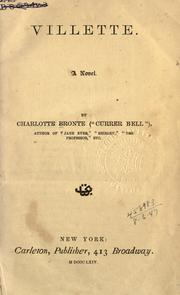
Villette
by Charlotte Brontë
Charlotte's most artistically ambitious novel and the natural next Brontë to read after Shirley — where Shirley is the fantasy of what a woman could be with money and freedom, Lucy Snowe in Villette is the reality of what a woman without those resources must navigate; the two novels together define Charlotte's range.
- 5Buy on Amazon
Mary Barton
by Elizabeth Gaskell
Gaskell's first novel and the most direct fictional treatment of the Manchester working-class conditions that form the background of Shirley — where Shirley focuses on the employer's perspective (Robert Moore is the mill owner) and the gentry world around it, Mary Barton gives the fullest portrait of the workers' perspective.
- 6
 Buy on Amazon
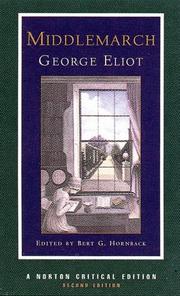
Middlemarch
by George Eliot
Eliot's masterwork engages the same question as Shirley — what a woman of intellectual and moral capacity can do with that capacity in a society that constrains female ambition — and resolves it more pessimistically; Dorothea's gradual diminishment of scope is the serious version of what Shirley Keeldar's independence is designed to prevent.
- 7
 Buy on Amazon
Sybil, or The Two Nations
by Benjamin Disraeli
Disraeli's political novel, published four years before Shirley, addresses the same industrial and class conflict (the 'two nations' of rich and poor, organized around a Chartist rising) and shares Shirley's interest in how political upheaval intersects with private life; the two novels together show how Victorian political fiction approached the 'condition of England' question.
- 8
 Buy on Amazon
Wuthering Heights
by Emily Brontë
The novel published in the same volume as Agnes Grey (and two years before Shirley) represents the Brontë imagination in its most intense form — where Shirley is the Brontë novel most engaged with the social world, Wuthering Heights is the most intensely focused on internal passion; reading both shows the full range of what the Brontë sisters could do.
More Shirley Resources
More Reading Recommendations
View all →Monthly Newsletter
Never miss a big release
Get the most anticipated upcoming books delivered to your inbox once a month — no spam, no filler.
Monthly only. Unsubscribe anytime.
Book links are Amazon affiliate links. As an Amazon Associate, BookReleaseRadar earns from qualifying purchases at no extra cost to you.