Recommendations
Books Like Salammbô
Best books to read after Salammbô by Flaubert
Readers who respond to Salammbô's spectacular historical and orientalist world, its portrait of ancient Carthage, and Flaubert's technique of extreme historical remove as an aesthetic strategy will find the wider tradition of the European historical novel and orientalist fiction.
- 1
 Buy on Amazon
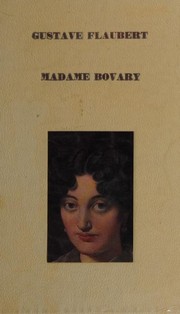
Madame Bovary
by Gustave Flaubert
Madame Bovary (1857) and Salammbô (1862) were written alternately during Flaubert's most productive decade, and reading them together shows the full range of his method: the same precision, the same irony, and the same obsession with the gap between romantic fantasy and reality, deployed in the most different possible settings — provincial Normandy and ancient Carthage.
- 2
 Buy on Amazon
Quo Vadis
by Henryk Sienkiewicz
Sienkiewicz's 1895 novel is the most popular inheritor of Salammbô's method in the European tradition: the ancient world, the spectacular historical spectacle, the love story that ends in martyrdom — Salammbô's template, repeated for a Christian subject and a popular audience.
- 3
 Buy on Amazon
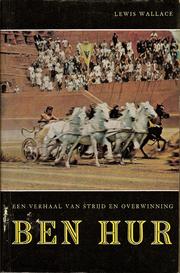
Ben-Hur
by Lew Wallace
Wallace's 1880 novel is the American popular equivalent of Salammbô's historical spectacular: where Flaubert uses the ancient Carthaginian world for a high-literary aesthetic effect, Wallace uses the ancient Roman-Palestinian world for a popular Christian narrative, but both exploit the ancient world's strangeness and violence for emotional intensity.
- 4
 Buy on Amazon
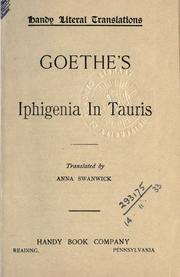
Iphigénie en Tauride
by Johann Wolfgang von Goethe
Goethe's play is an example of the high-classical ancient world that Flaubert's Carthage explicitly rejects: where Goethe's ancient world is purified, rational, and morally exemplary, Flaubert's Carthage is brutal, sensual, and opaque — Salammbô is the anti-Weimar-Classical ancient world.
- 5
 Buy on Amazon
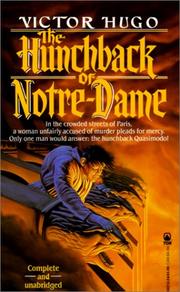
Notre-Dame de Paris
by Victor Hugo
Hugo's historical novel (1831) established the French Romantic historical novel that Salammbô develops in a radically different direction: where Hugo gives us a historical world full of recognizable human passions in a spectacular Gothic setting, Flaubert gives us a historical world that is deliberately alien and opaque.
- 6
 Buy on Amazon
The Last Days of Pompeii
by Edward Bulwer-Lytton
Bulwer-Lytton's 1834 novel is the English popular historical spectacular set in the ancient world that Flaubert's Salammbô responds to (critically and against): where Bulwer-Lytton makes the ancient world accessible and morally familiar, Flaubert makes it inaccessible and morally foreign.
- 7
 Buy on Amazon
L'Éducation sentimentale
by Gustave Flaubert
The contrast between Salammbô and L'Éducation sentimentale — between the historical spectacular set in the most remote past and the realist novel set in the immediately contemporary — is the key to understanding Flaubert's method: both novels use their respective settings to make the same point about the gap between human desire and human capacity.
- 8Buy on Amazon
Tanit and Baal
by Gustave Flaubert
Flaubert's extensive research notes and correspondence about Salammbô, published in the Pléiade Flaubert edition, are the essential companion to the novel: understanding how Flaubert researched and constructed the Carthaginian world illuminates both his method and the places where his historical imagination exceeded the evidence.
More Salammbô Resources
More Reading Recommendations
View all →Monthly Newsletter
Never miss a big release
Get the most anticipated upcoming books delivered to your inbox once a month — no spam, no filler.
Monthly only. Unsubscribe anytime.
Book links are Amazon affiliate links. As an Amazon Associate, BookReleaseRadar earns from qualifying purchases at no extra cost to you.