Recommendations
Books Like Range
Best books to read after Range by David Epstein
Range challenges the early-specialization consensus and argues that breadth of experience produces better outcomes in most complex domains. These 8 books provide the evidence base for understanding when specialization works, when range wins, and how to think about your own learning and career development.
- 1
 Buy on Amazon
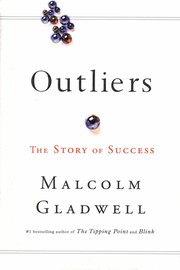
Outliers
by Malcolm Gladwell
Range is explicitly in dialogue with Outliers: Epstein opens with the Roger Federer vs. Tiger Woods comparison to show that both the early-specialization model (Woods) and the late-sampling model (Federer) can produce excellence, and then argues that in most domains, Federer's path is more broadly effective. Reading both books together gives the full picture of the evidence on specialization.
- 2
 Buy on Amazon
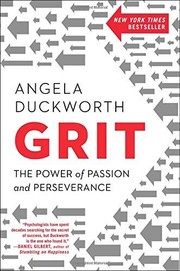
Grit
by Angela Duckworth
Range and Grit are in productive tension: Duckworth argues that commitment to a single domain — passionate, persevering pursuit of one long-term goal — is the key to extraordinary achievement, while Epstein argues that in most domains, serial exploration and late commitment produces better outcomes. The dialogue between them defines one of the most important practical debates in the science of achievement.
- 3
 Buy on Amazon
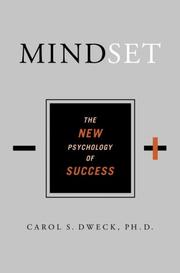
Mindset
by Carol S. Dweck
Dweck's growth mindset research is the psychological foundation of Range's empirical argument: a growth mindset (believing abilities can be developed) is what allows people to embrace the serial exploration and comfort with apparent inefficiency that Range shows produces long-term expertise, because each apparent detour is experienced as learning rather than failure.
- 4
 Buy on Amazon
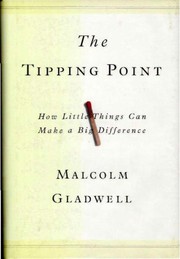
The Tipping Point
by Malcolm Gladwell
Gladwell's 2000 examination of how ideas spread through connectors, mavens, and salespeople is a structural parallel to Range's argument: the connectors who are crucial to The Tipping Point's epidemics are exactly the kind of range-having generalists who can move between domains and translate ideas — the same people that Range identifies as disproportionately valuable in complex, uncertain environments.
- 5
 Buy on Amazon
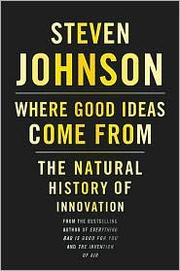
Where Good Ideas Come From
by Steven Johnson
Johnson's 2010 account of innovation — arguing that breakthrough ideas emerge from the 'adjacent possible' reached through diverse, recombinant thinking across domains — is the innovation-specific complement to Range: the kind of thinking Range describes (drawing on diverse experience, making unexpected analogical connections) is exactly the mechanism that Johnson shows produces genuine innovation.
- 6
 Buy on Amazon
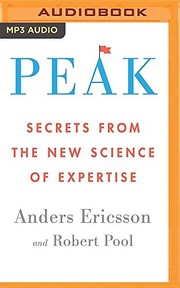
Peak
by Anders Ericsson
Ericsson's 2016 account of deliberate practice is Range's most important intellectual interlocutor: Ericsson argues for the power of structured, domain-specific practice; Epstein argues that this model (which inspired the 10,000-hour rule) applies only to 'kind learning environments' with clear rules and rapid feedback, and that most real-world domains require a different approach. Reading both books makes the conditions under which each is right clear.
- 7
 Buy on Amazon
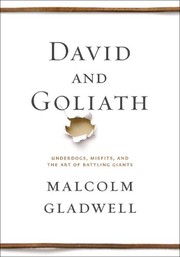
David and Goliath
by Malcolm Gladwell
Gladwell's 2013 examination of the hidden advantages of disadvantage complements Range by showing that the breadth of experience and unconventional paths that Range endorses often arise from the same circumstances that conventional wisdom reads as disadvantages — dyslexia, poverty, late starts — that turn out to produce unexpected strengths.
- 8
 Buy on Amazon
Thinking, Fast and Slow
by Daniel Kahneman
Kahneman's 2011 synthesis illuminates why Range's findings are counterintuitive: our System 1 processes read commitment and specialization as signs of competence and breadth as signs of indecision, which is why early specialization has such strong cultural prestige even when the empirical evidence for its superiority in most domains is weak.
More Range Resources
More Reading Recommendations
View all →Monthly Newsletter
Never miss a big release
Get the most anticipated upcoming books delivered to your inbox once a month — no spam, no filler.
Monthly only. Unsubscribe anytime.
Book links are Amazon affiliate links. As an Amazon Associate, BookReleaseRadar earns from qualifying purchases at no extra cost to you.