Recommendations
Books Like Possession
Best books to read after Possession by A.S. Byatt
Byatt's 1990 Booker Prize-winning novel — contemporary scholars discover a secret Victorian affair between the poets Ash and LaMotte and fall in love themselves, while Byatt invents all the Victorian poetry and letters — is simultaneously a love story, academic detective novel, Victorian pastiche, and meditation on how the past possesses us. These recommendations extend the experience through Byatt's other works, through the tradition of the academic novel and the historical novel that Possession straddles, and through fiction that investigates the relationship between the present and the Victorian past.
- 1Buy on Amazon
The Children's Book
by A.S. Byatt
Byatt's 2009 Booker-shortlisted companion and her most ambitious novel — the extended family and friends of a children's book author across the Edwardian era, through the Arts and Crafts movement, the Fabian Society, and eventually the First World War. The Children's Book shares Possession's characteristic method (a richly documented historical period, invented creative works embedded in the narrative, multiple characters whose individual stories constitute the novel's social picture) but in a different period and on a larger scale.
- 2Buy on Amazon
The Biographer's Tale
by A.S. Byatt
Byatt's 2000 companion in the tradition of the academic investigation — Phineas G., a graduate student who decides to abandon theory and 'encounter things' by writing a biography of the great Victorian biographer Scholes Destry-Scholes, who wrote biographies of Francis Galton, Carl Linnaeus, and Carolus Clusius. The Biographer's Tale shares Possession's formal method (invented Victorian documents, the scholar's pursuit of lost traces of the past) but in a more experimental and more comic mode.
- 3
 Buy on Amazon
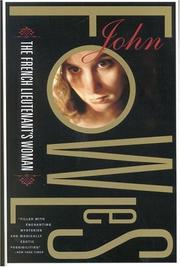
The French Lieutenant's Woman
by John Fowles
Fowles's 1969 companion in the tradition of the metafictional Victorian novel — the story of Charles Smithson and Sarah Woodruff in 1867 Lyme Regis, told by a narrator who is writing the story in 1969 and offers multiple endings. The French Lieutenant's Woman and Possession are the two great English novels that use Victorian setting and pastiche to investigate the gap between Victorian consciousness (repression, duty, restraint) and contemporary consciousness (freedom, desire, irony), and both are concerned with the relationship between authorial control and the lives of characters.
- 4
 Buy on Amazon
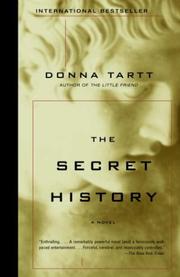
The Secret History
by Donna Tartt
Tartt's 1992 companion in the tradition of the literary novel about the seduction and corruption of a young scholar — Richard Papen's encounter with a group of Greek students who have murdered one of their number. Both Possession and The Secret History use the enclosed world of literary scholarship (the Victorian archive; the Greek seminar) as a setting for an investigation of desire, beauty, and the relationship between aesthetic experience and moral consequence.
- 5
 Buy on Amazon
The Name of the Rose
by Umberto Eco
Eco's 1980 companion in the tradition of the literary detective novel embedded in a period setting and saturated with scholarly erudition — William of Baskerville's investigation of murders in a medieval monastery connected to a lost manuscript. The Name of the Rose and Possession are the two most celebrated literary detective novels of the postwar era: both use a scholarly puzzle (a lost book; a secret love affair) as the engine for an investigation of a historical world and its relationship to the present.
- 6
 Buy on Amazon
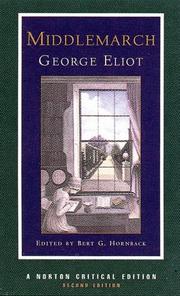
Middlemarch
by George Eliot
The great Victorian novel that Possession is most in dialogue with — Eliot's 1871 study of four interconnected lives in a provincial town, centering on the exceptionally gifted Dorothea Brooke. Possession's Christabel LaMotte is in the tradition of the exceptional Victorian woman (like Dorothea) whose gifts cannot find a form adequate to them within the constraints of her world, and Byatt's invented poetry for LaMotte is in dialogue with the question Middlemarch raises: what could a woman of exceptional intelligence do in the Victorian period?
- 7
 Buy on Amazon
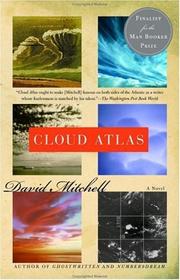
Cloud Atlas
by David Mitchell
Mitchell's 2004 companion in the tradition of the formally inventive novel that moves across multiple historical periods and voices — six nested stories from 1849 to a post-apocalyptic future, each written in a distinct voice and connected by hints of reincarnation. Cloud Atlas and Possession are companion studies in the literary formal challenge of pastiche — the invented historical documents, letters, and voices that must be convincing in their period and illuminate the connection between the past and the present that is the novel's philosophical subject.
- 8
 Buy on Amazon
The Remains of the Day
by Kazuo Ishiguro
Ishiguro's 1989 companion in the tradition of the retrospective English novel about the past and what we make of it — Stevens the butler's gradual recognition during a motor trip through England that the life he gave to Lord Darlington was both his greatest achievement and his greatest mistake. The Remains of the Day and Possession are both concerned with the relationship between the present and the past we have inherited or lived — and both use a journey (Roland and Maud's literal investigation; Stevens's literal motor trip) as the occasion for discovering what has been missed.
More Possession Resources
More Reading Recommendations
View all →Monthly Newsletter
Never miss a big release
Get the most anticipated upcoming books delivered to your inbox once a month — no spam, no filler.
Monthly only. Unsubscribe anytime.
Book links are Amazon affiliate links. As an Amazon Associate, BookReleaseRadar earns from qualifying purchases at no extra cost to you.