Recommendations
Books Like Pedro Páramo
Best books to read after Pedro Páramo by Juan Rulfo
Rulfo's 1955 ninety-page masterpiece — Juan Preciado's journey to the ghost village of Comala and the fragmentary voices of the dead that reconstruct the brutal cacique Pedro Páramo — is the direct inspiration for García Márquez's One Hundred Years of Solitude and the foundational text of Latin American magical realism. These recommendations extend the experience through García Márquez's work, through Latin American fiction that inherits Rulfo's formal innovations, and through fiction from other traditions that shares its haunted, fragmented engagement with memory, the dead, and communities destroyed by power.
- 1
 Buy on Amazon
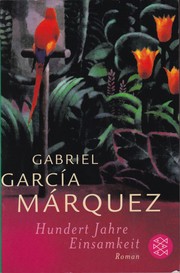
One Hundred Years of Solitude
by Gabriel García Márquez
García Márquez's 1967 masterpiece is the most direct heir to Pedro Páramo — García Márquez has said he memorized Rulfo's novel and that it was the direct inspiration for his own. Both novels take place in isolated Latin American communities (Comala/Macondo) that time and history have bypassed; both feature ghosts and the dead speaking as naturally as the living; both use a fragmented structure to reconstruct the history of a community through accumulated voices. One Hundred Years of Solitude expands Pedro Páramo's ninety pages into four hundred and twenty, showing what Rulfo compressed.
- 2
 Buy on Amazon
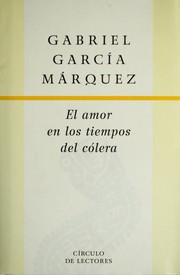
Love in the Time of Cholera
by Gabriel García Márquez
García Márquez's 1985 companion — the fifty-one-year love of Florentino Ariza for Fermina Daza — shows the other face of the world that Pedro Páramo inhabits: where Rulfo's novel is about a world destroyed by a loveless man's power, García Márquez's is about the persistence of love across a lifetime of obstacles. Both novels use the landscape of Caribbean/Mexican Latin America as a world where passion and history interact at full intensity.
- 3
 Buy on Amazon
El Llano en Llamas
by Juan Rulfo
Rulfo's 1953 short story collection — the only other major work he published — is the companion to Pedro Páramo and in many ways equally extraordinary. The same rural Mexican landscape, the same voice, the same economy of means: stories like 'No Dogs Bark' and 'Tell Them Not to Kill Me!' are among the greatest short stories in Spanish. El Llano en Llamas is the place where Rulfo's gifts first appear in full, and reading it alongside Pedro Páramo gives the complete picture of what he achieved in his two slim volumes.
- 4
 Buy on Amazon
Beloved
by Toni Morrison
Morrison's 1987 companion in the tradition of the novel haunted by the dead who cannot rest — Sethe, an escaped slave in Cincinnati, is haunted by the ghost of the daughter she killed to prevent her from being returned to slavery. Beloved and Pedro Páramo are the two great twentieth-century novels about the dead who remain among the living because the historical violence that destroyed them cannot be resolved. Both novels use a fragmentary, non-linear structure to embody the trauma they are describing.
- 5
 Buy on Amazon
Chronicle of a Death Foretold
by Gabriel García Márquez
García Márquez's 1981 novella — the reconstruction of a murder everyone knew was coming but no one stopped — uses the same narrative structure as Pedro Páramo: a narrator who arrives after the fact and reconstructs what happened through fragmentary voices and testimonies. Both are studies in collective guilt and collective memory, and both use the formal device of the after-the-fact reconstruction to show how a community's complicity in violence works.
- 6
 Buy on Amazon
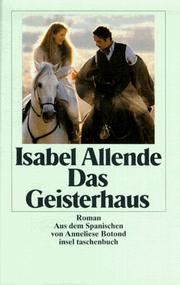
The House of the Spirits
by Isabel Allende
Allende's 1982 debut — the four-generation history of the Trueba family in an unnamed Chile — is the most ambitious Latin American magical-realist family saga in the tradition that Pedro Páramo established. Where Rulfo's novel compresses a community's history into ninety pages of fragmented voices, Allende expands hers across four generations and four women's perspectives. The House of the Spirits is also the clearest illustration of how Rulfo's and García Márquez's influence spread through Latin American women's writing.
- 7
 Buy on Amazon
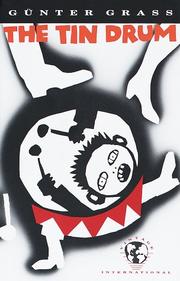
The Tin Drum
by Günter Grass
Grass's 1959 German companion — Oskar Matzerath's account of his childhood and young manhood in Danzig from his tin drum inside a mental institution — is the European equivalent of what Pedro Páramo does with memory and community: an account of a community destroyed by historical violence (in Grass's case, Nazism and the Second World War), narrated through a consciousness that refuses to grow up and process what it witnessed. Both are formally experimental narratives about the failure of communities to reckon with what their own violence has done.
- 8
 Buy on Amazon
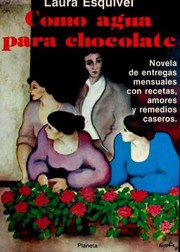
Like Water for Chocolate
by Laura Esquivel
Esquivel's 1989 Mexican magical-realist companion — Tita de la Garza's emotions are literally transferred into the food she cooks, affecting everyone who eats it. Like Water for Chocolate is in the tradition of the Mexican magical-realist novel that Rulfo established, with the same sense of a world in which the supernatural is inseparable from the domestic and the emotional. Esquivel's novel is warmer and more comic than Rulfo's, but both are studies in how constraint and repression manifest in the physical world around us.
More Pedro Páramo Resources
More Reading Recommendations
View all →Monthly Newsletter
Never miss a big release
Get the most anticipated upcoming books delivered to your inbox once a month — no spam, no filler.
Monthly only. Unsubscribe anytime.
Book links are Amazon affiliate links. As an Amazon Associate, BookReleaseRadar earns from qualifying purchases at no extra cost to you.