Recommendations
Books Like Paul et Virginie
Best books to read after Paul et Virginie by Bernardin de Saint-Pierre
Readers drawn to Paul et Virginie's tropical idyll, its Rousseauist philosophy of nature and innocence, and its influence on French Romanticism will find Atala and René as its successors and the tradition of the European novel about innocent love destroyed by civilization.
- 1
 Buy on Amazon
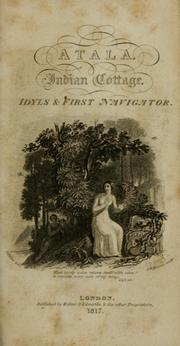
Atala
by François-René de Chateaubriand
The direct successor — Chateaubriand's 1801 prose narrative about Atala and Chactas in the American wilderness inherits the Rousseauist philosophy and the exotic natural landscape from Paul et Virginie and gives both a darker, more tragic treatment; the innocent love in a natural paradise destroyed by civilization's demands is the theme both works share, but where Paul et Virginie ends in sentimental Christian consolation, Atala ends in something more austere and more psychologically complex.
- 2Buy on Amazon
René
by François-René de Chateaubriand
The companion Chateaubriand text and the darker Romantic counterpart — where Paul et Virginie imagines what human beings could be if raised in nature without civilization, René imagines what happens to the educated European who cannot find in civilization the happiness that nature promises; the two texts together define the Rousseauist-Romantic argument about nature and civilization in its optimistic and pessimistic versions.
- 3
 Buy on Amazon
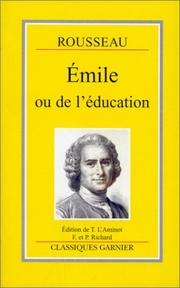
Emile, or On Education
by Jean-Jacques Rousseau
The philosophical source for Paul et Virginie's Rousseauist premises — Rousseau's 1762 treatise on the education of a child raised as far as possible from corrupting civilization is the direct philosophical background for the education of Paul and Virginie on Mauritius; Saint-Pierre was a close friend of Rousseau and directly translates Rousseau's educational philosophy into fictional form.
- 4
 Buy on Amazon
The Swiss Family Robinson
by Johann David Wyss
The German companion in the tradition of the family stranded in a natural paradise — Wyss's 1812 children's novel about a family shipwrecked on a tropical island is a Protestant, practical-minded version of the same premise as Paul et Virginie; where Saint-Pierre's island is a lyric idyll, Wyss's island is a family workshop where the virtues of industrious civilization are demonstrated in natural conditions.
- 5
 Buy on Amazon
The Garden of Eden
by Ernest Hemingway
The modern American companion in the tradition of the paradise that cannot last — Hemingway's posthumously published 1986 novel about newlyweds on the Mediterranean coast who cannot sustain their idyllic early love against the pressure of gender, sexuality, and identity is the twentieth-century American version of the innocent paradise that Paul et Virginie's civilization destroys; both works use a specific landscape of beauty as the setting for the impossibility of innocence.
- 6Buy on Amazon
The Blue Lagoon
by Henry De Vere Stacpoole
The English companion in the tradition of the children raised in natural innocence who fall in love — Stacpoole's 1908 novel about two children stranded on a Pacific island who grow up and fall in love without knowledge of civilization's conventions is the most direct later English parallel to Paul et Virginie; both are experiments in the question of what love looks like when it develops without the overlay of social convention.
- 7
 Buy on Amazon
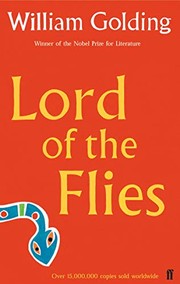
Lord of the Flies
by William Golding
The dark modern inversion of the Paul et Virginie premise — Golding's 1954 novel about children stranded on a tropical island who recreate savagery and violence is the explicit answer to the Rousseauist thesis; where Saint-Pierre argues that children raised without civilization develop natural virtue, Golding argues that children raised without civilization develop natural violence; the two novels together constitute the central fictional debate about human nature and social formation.
- 8
 Buy on Amazon
Manon Lescaut
by Abbé Prévost
The eighteenth-century companion in the tradition of the innocent girl whose nature is destroyed by contact with French civilization — Manon's natural warmth and capacity for genuine love are corrupted by the Parisian social world that teaches her the value of money; Paul et Virginie is Bernardin de Saint-Pierre's counter-argument: that if the same natural warmth is kept from civilization, it remains pure — at the cost of the girl's life.
More Paul et Virginie Resources
More Reading Recommendations
View all →Monthly Newsletter
Never miss a big release
Get the most anticipated upcoming books delivered to your inbox once a month — no spam, no filler.
Monthly only. Unsubscribe anytime.
Book links are Amazon affiliate links. As an Amazon Associate, BookReleaseRadar earns from qualifying purchases at no extra cost to you.