Recommendations
Books Like Pamela
Best books to read after Pamela by Samuel Richardson
Samuel Richardson's Pamela is the founding text of the English epistolary novel and the most controversial novel of the eighteenth century — a servant girl's resistance to her employer's advances, a sensation that was praised from pulpits, burned in public, and parodied within months. These recommendations extend the experience through Richardson's other works and through the eighteenth-century novel tradition Pamela inaugurated.
- 1
 Buy on Amazon
Clarissa
by Samuel Richardson
Richardson's 1748 masterwork — the direct successor to Pamela and the fullest development of everything that Pamela attempted. Where Pamela's virtue is rewarded with marriage, Clarissa's virtue is rewarded with death: Richardson's moral universe had darkened significantly in the eight years between the two novels.
- 2
 Buy on Amazon
Shamela
by Henry Fielding
Fielding's 1741 parody of Pamela — the most devastating contemporary response to Richardson's novel and the founding document of the argument about female virtue and calculation that Pamela inaugurated. Short, brilliantly funny, and essential for understanding the novel's cultural reception.
- 3Buy on Amazon
Joseph Andrews
by Henry Fielding
Fielding's 1742 novel began as a Pamela parody and became the founding text of the English comic novel. Joseph Andrews's character is explicitly defined in contrast to Pamela, and the first volume of the novel is organized around inverting the Pamela premise.
- 4
 Buy on Amazon
Les Liaisons Dangereuses
by Pierre Choderlos de Laclos
Laclos's 1782 French masterpiece inherits Richardson's epistolary form and applies it to a completely different moral universe — one in which Pamela's careful virtue would be systematically destroyed by Merteuil and Valmont. The contrast between Richardson's moral program and Laclos's defines the range of the epistolary form.
- 5
 Buy on Amazon
Evelina
by Fanny Burney
Burney's 1778 epistolary novel about a young woman's London season and the dangers of the social world is the most direct female successor to Pamela in the eighteenth-century novel — organized around the same combination of vulnerability, moral clarity, and epistolary intimacy, but with the social comedy that Richardson lacked.
- 6
 Buy on Amazon
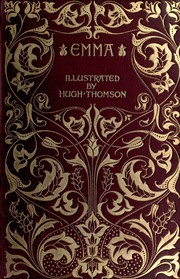
Emma
by Jane Austen
Austen's 1815 novel is the Regency-era development of the tradition that Pamela founded — the young woman navigating a social world in which her domestic choices are her primary arena of agency. Austen's irony and her refusal of Richardson's earnestness are the key differences, but the underlying social concerns are continuous.
- 7
 Buy on Amazon
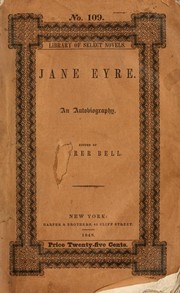
Jane Eyre
by Charlotte Brontë
Jane Eyre's famous assertion 'I am no bird; and no net ensnares me' is the Victorian development of Pamela's resistance — the governess who refuses to submit to a man of higher social position until the relationship is on terms she can accept. Brontë knew Richardson and the epistolary tradition.
- 8
 Buy on Amazon
The Color Purple
by Alice Walker
Walker's epistolary novel about Celie's resistance and recovery is the twentieth-century American counterpart to Pamela's project — writing as survival, the letter as the only available form of agency in a situation of extreme powerlessness, and virtue (in the sense of moral clarity) as the foundation of the eventual transformation.
More Pamela Resources
More Reading Recommendations
View all →Monthly Newsletter
Never miss a big release
Get the most anticipated upcoming books delivered to your inbox once a month — no spam, no filler.
Monthly only. Unsubscribe anytime.
Book links are Amazon affiliate links. As an Amazon Associate, BookReleaseRadar earns from qualifying purchases at no extra cost to you.