Recommendations
Books Like Orlando
Best books to read after Orlando by Virginia Woolf
Woolf's 1928 playful biographical novel — Orlando lives for three hundred years, transforms from a man into a woman, and arrives in the 1920s still writing the poem that has been their life's work — is a love letter to Vita Sackville-West, a history of English literature, and a proto-feminist and proto-queer investigation of how gender shapes identity. These recommendations extend the experience through Woolf's other novels, through fiction that shares its investigation of gender, biography, and the relationship between identity and history, and through queer writing that inherits its spirit of imaginative liberation.
- 1
 Buy on Amazon
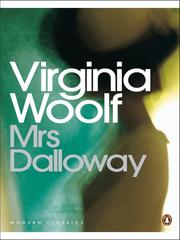
Mrs Dalloway
by Virginia Woolf
The most essential companion in Woolf's own work — the stream-of-consciousness masterpiece about a single London day in the life of Clarissa Dalloway, a woman defined by the social performance of feeling. Where Orlando is playful and picaresque, Mrs Dalloway is intense and compressed — but both are investigations of how women move through time and social space, and what it costs them to perform the identities society assigns them.
- 2
 Buy on Amazon
To the Lighthouse
by Virginia Woolf
Woolf's 1927 companion and the most emotionally resonant of her novels — the Ramsay family at their summer house, structured around the lighthouse that cannot be reached until Mrs. Ramsay is dead. To the Lighthouse is where Woolf's investigation of how consciousness inhabits time is at its most elegiac and most autobiographical (the Ramsays are based on Woolf's own parents). Mrs Dalloway and To the Lighthouse are the essential companions to Orlando for readers entering Woolf's world.
- 3Buy on Amazon
Possession
by A.S. Byatt
Byatt's 1990 Booker Prize-winning companion — two contemporary scholars discover the love letters of two Victorian poets and begin a love affair of their own. Possession and Orlando are companion studies in the relationship between present consciousness and historical identity: both novels use the past (Victorian poetry in Byatt, the Elizabethan to Edwardian eras in Woolf) as a medium through which to investigate what identity means across time. Both are also deeply literary — Woolf's novel is a history of English letters; Byatt's is a meditation on Victorian and contemporary literary scholarship.
- 4
 Buy on Amazon
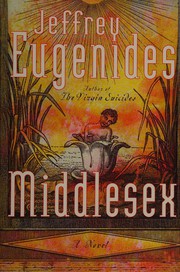
Middlesex
by Jeffrey Eugenides
Eugenides's 2002 Pulitzer Prize-winning companion — Cal Stephanides narrates his family's history across three generations and his own intersex condition. Middlesex and Orlando are the two most celebrated literary novels about the experience of gender fluidity and transformation — where Woolf's Orlando transforms magically (one morning a woman instead of a man), Eugenides's Cal discovers gradually the biological complexity that has always been present. Both novels use an extended biographical span (Orlando's 300 years; Cal's family saga across the twentieth century) to investigate what identity means across time.
- 5
 Buy on Amazon
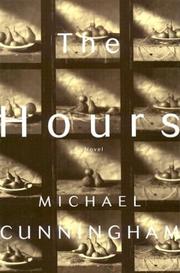
The Hours
by Michael Cunningham
Cunningham's 1998 Pulitzer Prize-winning companion — three women on different days structured around Mrs Dalloway: Virginia Woolf writing the novel in 1923, Laura Brown reading it in 1949 Los Angeles, and Clarissa Vaughan (a contemporary Mrs Dalloway) in 1990s New York. The Hours is explicitly in dialogue with Woolf's work and the most celebrated contemporary literary novel to place Woolf's life and art at its center. For readers who love Orlando, The Hours shows what Woolf's influence has meant to subsequent writers.
- 6
 Buy on Amazon
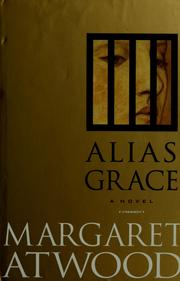
Alias Grace
by Margaret Atwood
Atwood's 1996 companion in the tradition of the historical novel that uses the past to investigate the construction of female identity — the story of Grace Marks, a nineteenth-century Irish immigrant maid convicted of murder, told through her own voice and the voices of those who investigate her. Both Orlando and Alias Grace use historical distance to investigate how female identity is constructed and constrained by the social world, and both refuse to provide a single authoritative account of who their protagonist 'really is.'
- 7
 Buy on Amazon
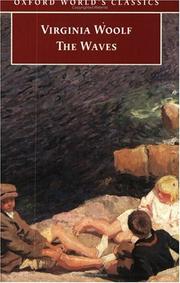
The Waves
by Virginia Woolf
Woolf's 1931 most formally ambitious novel — six characters speaking their inner lives through monologues from childhood to old age — is the work in which the investigation of individual identity that Orlando begins in playful form is developed in its most extreme and austere version. Where Orlando traces one identity across three hundred years of external history, The Waves traces six identities from childhood to old age through pure interior speech. Both are asking the same question — what constitutes a self across time? — and arriving at the same answer: the self is a narrative we tell ourselves about our experience.
- 8
 Buy on Amazon
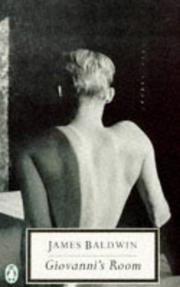
Giovanni's Room
by James Baldwin
Baldwin's 1956 companion in the tradition of the literary novel about queer identity and the cost of denying it — David, an American in Paris, falls in love with Giovanni while his fiancée is in Spain, and the catastrophic consequences of his inability to accept that love. Giovanni's Room is the twentieth-century American companion to the spirit of Orlando: where Woolf's novel imagines a world in which gender transformation and desire can be lived freely across time, Baldwin's shows the cost of the world that actually exists — the one in which such freedom must be denied.
More Orlando Resources
More Reading Recommendations
View all →Monthly Newsletter
Never miss a big release
Get the most anticipated upcoming books delivered to your inbox once a month — no spam, no filler.
Monthly only. Unsubscribe anytime.
Book links are Amazon affiliate links. As an Amazon Associate, BookReleaseRadar earns from qualifying purchases at no extra cost to you.