Recommendations
Books Like No Name
Best books to read after No Name by Wilkie Collins
Wilkie Collins's most morally complex sensation novel (1862-63) follows Magdalen Vanstone — disinherited by Victorian illegitimacy law — as she pursues recovery through an increasingly desperate series of schemes that compromise her own integrity. These recommendations extend the experience through Collins's other novels, through Victorian fiction about the injustice of the law as it applies to women, and through the tradition of the morally ambiguous female protagonist.
- 1
 Buy on Amazon
The Woman in White
by Wilkie Collins
Collins's most celebrated novel — where No Name has a heroine who actively schemes to recover what the law took from her, The Woman in White has an innocent victim of conspiracy; reading both together shows Collins's range in treating the same fundamental subject (women wronged by legal injustice) from different moral angles.
- 2
 Buy on Amazon
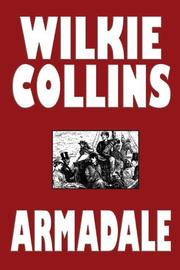
Armadale
by Wilkie Collins
Collins's most ambitious novel, written immediately after No Name — Lydia Gwilt's completely unsentimental use of every available resource to survive parallels Magdalen Vanstone's schemes, but in a darker register where the woman's moral compromises are more extensive and her social circumstances more desperate.
- 3
 Buy on Amazon
The Tenant of Wildfell Hall
by Anne Brontë
The most direct Victorian companion to No Name's feminist argument — Helen Graham's refusal to accept the legal consequences of her husband's dissolution and Magdalen's refusal to accept the legal consequences of her parents' invalid marriage are both organized around the same basic position: that unjust laws can be resisted.
- 4
 Buy on Amazon
Lady Audley's Secret
by Mary Elizabeth Braddon
Braddon's sensation novel features the most famous female schemer in Victorian sensation fiction — Lady Audley's bigamy and attempted murder are Magdalen's schemes taken to their criminal extreme; the two novels together define the sensation genre's interest in women who refuse the social constraints assigned to them.
- 5
 Buy on Amazon
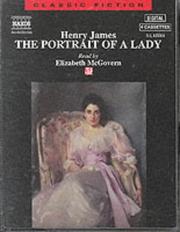
The Portrait of a Lady
by Henry James
James's masterwork approaches the same Victorian legal and social constraints on women from a very different angle — where No Name features a woman actively resisting constraint through schemes, The Portrait of a Lady features a woman whose moral seriousness leads her into a trap she cannot fight her way out of; the contrasting responses to the same social world.
- 6
 Buy on Amazon
Great Expectations
by Charles Dickens
Dickens's novel shares No Name's interest in a young person's schemes for social advancement and their moral consequences — Pip's pursuit of gentleman status through Magwitch's hidden money parallels Magdalen's pursuit of her lost inheritance; both novels ask whether the means of recovery corrupt what is recovered.
- 7
 Buy on Amazon
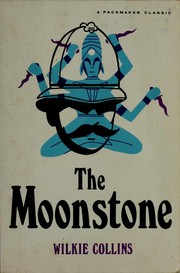
The Moonstone
by Wilkie Collins
Collins's founding detective novel — the most useful formal contrast to No Name in Collins's work; where No Name is driven by moral complexity and character, The Moonstone is driven by plot mechanics and mystery; reading both shows Collins's full range as a formal innovator.
- 8
 Buy on Amazon
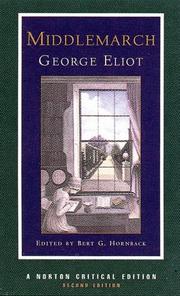
Middlemarch
by George Eliot
Eliot's masterwork engages the same Victorian laws that constrain Magdalen Vanstone through a very different narrative mode — Dorothea Brooke's marriage to Casaubon and Bulstrode's moral collapse are both studies in how legal and social structures shape individual choices; Eliot's psychological depth vs. Collins's narrative excitement.
More No Name Resources
More Reading Recommendations
View all →Monthly Newsletter
Never miss a big release
Get the most anticipated upcoming books delivered to your inbox once a month — no spam, no filler.
Monthly only. Unsubscribe anytime.
Book links are Amazon affiliate links. As an Amazon Associate, BookReleaseRadar earns from qualifying purchases at no extra cost to you.