Recommendations
Books Like Nausea
Best books to read after Nausea by Jean-Paul Sartre
Sartre's 1938 philosophical novel — Antoine Roquentin's diary of his experience of the Nausea, the terrifying alienation he feels as everyday objects reveal their brute, contingent existence — launched existentialism as a literary and cultural movement. These recommendations extend the experience through Camus's companion existentialist novels, through the tradition of the philosophical novel from Dostoevsky to Beckett, and through fiction that shares its investigation of consciousness, contingency, and what it means to exist without given purpose.
- 1
 Buy on Amazon
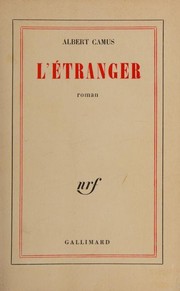
The Stranger
by Albert Camus
Camus's 1942 companion and the closest equivalent in the French philosophical tradition — Meursault's murder of an Arab and his subsequent trial, narrated in the flat, affect-less prose that embodies his experience of the absurd. The Stranger and Nausea are the two founding texts of French existentialist fiction, and the differences between them illuminate the philosophical debate between Sartre and Camus: Roquentin's Nausea leads to a discovery of freedom, Meursault's absurdity leads to a discovery of indifference — and Camus rejected Sartre's move from contingency to freedom as an illegitimate leap.
- 2
 Buy on Amazon
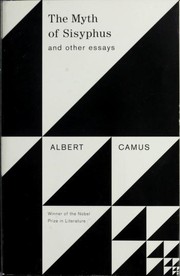
The Myth of Sisyphus
by Albert Camus
Camus's 1942 philosophical essay — the direct philosophical companion to The Stranger, developing the concept of the absurd that Nausea also dramatizes. The Myth of Sisyphus argues that the proper response to the absurd is not despair or denial but revolt — the 'one must imagine Sisyphus happy' of the famous conclusion. Reading The Myth of Sisyphus alongside Nausea is the clearest way to understand both what the two writers shared (the starting point of contingency) and what separated them (Sartre's existentialism vs. Camus's absurdism).
- 3Buy on Amazon
Notes from Underground
by Fyodor Dostoevsky
Dostoevsky's 1864 foundational text — the bitter monologue of the Underground Man, who argues against rational self-interest and progressive optimism — is the literary predecessor to Nausea that Sartre explicitly acknowledged. Both are first-person philosophical meditations by isolated narrators who cannot act without consciousness undermining the action; both are studies in what happens when a consciousness is honest about the absence of given meaning. The Underground Man is Roquentin's Russian ancestor.
- 4
 Buy on Amazon
The Trial
by Franz Kafka
Kafka's 1925 companion in the tradition of the philosophical novel about consciousness and the impossibility of authentic action — Josef K., arrested without being told his crime, prosecuted by a Court he cannot understand. Where Roquentin's problem is the brute indifference of existence (things have no meaning), Josef K.'s problem is the institutional indifference of power (procedures have no human meaning). Both novels use their protagonists' situation to embody a philosophical condition: contingency in Sartre, bureaucratic guilt in Kafka.
- 5
 Buy on Amazon
The Metamorphosis
by Franz Kafka
Kafka's 1915 companion in the tradition of the short philosophical narrative — Gregor Samsa's transformation externalizes the condition Roquentin experiences internally: the discovery of oneself as a thing, as a body that exists without necessity or purpose. Both are studies in the experience of contingency — the Nausea that reveals the brute existence of the chestnut tree root, the transformation that reveals the brute existence of the body — rendered through domestic particularity rather than abstract argument.
- 6
 Buy on Amazon
Hunger
by Knut Hamsun
Hamsun's 1890 companion in the tradition of the first-person philosophical novel about consciousness and the body — the unnamed narrator's experience of near-starvation in Christiania, his refusal of help, his pride and self-consciousness even in extremity. Hunger is the Scandinavian precursor to Nausea: the same isolated, highly conscious narrator recording his own degradation with unsparing precision, the same refusal of conventional consolation, the same discovery that consciousness is both the most vivid thing about us and the instrument of our suffering.
- 7
 Buy on Amazon
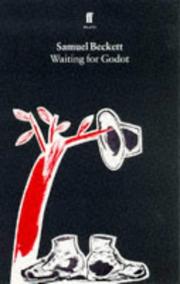
Waiting for Godot
by Samuel Beckett
Beckett's 1953 play — Vladimir and Estragon waiting for Godot who never comes — is the logical conclusion of the existentialist tradition that Nausea inaugurates: if existence is contingent and there is no given meaning, what is there to do? Beckett's answer is to wait, and to continue despite the knowledge that waiting is all there is. Waiting for Godot pushes the Sartrean confrontation with contingency to the point where speech and action are both impossible but must be attempted anyway.
- 8
 Buy on Amazon
The Road to Wigan Pier
by George Orwell
Orwell's 1937 documentary companion — his investigation of working-class life in northern England and his argument about socialism — belongs to the same intellectual moment as Nausea: both are 1930s investigations of what it means to take seriously the political and philosophical crisis of European civilization. Where Sartre investigates the philosophical implications of contingency in an isolated individual, Orwell investigates the social and political implications of material deprivation in a whole class.
More Nausea Resources
More Reading Recommendations
View all →Monthly Newsletter
Never miss a big release
Get the most anticipated upcoming books delivered to your inbox once a month — no spam, no filler.
Monthly only. Unsubscribe anytime.
Book links are Amazon affiliate links. As an Amazon Associate, BookReleaseRadar earns from qualifying purchases at no extra cost to you.