Recommendations
Books Like Narcissus and Goldmund
Best books to read after Narcissus and Goldmund by Hermann Hesse
Hesse's 1930 medieval novel — the friendship between Narcissus (monk, scholar, spirit) and Goldmund (wanderer, artist, senses) — is the most emotionally generous of his major works and the clearest expression of his central theme: the complementarity of the contemplative and the active life. These recommendations extend the experience through Hesse's other works, through European fiction that traces the relationship between art and life, and through novels about male friendship and the different paths through which consciousness develops.
- 1
 Buy on Amazon
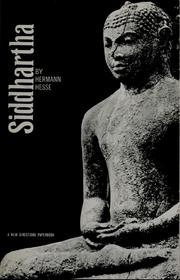
Siddhartha
by Hermann Hesse
The most natural Hesse companion — the same journey between the life of the senses (Kamala, Kamaswami) and the life of the spirit (the Samanas, the Buddha) traced in Siddhartha's sequential experience, while Narcissus and Goldmund dramatizes it as two separate men whose friendship embodies both paths. Siddhartha is the more concentrated and serene; Narcissus and Goldmund is more narratively rich and emotionally varied.
- 2
 Buy on Amazon
Steppenwolf
by Hermann Hesse
The companion in psychological depth — Harry Haller's experience of himself as divided between man and wolf, spirit and senses. Where Narcissus and Goldmund presents the two paths as separate men whose friendship allows each to understand the other, Steppenwolf presents them as warring aspects of a single psyche. Both novels end with the recognition that the opposition cannot be resolved but must be embraced — that the soul is not two things but a thousand.
- 3
 Buy on Amazon
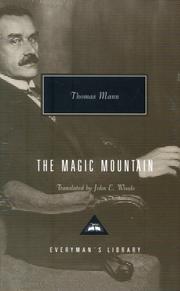
The Magic Mountain
by Thomas Mann
Mann's 1924 companion in the German literary tradition of the novel about two opposed types whose dialogue constitutes the novel's philosophical argument — Settembrini (liberal, rationalist, Apollonian) and Naphta (Jesuit, revolutionary, Dionysian) in Mann; Narcissus and Goldmund in Hesse. Both novels use the opposition of two characters to investigate the philosophical crisis of European civilization, and both were written in the same historical moment of crisis (the 1920s-30s) in response to the same sense that the old oppositions could not hold.
- 4
 Buy on Amazon
The Name of the Rose
by Umberto Eco
Eco's 1980 companion in the tradition of the medieval setting as the space for philosophical investigation — William of Baskerville and the young novice Adso in a medieval Italian monastery where a series of murders are connected to a lost book by Aristotle. The Name of the Rose and Narcissus and Goldmund are the two most celebrated twentieth-century novels set in the medieval monastery world — both use the medieval setting to investigate questions about knowledge, faith, and the relationship between the life of the mind and the life of the senses.
- 5
 Buy on Amazon
A Portrait of the Artist as a Young Man
by James Joyce
Joyce's 1916 companion in the European tradition of the Künstlerroman — the novel of the artist's formation. Where Goldmund's journey is a medieval wanderer's discovery of his artistic vocation through experience, Stephen Dedalus's is a modern Irish intellectual's. Both trace the same arc: the protagonist formed by a religious world (Catholicism, a monastery) who must escape that world's constraints to discover himself as an artist — and both end with the protagonist's departure, not his arrival.
- 6Buy on Amazon
The Razor's Edge
by W. Somerset Maugham
Maugham's 1944 companion in the tradition of the novel about a young man who renounces conventional success to seek wisdom — Larry Darrell's abandonment of the prosperous American life expected of him after the First World War to travel to India. The Razor's Edge dramatizes the same choice as Narcissus and Goldmund: the contemplative life over the practical one, the spiritual journey over the social one — and Maugham, like Hesse, presents this choice with sympathy and curiosity rather than judgment.
- 7
 Buy on Amazon
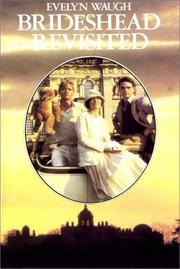
Brideshead Revisited
by Evelyn Waugh
Waugh's 1945 companion in the tradition of the friendship novel about two men who represent different orientations to life — Charles Ryder (the observer, the artist, the secular intelligence) and Sebastian Flyte (the beautiful, doomed Catholic aristocrat). Brideshead Revisited and Narcissus and Goldmund are both structured around a friendship between a spiritually oriented and a worldly figure, and both investigate whether those two orientations can coexist or whether one must ultimately be sacrificed to the other.
- 8
 Buy on Amazon
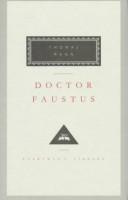
Doctor Faustus
by Thomas Mann
Mann's 1947 companion in the German literary tradition of the novel about the relationship between artistic genius and moral catastrophe — the composer Adrian Leverkühn who sells his soul to the Devil for twenty-four years of musical genius. Doctor Faustus and Narcissus and Goldmund are companion investigations of the relationship between artistic creation and the life of the senses — both ask what the artist must sacrifice (or be willing to suffer) to create work of genuine greatness, and both answer in terms of the relationship between Eros and the art it generates.
More Narcissus and Goldmund Resources
More Reading Recommendations
View all →Monthly Newsletter
Never miss a big release
Get the most anticipated upcoming books delivered to your inbox once a month — no spam, no filler.
Monthly only. Unsubscribe anytime.
Book links are Amazon affiliate links. As an Amazon Associate, BookReleaseRadar earns from qualifying purchases at no extra cost to you.