Recommendations
Books Like Nana
Best books to read after Nana by Émile Zola
Émile Zola's ninth Rougon-Macquart novel (1880) — the courtesan Nana's spectacular rise from slum poverty to become the dominant demi-mondaine of Second Empire Paris and her horrifying death from smallpox as the Franco-Prussian War begins; the most vivid portrait of the demi-monde in nineteenth-century fiction and the most devastating analysis of the Second Empire's decadence. These recommendations extend the experience through Zola's other Rougon-Macquart novels, through French Naturalist fiction, and through later fiction in Nana's tradition.
- 1
 Buy on Amazon
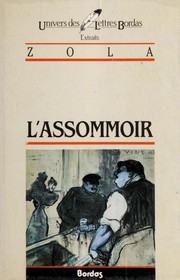
L'Assommoir
by Émile Zola
Zola's greatest individual novel — the seventh Rougon-Macquart (1877) introduces Gervaise, Nana's mother, and her destruction by alcoholism and poverty in the laundry world of working-class Paris; reading L'Assommoir before Nana gives the full hereditary and environmental context for Nana's character that Zola's Naturalist method requires.
- 2
 Buy on Amazon
Germinal
by Émile Zola
Zola's other great social novel — the thirteenth Rougon-Macquart (1885) portrays the coal miners of northern France with the same naturalist intensity that Nana brings to the demi-monde; while Nana is about the bottom falling out of the aristocratic world, Germinal is about the bottom rising against it; the two together cover the poles of Zola's social panorama.
- 3
 Buy on Amazon
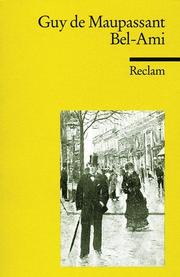
Bel-Ami
by Guy de Maupassant
Maupassant's novel (1885) is the most direct French Naturalist companion to Nana — where Nana is organized around a woman's power to destroy the men who desire her, Bel-Ami is organized around a man's power to use the women who desire him; the two novels together define the Naturalist treatment of sexual power in Third Republic France.
- 4
 Buy on Amazon
Thérèse Raquin
by Émile Zola
Zola's pre-cycle Naturalist study — the concentrated Gothic horror of Thérèse and Laurent's adulterous murder is the opposite of Nana's social panorama but uses the same Naturalist method; reading both together shows Zola's full range from concentrated single study to panoramic social novel.
- 5
 Buy on Amazon
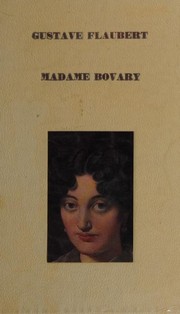
Madame Bovary
by Gustave Flaubert
Flaubert's masterwork is the most important French predecessor to Nana — where Emma Bovary's desires are frustrated by provincial reality, Nana's are satiated by Parisian wealth, and both women are destroyed in the end; the contrast between Flaubert's psychological interiority and Zola's social panorama defines the two main modes of French nineteenth-century fiction.
- 6
 Buy on Amazon
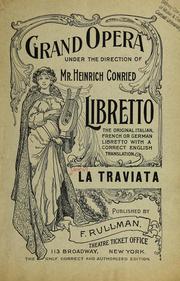
La Traviata
by Giuseppe Verdi
Verdi's opera (1853) is the most direct cultural companion to Nana's demi-monde world — Violetta's situation as a courtesan who is loved by an aristocratic man whose family objects follows the same social script that Nana enacts, but in a romantic register that Zola's naturalism explicitly refuses; comparing the two illuminates what Zola was rejecting in the Romantic treatment of the courtesan.
- 7Buy on Amazon
Moulin Rouge (Novel)
by Pierre La Mure
La Mure's biographical novel of Henri de Toulouse-Lautrec (1950) recreates the same Montmartre demi-monde world that Nana portrays; reading Zola's Naturalist treatment alongside Lautrec's visual art of the same world (which La Mure contextualizes) gives the social history of Second Empire Paris its most vivid documentation.
- 8
 Buy on Amazon
Camille
by Alexandre Dumas fils
Dumas's novel (1848) — the story of the courtesan Marguerite Gautier and her doomed love for Armand Duval — is the most important French predecessor to Nana's courtesan narrative; where Dumas treats the courtesan sentimentally (Marguerite sacrifices her love for Armand's social good and dies redeemed), Zola refuses sentimentality entirely; the contrast defines the shift from Romantic to Naturalist treatment.
More Nana Resources
More Reading Recommendations
View all →Monthly Newsletter
Never miss a big release
Get the most anticipated upcoming books delivered to your inbox once a month — no spam, no filler.
Monthly only. Unsubscribe anytime.
Book links are Amazon affiliate links. As an Amazon Associate, BookReleaseRadar earns from qualifying purchases at no extra cost to you.