Recommendations
Books Like Moneyball
Best books to read after Moneyball by Michael Lewis
Moneyball showed that expertise can be wrong in systematic, measurable ways — and that careful data analysis can reveal a different world than the experts inhabit. These 8 books extend that argument into finance, psychology, other sports, and the general study of how institutions fail to update on evidence.
- 1
 Buy on Amazon
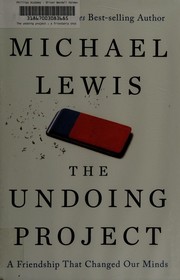
The Undoing Project
by Michael Lewis
Lewis's 2016 account of the Kahneman-Tversky partnership provides the psychological foundation for understanding why Moneyball's statistical approach works: the scouts who ignored on-base percentage and valued flashy tools were making the systematic judgment errors that Kahneman and Tversky documented — overweighting vivid, concrete evidence and underweighting statistical base rates.
- 2
 Buy on Amazon
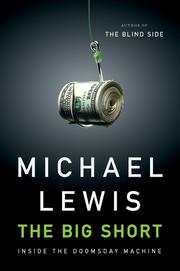
The Big Short
by Michael Lewis
Lewis's 2010 account of the few investors who bet against the mortgage bond market before the 2008 financial crisis applies the same template as Moneyball — a small number of contrarians use careful analysis to identify a massive market mispricing that the conventional wisdom is blind to — and produces the same result: the contrarians are right, and the conventional wisdom is catastrophically wrong.
- 3
 Buy on Amazon
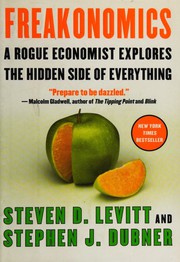
Freakonomics
by Steven D. Levitt
Levitt and Dubner's 2005 popular economics bestseller is Moneyball's intellectual companion: both books argue that careful empirical analysis routinely reveals truths that expert intuition misses, and both are organized around the thesis that the experts who resist the data are protecting their status and their conventional wisdom rather than the truth.
- 4
 Buy on Amazon
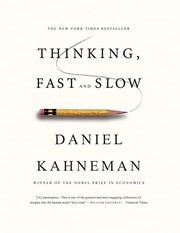
Thinking, Fast and Slow
by Daniel Kahneman
Kahneman's 2011 synthesis provides the psychological framework for understanding why the baseball scouts in Moneyball were so wrong: overconfidence, the representativeness heuristic, and the narrative fallacy all contributed to a consistent mispricing of players based on how they looked rather than how they performed, exactly the systematic bias that Kahneman's research documents.
- 5
 Buy on Amazon
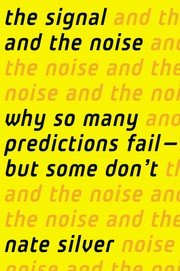
The Signal and the Noise
by Nate Silver
Silver's 2012 account of prediction in politics, sports, finance, and meteorology is the most important companion to Moneyball in the literature of statistical analysis versus expert intuition: Silver's PECOTA baseball forecast system was a direct heir of the Moneyball approach, and The Signal and the Noise is the broadest examination of when predictions work and when they don't.
- 6
 Buy on Amazon
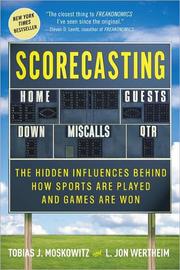
Scorecasting
by Tobias J. Moskowitz
Moskowitz and Wertheim's 2011 application of economic and statistical analysis to sports — examining referee bias, the home-field advantage, and the value of conventional wisdom in football and basketball — is the most direct successor to Moneyball in the sports analytics genre, applying the same skepticism about expert intuition to sports beyond baseball.
- 7
 Buy on Amazon
Liar's Poker
by Michael Lewis
Lewis's 1989 debut memoir about his years as a bond salesman at Salomon Brothers in the 1980s is the chronological first book in Lewis's career-long examination of how markets work and fail — and how the conventional wisdom that governs them is perpetuated by people who profit from it rather than by its accuracy.
- 8
 Buy on Amazon
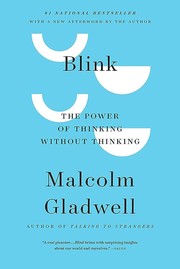
Blink
by Malcolm Gladwell
Gladwell's 2005 examination of rapid intuitive judgment — and when expert thin-slicing beats deliberate analysis, and when it fails — is in interesting tension with Moneyball: where Lewis argues that expert intuition in baseball is systematically wrong and statistical analysis is better, Gladwell argues that in some domains expert intuition is more reliable than analysis, and the question of when each approach is better is one of the most important in applied epistemology.
More Moneyball Resources
More Reading Recommendations
View all →Monthly Newsletter
Never miss a big release
Get the most anticipated upcoming books delivered to your inbox once a month — no spam, no filler.
Monthly only. Unsubscribe anytime.
Book links are Amazon affiliate links. As an Amazon Associate, BookReleaseRadar earns from qualifying purchases at no extra cost to you.