Recommendations
Books Like Lélia
Best books to read after Lélia by George Sand
Readers drawn to Lélia's philosophical ambition, its portrait of a woman outside the possibilities of her time, and Sand's prose poetry will find the Romantic tradition of philosophical fiction and the feminist novelists who shared her analysis of female constraint.
- 1
 Buy on Amazon
Indiana
by George Sand
The companion Sand novel and the one to read first — Indiana (1832) is the realistic social world that Lélia abandons for allegorical space; both are about the impossibility of female happiness under Restoration social constraints, but where Indiana uses plot and character to make the argument, Lélia uses philosophical meditation; the contrast between the two shows Sand's range.
- 2
 Buy on Amazon
René
by François-René de Chateaubriand
The founding text of the mal du siècle that Lélia translates into a woman's experience — Chateaubriand's René is consumed by 'le vague des passions' without social explanation; Sand's explicit feminist move is to give the same condition a social cause (the limitation of women's possibilities) that Chateaubriand's male hero can ignore because the world is not limiting him in the same way.
- 3
 Buy on Amazon
Adolphe
by Benjamin Constant
The analytical Romantic self-portrait that Lélia engages — where Adolphe is destroyed by his own lucidity about his emotions, Lélia is destroyed by her capacity for feeling in a world that has no use for it; both are studies in the impossibility of love when the protagonist's self-awareness is more developed than the social world can accommodate.
- 4Buy on Amazon
Atala
by François-René de Chateaubriand
The companion Romantic prose poem that establishes the allegorical landscape tradition Lélia inherits — Chateaubriand's 1801 story of a doomed love in the American wilderness is the first great French Romantic prose lyric, and the tradition of symbolic landscape and philosophical passion that it began is the formal tradition Lélia enters; Lélia's Berry landscapes are the French domestic equivalent of Atala's exotic American sublime.
- 5
 Buy on Amazon
The Mill on the Floss
by George Eliot
The English companion in the tradition of the exceptional woman destroyed by the limitations of her society — Maggie Tulliver's intelligence and emotional range exceed what St. Ogg's can accommodate, exactly as Lélia's philosophical depth exceeds what French Romantic society can offer; George Eliot read Sand extensively and the portrait of the exceptional woman at odds with her world in The Mill on the Floss is directly in Lélia's tradition.
- 6
 Buy on Amazon
Camille
by Alexandre Dumas fils
The companion novel in the tradition of the exceptional woman outside the social norms — Marguerite Gautier is destroyed by consumption and social exclusion as a courtesan; Lélia is destroyed by philosophical despair and the impossibility of female vocation; both are portraits of the Romantic woman who exceeds her assigned social role, and both were read as Sand's generation's definition of the exceptional feminine type.
- 7
 Buy on Amazon
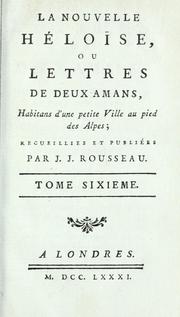
La Nouvelle Héloïse
by Jean-Jacques Rousseau
The eighteenth-century philosophical novel of passion and renunciation that Lélia answers — Julie d'Etange renounces her love for Saint-Preux for duty and virtue, while Lélia can find no such renunciation that resolves her situation; Sand's novel is partly a Romantic response to Rousseau's solution, arguing that the self-denying female virtue Rousseau praised is itself the source of the unhappiness he tried to resolve.
- 8
 Buy on Amazon
The Second Sex
by Simone de Beauvoir
The twentieth-century philosophical analysis that retrospectively explains Lélia's situation — Beauvoir's 1949 analysis of how women are defined as Other, their transcendence blocked by immanence, is the philosophical framework that makes Lélia's despair legible in structural terms; Sand intuited in 1833 what Beauvoir would argue systematically in 1949, and reading both together shows the continuity of the feminist philosophical tradition.
More Lélia Resources
More Reading Recommendations
View all →Monthly Newsletter
Never miss a big release
Get the most anticipated upcoming books delivered to your inbox once a month — no spam, no filler.
Monthly only. Unsubscribe anytime.
Book links are Amazon affiliate links. As an Amazon Associate, BookReleaseRadar earns from qualifying purchases at no extra cost to you.