Recommendations
Books Like Le Jardin de Bérénice
Best books to read after Le Jardin de Bérénice by Barrès
Readers who respond to Le Jardin de Bérénice's Symbolist landscape meditation, the Culte du moi philosophy, and Barrès's treatment of the collective memory of the earth will find the wider tradition of French Symbolist and nationalist fiction.
- 1Buy on Amazon
Sous l'œil des barbares
by Maurice Barrès
The first volume of the Culte du moi trilogy is the essential starting point for understanding Le Jardin de Bérénice: Philippe's philosophy of the cultivated ego against the 'barbarians' is established here, and reading the trilogy in order shows the development that Le Jardin de Bérénice culminates.
- 2
 Buy on Amazon
Un homme libre
by Maurice Barrès
The second volume of the Culte du moi trilogy shows Philippe's systematic development of his philosophy of intensive self-cultivation — the necessary bridge between Sous l'œil des barbares and Le Jardin de Bérénice's encounter with the collective unconscious of the earth.
- 3
 Buy on Amazon
Les Déracinés
by Maurice Barrès
Les Déracinés (1897) is the political consequence of Le Jardin de Bérénice: where the Culte du moi trilogy develops a philosophy of the rooted self, Les Déracinés (the first volume of the Roman de l'énergie nationale) applies that philosophy to the question of young Lorrainers uprooted from their provincial culture by Parisian university education — the aesthetic position becomes a political argument.
- 4
 Buy on Amazon
Bruges-la-Morte
by Georges Rodenbach
Rodenbach's 1892 Symbolist novel shares Le Jardin de Bérénice's method of using a landscape as the objective correlative of a spiritual state: where Barrès uses the Camargue as the emblem of collective memory and rootedness, Rodenbach uses Bruges as the emblem of grief and the impossible return of the dead — both novels belong to the Symbolist tradition of the landscape-as-consciousness.
- 5
 Buy on Amazon
La Cathédrale
by Joris-Karl Huysmans
Huysmans's 1898 meditation on Chartres is the Catholic equivalent of Le Jardin de Bérénice's nationalist meditation on the Camargue: both novels use a specific landscape/monument as the site of access to a collective spiritual inheritance that the individual consciousness cannot achieve alone, and both belong to the same French Symbolist tradition of the sacred place.
- 6
 Buy on Amazon
À la recherche du temps perdu
by Marcel Proust
Proust explicitly acknowledged Barrès's influence, and the Culte du moi trilogy's analysis of the relationship between individual memory and collective landscape anticipates the fundamental project of La Recherche: the recovery of the past through the landscape of childhood is the Proustian equivalent of Bérénice's instinctive rootedness in the Camargue earth.
- 7
 Buy on Amazon
Amori et dolori sacrum
by Maurice Barrès
Barrès's 1903 travel meditations on Venice, Toledo, and the Rhineland are the most direct extension of Le Jardin de Bérénice's method: where the Camargue is the French collective memory landscape, Venice is the dying beauty landscape and Toledo the religious mysticism landscape — the same method of reading a place as a text of accumulated spiritual lives applied to different sacred sites.
- 8
 Buy on Amazon
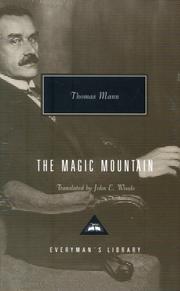
The Magic Mountain
by Thomas Mann
Mann's 1924 novel uses the Swiss mountain sanatorium as a landscape-as-consciousness with the same systematic precision that Barrès applies to the Camargue: both novels use a specific place as a site where the questions of individual consciousness, collective memory, and the inheritance of the past are worked out through a protagonist's encounter with a representative figure (Bérénice, Claudia Chauchat).
More Le Jardin de Bérénice Resources
More Reading Recommendations
View all →Monthly Newsletter
Never miss a big release
Get the most anticipated upcoming books delivered to your inbox once a month — no spam, no filler.
Monthly only. Unsubscribe anytime.
Book links are Amazon affiliate links. As an Amazon Associate, BookReleaseRadar earns from qualifying purchases at no extra cost to you.