Recommendations
Books Like Lamia and Other Poems
Best books to read after Lamia and Other Poems by John Keats
Readers captivated by the sensuous Gothic romance of Keats's 1820 collection will find companion works in the classical sources he drew on, in Romantic narrative poetry, and in the Victorian inheritors of his aesthetic.
- 1Buy on Amazon
The Odes of John Keats
by John Keats
The lyric summit published in the same 1820 volume — the Odes on the Nightingale, the Grecian Urn, Melancholy, Psyche, and Autumn are the concentrated lyric equivalent of the narrative richness of Lamia, The Eve of St. Agnes, and Isabella; reading both modes together shows the full range of Keats's creative year.
- 2
 Buy on Amazon
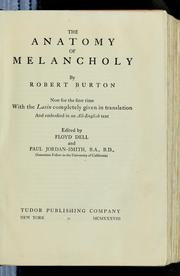
The Anatomy of Melancholy
by Robert Burton
The source of the Lamia story — Burton's account of the serpent-woman Lamia in Part 3 is Keats's direct source; The Anatomy of Melancholy is one of the great eccentric prose works in the language and reading it alongside the poem shows exactly what Keats took and what he transformed.
- 3
 Buy on Amazon
Endymion
by John Keats
The long narrative poem that Lamia revises and refines — comparing the sprawling sensuous mythology of Endymion with the more controlled narrative art of Lamia and The Eve of St. Agnes shows how dramatically Keats developed between 1817 and 1819.
- 4Buy on Amazon
Hyperion
by John Keats
The philosophical fragment included in the same 1820 volume — Hyperion provides the epic ambition and Miltonic gravity that counterbalances the romantic sensuality of Lamia and The Eve of St. Agnes; reading the whole 1820 volume as a unified artifact shows its remarkable range.
- 5Buy on Amazon
Goblin Market and Other Poems
by Christina Rossetti
The Victorian narrative poem that most directly inherits the sensuous allegorical mode of Keats's narrative poetry — Rossetti's Goblin Market (1862) uses the same strategy of sensuous surface and symbolic depth that Keats employs in Lamia and The Eve of St. Agnes; the most important Victorian response to Keatisian narrative.
- 6Buy on Amazon
The Decameron
by Giovanni Boccaccio (trans. Mark Musa)
The medieval source of Isabella (or The Pot of Basil) — Boccaccio's story (Day 4, Novella 5) is the direct source for Keats's most gruesome narrative poem; reading Boccaccio alongside Keats shows the transformation from Italian novella to English Spenserian romance.
- 7
 Buy on Amazon
Poems and Ballads
by Algernon Charles Swinburne
The Victorian collection that most intensely develops Keats's aesthetic of sensuous beauty and the erotic lyric — Swinburne's Poems and Ballads (1866) takes the Keatisian mode and pushes it to its Victorian extreme in 'Laus Veneris,' 'Dolores,' and 'The Garden of Proserpine'; the most important development of Keats in later Victorian poetry.
- 8Buy on Amazon
The Pre-Raphaelites: An Anthology
by Various (ed. Jerome McGann)
The Victorian movement that claimed Keats as their primary inspiration — Rossetti, Morris, and their circle drew directly on the sensuous mythological world of Lamia and The Eve of St. Agnes; reading the Pre-Raphaelite poets alongside Keats shows his nineteenth-century afterlife and the aesthetic tradition he founded.
More Lamia and Other Poems Resources
More Reading Recommendations
View all →Monthly Newsletter
Never miss a big release
Get the most anticipated upcoming books delivered to your inbox once a month — no spam, no filler.
Monthly only. Unsubscribe anytime.
Book links are Amazon affiliate links. As an Amazon Associate, BookReleaseRadar earns from qualifying purchases at no extra cost to you.