Recommendations
Books Like La Vénus d'Ille
Best books to read after La Vénus d'Ille by Mérimée
Mérimée's La Vénus d'Ille (1837) is the most perfect of his fantastic tales — the account of a bronze statue of Venus that appears to come to life and crush a bridegroom on his wedding night, narrated by a skeptical observer who cannot explain what he has seen. The founding text of the French conte fantastique, it established the standard of the perfectly maintained ambiguity between natural and supernatural explanation.
- 1
 Buy on Amazon
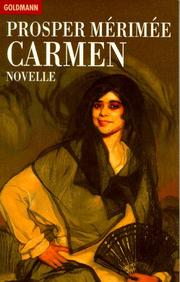
Carmen
by Prosper Mérimée
The most famous Mérimée novella — the same cold narrative method and the same ambiguity about whether the story's fatal force (Carmen's power over the soldier José) is natural or supernatural, with the added context of the Gypsy world and the fatal desire that drives La Vénus d'Ille's tragedy from a different angle.
- 2Buy on Amazon
Lokis
by Prosper Mérimée
The most elaborate of Mérimée's fantastic tales — the Lithuanian nobleman who may be the son of a bear maintains the same perfectly calibrated ambiguity as La Vénus d'Ille between the supernatural and the naturalistic, and represents the full development of the method at the end of Mérimée's career.
- 3
 Buy on Amazon
La Morte amoureuse
by Théophile Gautier
Gautier's 1836 fantastic tale of a priest who falls in love with a vampire is the most important contemporary parallel in the French conte fantastique tradition — appearing one year before La Vénus d'Ille, it established the same ambiguity between religious vision and supernatural reality that Mérimée achieves with his bronze goddess.
- 4
 Buy on Amazon
Le Horla
by Guy de Maupassant
Maupassant's 1887 story of an invisible presence that may be a supernatural entity or a symptom of madness is the most celebrated of the century's later contributions to the French conte fantastique tradition that La Vénus d'Ille helped establish — the ambiguity maintained to the end is the same, but the supernatural threat has moved from the mythological to the psychological.
- 5
 Buy on Amazon
The Sandman
by E.T.A. Hoffmann
Hoffmann's great fantastic tale of a young student and the sinister optician Coppelius is the most important German contemporary in the tradition — the automaton Olimpia who may or may not be alive parallels the bronze Venus who may or may not be alive, and the comparison shows the French and German versions of the same Romantic anxiety about the animation of the inanimate.
- 6
 Buy on Amazon
The Turn of the Screw
by Henry James
James's novella maintains the same perfectly calibrated ambiguity as La Vénus d'Ille — the governess's account of the ghosts may or may not be reliable, the supernatural may or may not be present — and represents the most sophisticated development of the fantastic ambiguity method in the English language.
- 7
 Buy on Amazon
La Vénus d'Ille
by Prosper Mérimée
The complete Mérimée — the story exists in context with Mateo Falcone, Tamango, Colomba, Carmen, and Lokis, and reading the full range of his fiction shows how the cold ethnographic method of his realistic work informs and enables the perfectly controlled ambiguity of his fantastic tales.
- 8
 Buy on Amazon
Mateo Falcone
by Prosper Mérimée
The essential companion — the earliest and most economical statement of the Mérimée narrative method that La Vénus d'Ille applies to the fantastic mode. The cold, anthropological distance from Corsican honor culture in Mateo Falcone is the same distance that maintains the ambiguity of La Vénus d'Ille.
More La Vénus d'Ille Resources
More Reading Recommendations
View all →Monthly Newsletter
Never miss a big release
Get the most anticipated upcoming books delivered to your inbox once a month — no spam, no filler.
Monthly only. Unsubscribe anytime.
Book links are Amazon affiliate links. As an Amazon Associate, BookReleaseRadar earns from qualifying purchases at no extra cost to you.