Recommendations
Books Like La Joie de vivre
Best books to read after La Joie de vivre by Zola
Readers who respond to La Joie de vivre's philosophical counter-argument to pessimism, its portrait of Pauline's practical love against Lazare's Schopenhauerian withdrawal, and its Normandy coastal setting will find the wider tradition of French Naturalist philosophical fiction.
- 1
 Buy on Amazon
Germinal
by Émile Zola
Germinal (1885) was written immediately after La Joie de vivre and is its social counterpart: where La Joie de vivre analyzes pessimism as a philosophical question in a bourgeois family, Germinal analyzes it as a lived reality in the mining community — the conditions that make Schopenhauer's pessimism look like understatement.
- 2
 Buy on Amazon
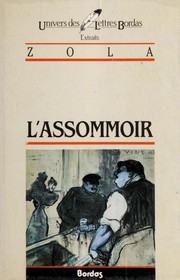
L'Assommoir
by Émile Zola
L'Assommoir (1877) is the most direct predecessor of La Joie de vivre's analysis of what the human organism does with suffering: where Gervaise in L'Assommoir is destroyed by her environment, Pauline in La Joie de vivre survives and gives — both novels ask what happens when a generous character is placed in conditions that do not deserve generosity.
- 3Buy on Amazon
The Brothers Karamazov
by Fyodor Dostoevsky
Dostoevsky's great novel engages with the same Schopenhauerian pessimism through Ivan Karamazov's 'rebellion' against a world that produces innocent suffering: where Pauline in La Joie de vivre responds to suffering with practical love, Ivan responds with intellectual revolt, making the two novels the most searching literary responses to the problem of suffering in nineteenth-century fiction.
- 4
 Buy on Amazon
The Will to Power
by Friedrich Nietzsche
Nietzsche's philosophy, which was developing during the same period as La Joie de vivre was written, offers the most explicit counter-argument to Schopenhauer's pessimism: where Schopenhauer recommends withdrawal and resignation, Nietzsche recommends active affirmation — and Pauline Quenu's practical generosity is a popular-Naturalist version of the same Nietzschean affirmation.
- 5
 Buy on Amazon
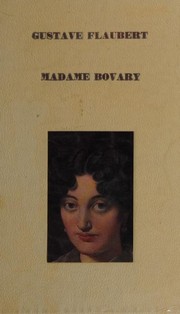
Madame Bovary
by Gustave Flaubert
Flaubert's Emma Bovary, like Lazare Chanteau in La Joie de vivre, is a character destroyed by the gap between Romantic fantasy and actual experience; but where Lazare uses pessimist philosophy as his Romantic fantasy (a theory that exempts him from the obligation to act), Emma uses sentimental fiction.
- 6Buy on Amazon
The Idiot
by Fyodor Dostoevsky
Dostoevsky's Prince Myshkin is the closest Russian equivalent of Pauline Quenu: a character of natural goodness and generosity placed in an environment that does not know how to receive such goodness, and whose gift is eventually destroyed by the people it was meant to help.
- 7
 Buy on Amazon
Une page d'amour
by Émile Zola
Une page d'amour (1878) is the other intimate Rougon-Macquart novel and the most similar to La Joie de vivre in scale and tone: both novels are about women whose generosity is met with ingratitude, and both use a provincial or semi-private setting rather than the panoramic urban analysis of the cycle's most famous works.
- 8
 Buy on Amazon
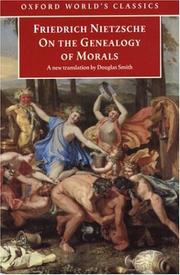
On the Genealogy of Morals
by Friedrich Nietzsche
Nietzsche's analysis of the difference between 'master morality' (the active, affirmative ethics of strength) and 'slave morality' (the reactive ethics of resentment) maps directly onto the contrast in La Joie de vivre between Pauline's active generosity and Lazare's passive pessimism-as-resentment.
More La Joie de vivre Resources
More Reading Recommendations
View all →Monthly Newsletter
Never miss a big release
Get the most anticipated upcoming books delivered to your inbox once a month — no spam, no filler.
Monthly only. Unsubscribe anytime.
Book links are Amazon affiliate links. As an Amazon Associate, BookReleaseRadar earns from qualifying purchases at no extra cost to you.