Recommendations
Books Like La Bête Humaine
Best books to read after La Bête Humaine by Émile Zola
Zola's 1890 crime novel follows Jacques Lantier, a locomotive driver haunted by an inherited impulse to murder, against the backdrop of the French railway system. These recommendations extend the experience through other Rougon-Macquart novels connected to La Bête Humaine by character and theme, through Zola's other major works, and through crime and psychological fiction that shares its investigation of violence, guilt, and the forces that drive human beings toward destruction.
- 1
 Buy on Amazon
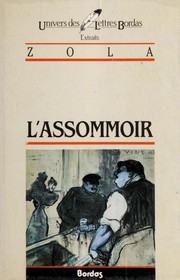
L'Assommoir
by Émile Zola
The seventh Rougon-Macquart novel (1877) and the most essential context for La Bête Humaine: Gervaise Macquart, Jacques Lantier's mother, is destroyed by alcoholism and the poverty of the Parisian working class. L'Assommoir establishes the hereditary violence and degeneration that Jacques carries in his blood — and reading it makes Jacques's compulsion in La Bête Humaine a specific inheritance from a specific woman's ruin.
- 2
 Buy on Amazon
Germinal
by Émile Zola
The thirteenth Rougon-Macquart novel (1885) and the most acclaimed in the cycle: Étienne Lantier, Jacques's brother, leads a miners' strike in the coal fields of northern France. Germinal and La Bête Humaine are the two greatest novels of the cycle in terms of sustained power, and both follow Lantier brothers whose Macquart blood drives them toward destruction — one through political violence, one through murderous compulsion.
- 3
 Buy on Amazon
Nana
by Émile Zola
The ninth Rougon-Macquart novel (1880): Nana, the daughter of Gervaise Macquart (and thus Jacques's half-sister), becomes a famous courtesan who ruins the men who desire her. Nana and La Bête Humaine are complementary studies in destructive compulsion — where Jacques cannot stop himself from the impulse to kill, Nana cannot stop herself from destroying what she desires — both driven by hereditary forces they do not fully understand.
- 4
 Buy on Amazon
Crime and Punishment
by Fyodor Dostoevsky
Dostoevsky's 1866 novel is the greatest of all psychological studies of the murderer's mind: Raskolnikov's theory-driven murder of a pawnbroker and the psychological disintegration that follows. Where Zola treats Jacques's compulsion as a hereditary and physiological phenomenon, Dostoevsky treats Raskolnikov's crime as a philosophical error — but both are investigating the internal experience of a man who kills, and the forces that drive him toward violence.
- 5
 Buy on Amazon
Pot-Bouille
by Émile Zola
The tenth Rougon-Macquart novel (1882) — Octave Mouret's arrival in Paris and rise through the bourgeoisie, directly preceding The Ladies' Paradise (1883). Pot-Bouille connects the same Rougon-Macquart world as La Bête Humaine and shares its interest in the corruption concealed beneath respectable surfaces — though its mode is satirical comedy rather than naturalist crime.
- 6
 Buy on Amazon
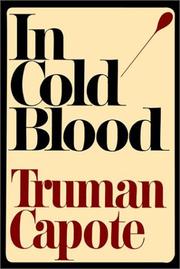
In Cold Blood
by Truman Capote
Capote's 1966 true crime masterpiece — the investigation of the murder of the Clutter family in Kansas and the psychology of the two killers. Where Zola invents a fictional killer driven by hereditary compulsion, Capote investigates real killers and their real psychology with the same fascination and the same cold, precise attention to what violence reveals about the people who commit it.
- 7
 Buy on Amazon
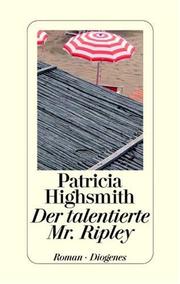
The Talented Mr. Ripley
by Patricia Highsmith
Highsmith's 1955 crime novel — Tom Ripley's identity theft, murder, and survival in Italy — is the twentieth-century companion in the tradition of the novel that makes a killer its protagonist and forces the reader to identify with his survival. Where Jacques Lantier is driven by compulsion he cannot control, Ripley is driven by calculation he cannot stop, but both novels investigate what it feels like to be inside a mind that has crossed the line.
- 8
 Buy on Amazon
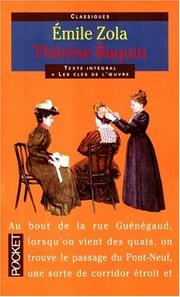
Thérèse Raquin
by Émile Zola
Zola's pre-Rougon-Macquart psychological novel (1867) — the story of Thérèse and her lover Laurent who murder her husband and are destroyed by guilt. Thérèse Raquin is Zola's most concentrated study of the psychology of guilt after a violent crime, and reading it alongside La Bête Humaine shows the full range of Zola's interest in violence: where Thérèse Raquin shows the consequences, La Bête Humaine shows the compulsion.
More La Bête Humaine Resources
More Reading Recommendations
View all →Monthly Newsletter
Never miss a big release
Get the most anticipated upcoming books delivered to your inbox once a month — no spam, no filler.
Monthly only. Unsubscribe anytime.
Book links are Amazon affiliate links. As an Amazon Associate, BookReleaseRadar earns from qualifying purchases at no extra cost to you.