Recommendations
Books Like L'Étui de nacre
Best books to read after L'Étui de nacre by Anatole France
Readers who respond to L'Étui de nacre's philosophical tales, the irony of 'Le Procurateur de Judée,' and France's technique of crystalline anecdote will find the wider tradition of French ironic short fiction.
- 1
 Buy on Amazon
Thaïs
by Anatole France
Thaïs (1890) is France's essential companion novel — the same ironic religious and philosophical intelligence at novel length, showing what the tales in L'Étui de nacre achieve in concentrated form can sustain across a full narrative.
- 2
 Buy on Amazon
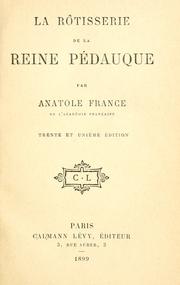
La Rôtisserie de la Reine Pédauque
by Anatole France
Published the same year as L'Étui de nacre (1892), the Rôtisserie is the companion novel: the tales and the novel are products of the same creative moment and show the same ironic intelligence at different scales — reading both together gives the fullest picture of France at the height of his powers.
- 3Buy on Amazon
Les Sept Femmes de la Barbe-Bleue
by Anatole France
France's later tale collection (1909) shows the development of the ironic method into his mature period: the same philosophical technique of the crystalline anecdote, but with a sharper political and satirical edge reflecting the post-Dreyfus Affair period.
- 4Buy on Amazon
Contes cruels
by Auguste Villiers de l'Isle-Adam
Villiers's 1883 tale collection is the Symbolist parallel to L'Étui de nacre's ironic tales: where France's tales use historical and mythological settings for philosophical irony, Villiers's use fantastic and contemporary settings for philosophical idealism — reading both shows the full range of the fin-de-siècle philosophical tale.
- 5Buy on Amazon
The Portable Chekhov
by Anton Chekhov
Chekhov's tales are the Russian parallel to France's ironic short fiction: both writers achieve maximum effect through economy and restraint, both refuse sentimentality and moralizing, and both use the technique of the withheld conclusion — the effect that 'Le Procurateur de Judée' achieves through Pilate's failure to recognize the name 'Jesus of Nazareth' is closely related to the technique Chekhov perfects in his best stories.
- 6
 Buy on Amazon
Labyrinths
by Jorge Luis Borges
Borges's tales — particularly 'Theme of the Traitor and the Hero,' 'The Garden of Forking Paths,' and 'Pierre Menard, Author of the Quixote' — show the ironic philosophical tale method of L'Étui de nacre developed to its twentieth-century extreme: the same use of historical-mythological material as a vehicle for philosophical paradox, the same crystalline precision, the same devastating ironic reversal.
- 7
 Buy on Amazon
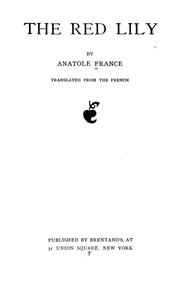
Le Lys rouge
by Anatole France
Le Lys rouge (1894) is the next major development after L'Étui de nacre in France's work and essential for following his range: the ironic philosophical intelligence that crystallizes into anecdotes in the tales sustains a full social novel in Le Lys rouge.
- 8
 Buy on Amazon
Penguin Island
by Anatole France
L'Île des pingouins (1908) is France's most ambitious application of the ironic historical method that L'Étui de nacre employs: where the tales use individual historical anecdotes for ironic effect, Penguin Island uses the entire history of France, from early Christianity to the Dreyfus Affair and beyond, as the material for an ironic satire of a civilization.
More L'Étui de nacre Resources
More Reading Recommendations
View all →Monthly Newsletter
Never miss a big release
Get the most anticipated upcoming books delivered to your inbox once a month — no spam, no filler.
Monthly only. Unsubscribe anytime.
Book links are Amazon affiliate links. As an Amazon Associate, BookReleaseRadar earns from qualifying purchases at no extra cost to you.