Recommendations
Books Like Kim
Best books to read after Kim by Rudyard Kipling
Rudyard Kipling's masterpiece (1901) — Kim O'Hara, the orphaned Irish-Indian street boy of Lahore who becomes an agent in the Great Game (British-Russian intelligence competition for Central Asia) while also becoming the disciple of a Tibetan lama seeking a sacred river; the most vivid recreation of colonial India in English fiction and the most searching exploration of the divided identity that colonialism produced. These recommendations extend the experience through Kipling's other major works, through the colonial India literary tradition, and through fiction that engages the Great Game and its consequences.
- 1
 Buy on Amazon
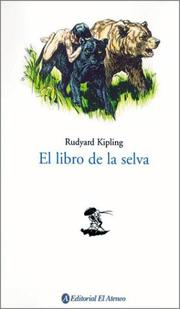
The Jungle Book
by Rudyard Kipling
Kipling's collection of linked stories (1894) is the most direct companion to Kim — where Kim is a boy who navigates colonial India's many worlds, Mowgli navigates the even more radically different worlds of the wolf pack and the man-village; both characters are defined by their ability to belong to multiple worlds and full belonging to none.
- 2Buy on Amazon
A Passage to India
by E.M. Forster
Forster's masterwork is the most important literary response to Kim — where Kipling's novel presents colonial India from inside the British-Indian world Kim inhabits, Forster's presents it from the perspective of the gap between English and Indian consciousness that colonialism creates; Forster is the liberal humanist corrective to Kipling's imperial celebration.
- 3
 Buy on Amazon
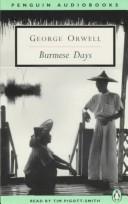
Burmese Days
by George Orwell
Orwell's early novel represents the other side of Kipling's imperial world — where Kim presents the Great Game as an exciting adventure that Kim excels at, Burmese Days presents colonial service as a moral trap that degrades both the English and the Burmese it affects; reading Kim alongside Burmese Days shows the full ideological range of English colonial fiction.
- 4
 Buy on Amazon
The Man Who Would Be King
by Rudyard Kipling
Kipling's novella (1888) — two English adventurers in Kafiristan who become kings and gods before their hubris destroys them — is the most direct companion to Kim's Great Game themes; where Kim is a romantic view of British imperial adventure, The Man Who Would Be King is a more ambiguous treatment of what happens when the adventure exceeds the adventurers' capacity for responsibility.
- 5Buy on Amazon
The Shadow of the Great Game
by Kipling context
Peter Hopkirk's The Great Game: The Struggle for Empire in Central Asia (1990) is the best historical account of the British-Russian competition that provides Kim's plot context — Hopkirk's narrative of the actual intelligence agents, the actual routes, and the actual political stakes gives Kim's espionage scenes their historical grounding and makes the novel more vivid on re-reading.
- 6
 Buy on Amazon
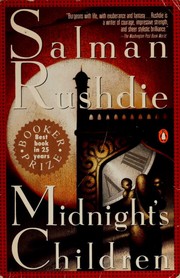
Midnight's Children
by Salman Rushdie
Rushdie's Booker Prize-winning novel is the most important Indian novel's response to the colonial tradition Kim represents — where Kim celebrates the diversity and vitality of Indian street life from within a framework that takes British imperial authority as given, Rushdie's India after independence has to define itself against that framework; the two novels together show the arc from colonial celebration to postcolonial reckoning.
- 7
 Buy on Amazon
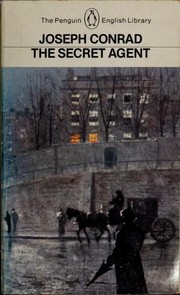
The Secret Agent
by Joseph Conrad
Conrad's political novel (1907) approaches the spy world that Kim inhabits from a very different angle — where Kim's Great Game is romantic adventure, Conrad's London anarchist milieu is squalid and futile; both novels treat intelligence work and political conspiracy, but Conrad's irony is the anti-Kipling rejoinder to the adventure tradition.
- 8
 Buy on Amazon
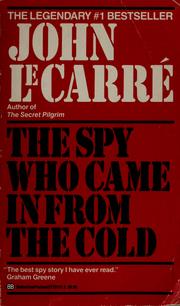
The Spy Who Came in from the Cold
by John le Carré
Le Carré's Cold War spy novel is the twentieth-century inheritor of Kim's Great Game — where Kim's espionage is exciting and morally uncomplicated, le Carré's is disillusioning and morally impossible; the contrast between Kim and Alec Leamas shows the arc of English spy fiction from imperial confidence to Cold War exhaustion.
More Kim Resources
More Reading Recommendations
View all →Monthly Newsletter
Never miss a big release
Get the most anticipated upcoming books delivered to your inbox once a month — no spam, no filler.
Monthly only. Unsubscribe anytime.
Book links are Amazon affiliate links. As an Amazon Associate, BookReleaseRadar earns from qualifying purchases at no extra cost to you.