Recommendations
Books Like Jude the Obscure
Best books to read after Jude the Obscure by Thomas Hardy
Hardy's 1895 final novel — Jude Fawley's thwarted aspiration to university education, his love for the unconventional Sue Bridehead, and the progressive destruction of both by the institutions of marriage, class, and religion. These recommendations extend the experience through Hardy's other Wessex novels, through Victorian fiction that shares its portrayal of class aspiration and its critique of institutional hypocrisy, and through European naturalist fiction that shows similar characters ground down by similar forces.
- 1
 Buy on Amazon
Tess of the D'Urbervilles
by Thomas Hardy
Hardy's 1891 companion and the novel most naturally paired with Jude: where Jude is destroyed by the class system and the institution of marriage, Tess is destroyed by the sexual double standard and a specific man's predation. Both novels are Hardy at his most directly polemical — written as explicit attacks on Victorian hypocrisy — and both end in catastrophe that Hardy presents not as tragedy in the Greek sense (earned by character flaws) but as the logical consequence of an unjust social system.
- 2
 Buy on Amazon
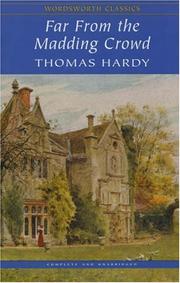
Far from the Madding Crowd
by Thomas Hardy
Hardy's 1874 novel — the Wessex world before Hardy's darkness fully took hold: Bathsheba Everdene, independent and capable, navigates love and disaster without being destroyed. Far from the Madding Crowd is both an introduction to the Wessex landscape and atmosphere that Jude also inhabits and the tonal contrast that makes Jude's darkness more legible — the world of Far from the Madding Crowd is the world that has closed against Jude by 1895.
- 3
 Buy on Amazon
The Mayor of Casterbridge
by Thomas Hardy
Hardy's 1886 Wessex tragedy — Michael Henchard's rise and fall driven by the consequences of a single drunken act. The Mayor of Casterbridge is Hardy's most classical tragic structure (one protagonist, one fatal flaw, inexorable consequence) while Jude the Obscure is his most radical in attacking the social structures themselves as the source of catastrophe — together they show the full range of Hardy's vision of how lives are destroyed.
- 4
 Buy on Amazon
Germinal
by Émile Zola
Zola's 1885 novel — Étienne Lantier's arrival in the coal mines and the great strike — is the French companion in the tradition of the novel about class aspiration and its destruction. Where Jude wants access to the university (intellectual aspiration), Étienne wants justice for the miners (political aspiration), but both are driven by a force they can't quite name and destroyed by the structures that refuse to yield to them. Both are masterworks of European naturalism at its most powerful.
- 5
 Buy on Amazon
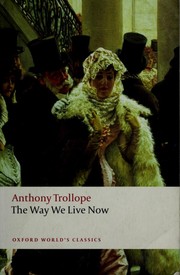
The Way We Live Now
by Anthony Trollope
Trollope's 1875 satire — the most comprehensive Victorian study of a society whose institutions (financial, social, matrimonial) are revealed as hollow and corrupt. Where Hardy attacks the institutions of marriage and class from below (from Jude's perspective as someone excluded from them), Trollope attacks them from within — but both are diagnosing the same Victorian social system as fundamentally dishonest about what it claims to value.
- 6
 Buy on Amazon
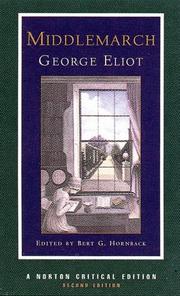
Middlemarch
by George Eliot
Eliot's 1871 masterpiece — Dorothea Brooke's exceptional capacities and the provincial world that cannot accommodate them. Where Jude is destroyed by his inability to enter the university, Dorothea is destroyed by her inability to find a role that her capacities require — both are portraits of intelligence and moral seriousness that the Victorian world cannot use. Eliot is more consoling about the outcome; Hardy is more ruthless.
- 7
 Buy on Amazon
The Earth
by Émile Zola
Zola's 1887 Rougon-Macquart novel — Jean Macquart among the violent peasants of the Beauce. The Earth and Jude the Obscure are companion studies from the same years (1887/1895) in the European naturalist tradition of the novel that portrays rural life without sentimentality — both are works in which the aspirations of the characters are ground down by the material and institutional forces that surround them.
- 8
 Buy on Amazon
Sister Carrie
by Theodore Dreiser
Dreiser's 1900 American naturalist companion — Carrie Meeber's rise through Chicago and New York society, while George Hurstwood falls from comfort to ruin. Sister Carrie shares Jude the Obscure's refusal to moralize about characters who follow their desires across conventional lines — both Dreiser and Hardy are working in the tradition of the naturalist novel that refuses to punish its characters for wanting more than their world offers.
More Jude the Obscure Resources
More Reading Recommendations
View all →Monthly Newsletter
Never miss a big release
Get the most anticipated upcoming books delivered to your inbox once a month — no spam, no filler.
Monthly only. Unsubscribe anytime.
Book links are Amazon affiliate links. As an Amazon Associate, BookReleaseRadar earns from qualifying purchases at no extra cost to you.