Recommendations
Books Like Strange Case of Dr Jekyll and Mr Hyde
Best books to read after Jekyll and Hyde by Robert Louis Stevenson
Robert Louis Stevenson's foundational Gothic novella (1886) — Dr Jekyll's chemical separation of respectable and violent identities gave English language its most powerful allegory of the divided self and established the template for twentieth-century psychological horror. These recommendations extend the experience through Victorian Gothic fiction, through the tradition of the divided self, and through Stevenson's other major works.
- 1
 Buy on Amazon
The Picture of Dorian Gray
by Oscar Wilde
Wilde's novel is the most direct literary companion to Jekyll and Hyde — published four years later, it takes the same split between beautiful appearance and corrupt reality and gives it aesthetic rather than scientific form; Dorian's portrait bears his moral decay while he remains beautiful, exactly as Hyde bears Jekyll's.
- 2
 Buy on Amazon
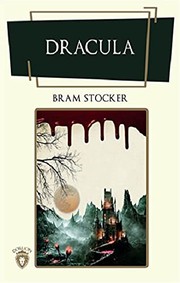
Dracula
by Bram Stoker
Stoker's novel shares Jekyll and Hyde's concern with the respectable Victorian professional world's vulnerability to ancient, irrational forces — Dracula's invasion of English domesticity recalls Hyde's emergence from Jekyll's laboratory; both novels use Gothic horror to address anxieties about the stability of Victorian civilization.
- 3
 Buy on Amazon
The Turn of the Screw
by Henry James
James's ambiguous Gothic novella shares Jekyll and Hyde's formal elegance and its interest in what lies beneath the surface of respectable Victorian life — where Stevenson makes Hyde visible and explicit, James keeps his horrors ambiguous; reading both gives the full range of late Victorian Gothic's treatment of suppressed reality.
- 4
 Buy on Amazon
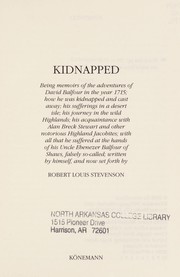
Kidnapped
by Robert Louis Stevenson
Stevenson's adventure novel, written in the same year as Jekyll and Hyde — the best introduction to his range as a writer; where Jekyll and Hyde is Gothic and allegorical, Kidnapped is historical adventure and psychological study of character; reading both shows the full scope of Stevenson's imagination.
- 5
 Buy on Amazon
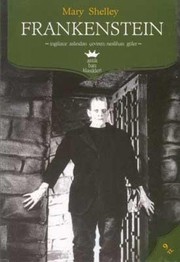
Frankenstein
by Mary Shelley
Shelley's novel is the most important predecessor to Jekyll and Hyde in the tradition of the scientist who creates an uncontrollable other self — Frankenstein and his creature are the ur-version of the relationship that Stevenson analyzed in Jekyll and Hyde; the divided creator/creation recurs as the central figure of Gothic science fiction.
- 6Buy on Amazon
The Double
by Fyodor Dostoevsky
Dostoevsky's 1846 novella about a civil servant whose double appears and gradually displaces him is the most direct literary predecessor to Jekyll and Hyde — Golyadkin's double represents his own suppressed ambitions and social anxieties; the divided self as psychological realism, which Stevenson would transform into Gothic allegory.
- 7
 Buy on Amazon
Heart of Darkness
by Joseph Conrad
Conrad's novella, published thirteen years after Jekyll and Hyde, inherits its analysis of the Victorian professional's capacity for violence — Kurtz's descent into 'the horror' is the colonialist version of Hyde's emergence from Jekyll; both works use a literal journey (into the laboratory, into Africa) to reveal what the respectable Victorian man suppresses.
- 8Buy on Amazon
The Island of Doctor Moreau
by H.G. Wells
Wells's scientific horror novel is the most direct science fiction companion to Jekyll and Hyde — Moreau's vivisection experiments and the beast-people recall Jekyll's chemical experiments and Hyde; both novels use the figure of the scientist who transgresses natural limits as a vehicle for Victorian anxieties about evolution, degeneration, and human nature.
More Strange Case of Dr Jekyll and Mr Hyde Resources
More Reading Recommendations
View all →Monthly Newsletter
Never miss a big release
Get the most anticipated upcoming books delivered to your inbox once a month — no spam, no filler.
Monthly only. Unsubscribe anytime.
Book links are Amazon affiliate links. As an Amazon Associate, BookReleaseRadar earns from qualifying purchases at no extra cost to you.