Recommendations
Books Like Jacob's Room
Best books to read after Jacob's Room by Virginia Woolf
Woolf's 1922 breakthrough — Jacob Flanders known only through others' impressions and the rooms he inhabits — is the first fully experimental novel in the Woolf canon and the threshold work between the conventional Edwardian novel she had been writing and the stream-of-consciousness method of Mrs Dalloway, To the Lighthouse, and The Waves. These recommendations extend the experience through Woolf's major works, through the tradition of modernist fiction that Jacob's Room belongs to, and through novels that use formal innovation to render what cannot be directly represented.
- 1
 Buy on Amazon
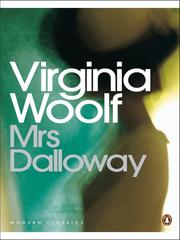
Mrs Dalloway
by Virginia Woolf
The mature crystallization of Jacob's Room's method — Clarissa Dalloway's day in London, June 1923, intercut with Septimus Warren Smith's parallel day in shadow form. Mrs Dalloway is more controlled and more achieved than Jacob's Room, but the formal breakthrough of the earlier novel made it possible: the technique of knowing a character through others' impressions, the movement in and out of consciousness, the treatment of time as a medium of the mind.
- 2
 Buy on Amazon
To the Lighthouse
by Virginia Woolf
The most direct extension of Jacob's Room's elegiac project — the Ramsay family at their summer house in the Hebrides, Mrs Ramsay (a portrait of Woolf's mother Julia) at the center, and the ten-year gap of 'Time Passes' in which Mrs Ramsay dies and the First World War happens. To the Lighthouse is the novel that Jacob's Room was reaching toward: the same formal investment in consciousness over plot, the same elegiac tone, but with the greater assurance of a mature master.
- 3
 Buy on Amazon
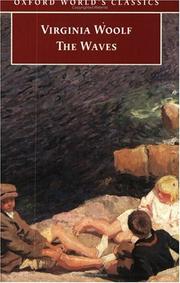
The Waves
by Virginia Woolf
Woolf's most ambitious formal experiment — six characters in interspersed dramatic monologues across their lifetimes. The Waves extends the technique of Jacob's Room to its logical limit: Jacob is known through others' perceptions; in The Waves, Percival (another young man who dies young and is known through others' responses) is never given a direct voice at all. The Waves is the most demanding and most rewarding of Woolf's novels.
- 4
 Buy on Amazon
Ulysses
by James Joyce
Published in the same year as Jacob's Room and the other great formal breakthrough of Anglo-American modernism — Bloom's day in Dublin in eighteen chapters each in a different style. Jacob's Room and Ulysses are companion explorations of the same formal question: what can the novel do if it abandons conventional narration in favor of the movement of consciousness? Joyce's answer is more maximalist, Woolf's more lyrical, but both novels were written in the same literary moment and in response to the same challenge.
- 5
 Buy on Amazon
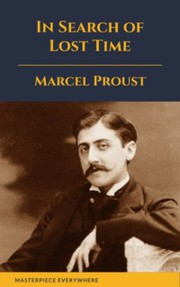
In Search of Lost Time
by Marcel Proust
The great French precursor to Woolf's project — the most ambitious attempt in any language to render the actual texture of consciousness, memory, and time. Woolf read Proust while writing Jacob's Room and was profoundly influenced by his digressive, involuntary memory — the sense that time is not linear but that the past can be recovered in an instant through the senses. Jacob's Room without Proust is almost unthinkable.
- 6
 Buy on Amazon
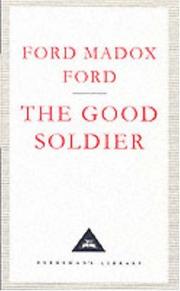
The Good Soldier
by Ford Madox Ford
The companion modernist novel in the tradition of the unreliable narrator and formal experiment with point of view — Dowell's account of the Ashburnhams' tragedy, which he tells circling back and forward in time. Jacob's Room and The Good Soldier are companion modernist investigations of what cannot be known directly: Jacob through others' impressions; the Ashburnhams through Dowell's necessarily incomplete retrospective account.
- 7
 Buy on Amazon
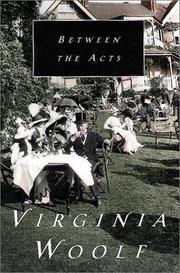
Between the Acts
by Virginia Woolf
Woolf's final novel and the most allusive of her works — the village pageant at Pointz Hall in June 1939. Between the Acts is the terminal point of the development that Jacob's Room began: the same formal investment in impression over narration, the same elegiac tone, but now compressed into a single afternoon and organized around a theatrical performance that is itself a compressed history of England.
- 8
 Buy on Amazon
A Portrait of the Artist as a Young Man
by James Joyce
Joyce's 1916 companion in the European tradition of the Bildungsroman — Stephen Dedalus's formation from childhood through his rejection of Catholicism and Ireland. Both Jacob's Room and A Portrait are organized around a young man's formation — but where Joyce traces Stephen's consciousness directly, Woolf renders Jacob's through others' perceptions of him. They are companion investigations of the same formal problem from opposite directions.
More Jacob's Room Resources
More Reading Recommendations
View all →Monthly Newsletter
Never miss a big release
Get the most anticipated upcoming books delivered to your inbox once a month — no spam, no filler.
Monthly only. Unsubscribe anytime.
Book links are Amazon affiliate links. As an Amazon Associate, BookReleaseRadar earns from qualifying purchases at no extra cost to you.