Recommendations
Books Like Invisible Cities
Best books to read after Invisible Cities by Italo Calvino
Invisible Cities is Calvino at his most purely meditative and beautiful — 55 imaginary cities described by Marco Polo to Kublai Khan, each organized around a different principle. If the novel's formal ingenuity and its portrait of the city as a space of possibility moved you, these books share its concern with the imagination of space, its interest in what cities and places hold and reveal, and its willingness to use fiction as a vehicle for philosophical speculation without losing the beauty of the particular.
- 1
 Buy on Amazon
If on a winter's night a traveler
by Italo Calvino
The essential companion in Calvino's metafictional mode — the novel that addresses the reader directly as 'you' and organizes itself as a series of interrupted novel beginnings; where Invisible Cities is organized around spaces, this novel is organized around the experience of reading itself; both are supreme examples of Calvino's ability to use form as content
- 2
 Buy on Amazon
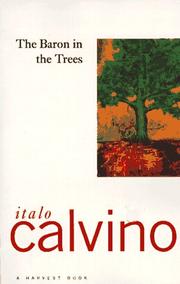
The Baron in the Trees
by Italo Calvino
The most accessible of Calvino's Our Ancestors trilogy — Cosimo Piovasco di Rondò's life in the Ligurian trees; where Invisible Cities uses the structure of an imaginary geography to meditate on what cities are, The Baron in the Trees uses the structure of a fable to meditate on what freedom and consistency are; both are organized around an extreme premise that illuminates ordinary life
- 3
 Buy on Amazon
One Hundred Years of Solitude
by Gabriel García Márquez
The essential companion in the magical-realist tradition that Calvino's later work intersects — Macondo's century of the Buendía family; where Invisible Cities uses the structure of dialogue and classification to generate its cities, García Márquez uses the structure of family saga and magical realism; both show how fiction can create entire worlds with extraordinary economy
- 4
 Buy on Amazon
The Name of the Rose
by Umberto Eco
The essential Italian companion — Eco's medieval mystery novel; where Invisible Cities uses the image of the library (the city is organized like a text) as a central metaphor, The Name of the Rose uses the library literally; both are organized around the relationship between classification, knowledge, and the imagination of order
- 5
 Buy on Amazon
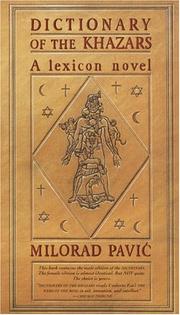
Dictionary of the Khazars
by Milorad Pavić
Pavić's novel organized as a lexicon of a vanished people — entries that can be read in any order in three different versions (male, female, and neutral) that differ in one crucial passage; the most direct structural parallel to Invisible Cities in the tradition of the novel that refuses conventional linear reading and organizes itself instead as an encyclopedia or dictionary
- 6
 Buy on Amazon
Ficciones
by Jorge Luis Borges
The essential predecessor — Borges's short stories organized as fictional reviews of imaginary books and descriptions of imaginary worlds; Calvino acknowledged Borges as a fundamental influence, and Invisible Cities' imaginary cities are in direct dialogue with Borges's imaginary libraries, lotteries, and labyrinths
- 7
 Buy on Amazon
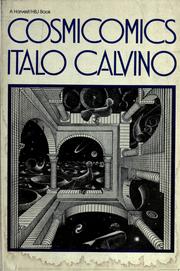
Cosmicomics
by Italo Calvino
The companion in Calvino's mode of scientific premises as pretexts for philosophical fable — stories organized around scientific facts (the universe before the Big Bang, the formation of the first animals) narrated by an entity who was present for all of them; the most direct parallel to Invisible Cities in Calvino's own work
- 8Buy on Amazon
The Rings of Saturn
by W.G. Sebald
Sebald's walking memoir of the Suffolk coast organized as an extended meditation on decay, memory, and the violence underneath European civilization — the most important recent parallel to Invisible Cities in the tradition of the book that uses a journey (actual or imagined) as a vehicle for philosophical meditation on place, history, and human experience
More Invisible Cities Resources
More Reading Recommendations
View all →Monthly Newsletter
Never miss a big release
Get the most anticipated upcoming books delivered to your inbox once a month — no spam, no filler.
Monthly only. Unsubscribe anytime.
Book links are Amazon affiliate links. As an Amazon Associate, BookReleaseRadar earns from qualifying purchases at no extra cost to you.